




Methods for Success

Valve Adjustment Tips







 TOC
TOC










“Rotten” Rodney Bauman, Jefferson Bryant, Tommy Lee Byrd, Ron Ceridono, Ron Covell, Grant Cox, Fuelish Media, John Gilbert, Tavis Highlander, Jeff Huneycutt, Barry Kluczyk, Scotty Lachenauer, Patrick Lauder, Jason Lubken, John Machaqueiro, Ryan Manson, Jason Matthew, Josh Mishler, NotStock Photography, Todd Ryden, Jason Scudellari, Jeff Smith & Chuck Vranas – Writers and Photographers
Travis Weeks Advertising Sales Manager
Patrick Walsh Sales Representative
ads@inthegaragemedia.com
AllChevyPerformance.com
ClassicTruckPerformance.com
ModernRodding.com
InTheGarageMedia.com
inthegaragemedia.com “Online Store”
For bulk back issues of 10 copies or more, contact store@inthegaragemedia.com
info@inthegaragemedia.com
Editorial contributions are welcomed but editors recommend that contributors query first. Contribution inquiries should first be emailed to info@inthegaragemedia.com. Do not mail via USPS as we assume no responsibility for loss or damage thereto. IN THE GARAGE MEDIA, INC. reserves the right to use material at its discretion, and we reserve the right to edit material to meet our requirements. Upon publication, payment will be made at our current rate, and that said, payment will cover author’s and contributor’s rights of the contribution. Contributors’ act of emailing contribution shall constitute and express warranty that material is original and no infringement on the rights of others.

Copyright (c) 2026 IN THE GARAGE MEDIA, INC.
PRINTED IN U.S.A.


Cleveland, OH
(216) 281-8777


 firing up
 BY NICK LICATA
here seems to be two kinds of muscle car owners: those who are perfectly content with having a car that looks and runs fine and handles the equipment it’s had for years. Then there are those who are never fully satisfied, always chasing the latest and greatest parts in search of better performance or sharper looks. I respect both camps.
I fall somewhere in the middle. I tend to subscribe to the “if it ain’t broke, don’t fix it” philosophy, but if you show me something that’s going to improve performance, I’m all ears. That’s exactly where we find ourselves with our long-term project car, “Project Orange Krate,” a 1971 Camaro that began its journey years ago in the now-defunct publication Camaro Performers.
For years, not much had changed with the car. But as time went on, parts wore out, technology evolved, and eventually things needed a bit of freshening up. That’s the whole point of a magazine project car, after all: to try new products and keep pace with the latest aftermarket offerings.
 PARTS BIN





 CHEVY CONCEPTS
InTheGarageMedia.com


 Text & Rendering by Tavis Highlander
ubbletops are one of the Chevrolets that you don’t mess with too much since they look so right from the factory. With this 1961 Impala project the owner and I decided to stick to that rule, but we had to have a little fun at the same time. Up first was the front end where the bumper was cut and shaped to create a straight-across form. The upper grille area was also removed to further simplify the look. On the hood are some simple vents that carry over styling found on other trim pieces found on the car.
Out back, the taillights have been joined into units with a simple bit of trim and paint. Under those tails you’ll spot custom exhaust outlets that are incorporated into the rear valance. These mimic some of the taillight styling with an outer perimeter, four inward elements, and then an inner perimeter element. Wrapping up the look are custom-cut wheels based on the Schott Mach V Concave. These have a faux whitewall incorporated into the wheel itself.
 FEATURE
 IMAGES BY THE AUTHOR
hen Thomas Sozzi inherited his 1970 Chevelle SS, a car his father modified and raced frequently back in the ’90s, he had no immediate plans to do anything with it. “Given my young age at the time, the Chevy sat idle in a garage for over 20 years until I had the means to restore it the way my dad would have wanted,” Thomas says. “My fondest memories with him were always at the racetrack or when he was working on his cars in the garage.”
His dad, Tommy, raced the car at nearby Raceway Park in Englishtown, New Jersey, as young Thomas would tag along to watch his dad in his element, either racing or working as a crew chief for a Pro Street team that he was part owner. Sadly, the elder Sozzi died when Thomas was just 10 years old, so this Chevelle means more to him now than ever, as it’s a cherished possession that helped form an unbreakable bond between father and son.
Once Thomas had the time and the means, he sought out a shop that could help him get the Chevelle back on the road. “My goal for the project was to restore it back to a street car but with some OEM features,” Thomas says. “So, I started researching restoration shops and came across proprietors Jesse Barratt and Jeff Manzella over at Blue Sky Performance and Restoration in Andover, New Jersey. Immediately after our introductory phone call, I knew they were the ones I wanted to work with. They understood how important this project was not only to me, but also to my mother and siblings as well.”

 TECH
TECH IMAGES BY THE AUTHOR
s hot rodders, we’re driven to embrace factory offerings while always seeking to increase performance and add plenty of cool features to our rides. With today’s engineering and technology, the aftermarket has raised the bar in every aspect of our hobby, from platform upgrades to suspension dynamics and increased braking capabilities. One of the most important parts maintaining the heartbeat of your LS is the management system of how the accessories are driven off the front of the engine. There are numerous options available if you’re looking to update your existing system, take on an engine swap, or address a full rebuild. Gone are the days of feeling stuck using the unattractive factory mounting brackets requiring you to use multiple belts to support A/C, power steering, alternator, and fan.
We’re here to tell you that the engineering and design team at Eddie Motorsports have upped the ante with the development of their exclusive S-Drive 6-Rib Serpentine Pulley Kits for Chevy LS, big-, and small-block engines. Utilizing cutting-edge technology fused with meticulous attention to detail, they’ve produced an excellent system for the LS.
On a recent visit to Chris Cerce Customs (CCC) in Taunton, Massachusetts, we met with shop owner Chris Cerce who was preparing to outfit a fresh Chevrolet Performance LS3 long-block packed with plenty of factory performance. With Eddie Motorsports offering a number of different combinations for the LS, he selected their Elite Series in a bright polished finish, complete with upgraded polished billet aluminum power steering reservoir and Powermaster 220-amp alternator. For a truly custom look, the systems are available in seven finishes to suit your build style.


 FEATURE
 IMAGES BY THE AUTHOR
t goes without saying that when there’s a “two,” logic tells us a “one” must have come first. Longtime All Chevy Performance magazine readers may remember the May ’22 issue, which featured Butch Szollosy’s 1961 Corvette dubbed the “Squirrel Town Screamer II.” Now, we’re stepping back to the beginning, bringing you the original “Squirrel Town Screamer”—his 1957 Chevy 210 sedan.
Butch’s love affair with the Chevrolet brand began at an early age. He recalls, “My father always had Chevys, and they were what I learned to work on. I liked the availability of parts at a reasonable price because they were so plentiful, that’s why I stayed with Chevrolet.” That early brand loyalty soon evolved into a deep passion for drag racing, fueled by countless trips to local tracks during his youth. He adds, “I loved watching the Junior Stockers race back in the late ’60s because we had our local heroes, people that we knew, and these cars would run fender to fender going through the traps.”
 TECH
TECH Images by The Author
am changing is the classic approach to building any kind of performance engine, especially for LS engines. Bone-stock LS cathedral port cylinder heads flow so well that a simple cam and valvespring swap to an otherwise-stock 5.3L LS engine can be worth as much as 80 to 100 more horsepower. There are hundreds of examples of these successful swaps. We stuffed a cam into a stock 4.8L (293ci) LS and with a carbureted intake and headers made an excellent 420 hp.
But what most of the YouTube videos don’t tell you is how to make this happen. For the LS engine veterans, you already know the drill. But for newcomers, a cam swap even on an LS engine can be intimidating. To minimize any concern you may have, this story will walk you through the process. To prevent this from becoming too tedious, we will assume you have some basic mechanical skills and metric hand tools, but you will still need a few specialty tools to pull this off.
The good news about the specialty tools is that if engine wrenching will be a major part of your future, these items will make your life easier for years to come. A good three-jaw puller like the Posi-Lock version we use is useful for many other related automotive tasks. Sometimes we make our own tools to save both time and money. As an example, we used a pair of 5/16-inch steel dowel rods roughly 24 inches in length to act as lifter retainers for when you want to swap cams on an older LS engine. All LS engines come with plastic lifter holders that will capture the lifters in the “up” position if you spin the engine over several times with the rockers and pushrods removed.


 FEATURE
 IMAGES BY NOTSTOCK PHOTOGRAPHY
hese days it’s just about unheard of to find a first-gen Camaro for sale with unmolested sheetmetal that is as good as it appears from 10 feet away. Zoom in 10 inches and that skin begins to show hidden calluses from layers of filler and years of abuse. That adage stayed true for John van der Hulle when he bought this 1969 Camaro from a friend who knew of a dealer moving classic muscle cars as a side hustle. The pitch was seductive: A Z/28 with a hydraulic roller and solid bones. The kind of story that starts with good intentions and ends in an ugly reality.
“When I bought the car, the idea was to drive it for a year or two, then build it as a Pro Touring street machine,” John tells. “The engine wasn’t running well, so I tried a few things and nothing took. I was in the process of timing it and found the balancer was shot. I dug in further and discovered the engine was not a 355 hydraulic roller like I’d been told. It was just a clapped-out 350.”
By the end of that same weekend, the Camaro sat stripped to its bones, and the fairy tale was officially over. John discovered it was not in fact a Z/28. It was an X11 SS appearance package wearing badges it had not earned. Worse, it was a rust bucket hiding beneath shiny paint.
TECH IMAGES BY THE AUTHOR
n adjustable proportioning valve. We are willing to bet that most of our readers are at least vaguely familiar with this part of a brake system. But do you actually know its purpose? OK, but do you know how it works? Did you know it’s not just for high-performance Pro Touring builds destined for an autocross track?
Let’s take a step back. Brakes are important, we all intuitively know that. But it’s not often a situation arises when you need to utilize the full capability of your brakes during normal street driving. Modern cars have forward collision warning systems to help reduce unforeseen collisions and advanced antilock braking system (ABS), which can manage tire slip up to 100 times per second. Our old muscle cars simply don’t have that. So, it’s our responsibility to make sure our brakes are set up as well as possible.
A few issues back, we talked about the differences between brakes that are too touchy or too hard. With help from Paul Bosserman at Old Anvil Speed Shop, we solved our issues by installing a properly sized Wilwood manual master cylinder. Now that we have adequate control over the braking effort, the last piece of the puzzle is the front to rear brake bias. Too much front brake and you’ll lock up only the front tires in a panic, removing your ability to steer. Too much rear brake and you could slide the car sideways into whatever it was you were trying to avoid.
 FEATURE
 IMAGES BY THE AUTHOR
t’s likely happened to all of us. You’re elbows deep into the restoration of a project and suddenly you get sidetracked for whatever reason—life, money, lack of direction, and possibly even another project car. It’s more common than you think. We’ve left work on the table at one time or another and had to decide to carry on or just jump ship and try to recoup some of the cost.
So, it’s no surprise there are plenty of unfinished projects up for sale these days. One person’s incomplete car can easily become another’s timeless treasure. Finding a project that matches your skills and recognizing a goal that feels attainable can create a win-win for both buyer and seller. Bringing a stalled build back to life is rewarding on every level, especially when the finished product resonates with you, the new owner, and the admiring public alike.
Ron Mulé of Hamilton, New Jersey, is one of those enthusiasts who can see the faintly lit prize at the end of the tunnel, no matter how dim the light appears. This Chevy lover has always gone out of his way to find hidden gems and uses his autobody and mechanical skills to make them better than they ever were.
 TECH
TECH
 Images by Chadly Johnson
ver the years automobile manufacturers have gone to extraordinary lengths to play hide and seek with the fuel tank filler. Cadillac went so far in 1949 to conceal it under the hinged driver side taillight. Chevrolet did the same thing in 1956 with a unique flip-down taillight. For those old enough to remember hiding the gas cap, this was not only a slick styling trick, it was also the origin of a classic gas station gag. There was always an old-time pump jockey who would flip open the taillight of one of these cars and tell the new kid at the service station “that’s where you add blinker fluid.” No telling how many trusting young men were sent to a parts house to ask an amused salesman for a gallon of the stuff.
Recently we were talking to Chadly Johnson, our man on the scene at MetalWorks Classic Auto Restoration in Eugene, Oregon, when he mentioned they were installing a hidden gas tank filler behind the taillight of a 1966 Chevy Nova. That sounded like a cool idea, but what piqued our interest was hearing this was not a kit. All the modifications made to modify the taillight and hide the fuel filler were designed and fabricated by their own Dave Williams. We had to see how it was being done.
Williams began the transformation by removing the inner support structure of the original taillight. He then fabricated a housing from sheetmetal to mount the fuel tank’s relocated fill pipe. A hinge was fabricated from flat stock that mounts an LED taillight that now swings open to access the gas cap. A cable-operated gas door latch from a Nissan holds the light tight to the body when in the closed position. All of these modifications required some crafty engineering.


 FEATURE
 Images by The Author
eller’s remorse is a real thing, and it affects a huge percentage of gearheads. Once the car gets out of the seller’s hands, it could end up a thousand miles away, or worse yet, it could end up wrecked or parted out—the unknown is the part that makes us remorseful. Second chances are rare, but for Chad Culbertson, owner of a roofing company in Fall Branch, Tennessee, it worked out in his favor, as his slick 1970 Camaro came back around when the time was right.
Chad originally bought the car as a project in January 2011. The body was in primer, and the car needed a lot of work to reach the finish line, but he had a vision for the future. Lucky for him, a good friend, Chad Ball, and his shop, Chimney Top Performance, had the ability to turn that vision into a reality.

 TECH
TECH IMAGES BY TRAVIS SCUDELLARI
hen wrapping up a project, it’s common for a few loose ends to linger, especially if they don’t affect how the vehicle looks, runs, or handles. Case in point: our 1971 Camaro, “Project Orange Krate.” The car has performed flawlessly for years, but it never had a functioning parking brake. To be honest, the pedal assembly was missing when we bought the car, and replacing it simply kept getting pushed down the priority list.
Not surprisingly, we found it’s sort of important to have a properly functioning parking brake, especially in a car equipped with a manual transmission. Being the car is armed with a T56 six-speed, I always had a 2×4 on hand to use as a wheel chock so I could warm up the car without having one foot on the brake pedal. Not ideal and not totally safe, but it got the job done … kind of. Plus, having a block of wood banging around the back seat area while on an autocross or road course is a bad idea. Ask me how I know.
Finally, after years of putting off installing a manual parking brake mechanism, I figured it would be a great time to up the technology and go with an electric parking brake system. I headed over to the Summit Racing website (SummitRacing.com) and picked up an E-Stopp Electric Parking Brake System to replace our “Fred Flintstone-era” system that we’ve relied on for the past 15 or so years.

Advertiser
- AMERICAN AUTOWIRE11
- ART MORRISON ENTERPRISES13
- AUTO METAL DIRECT27
- AUTO METER PRODUCTS9
- AUTOMOTIVE RACING PRODUCTS29
- BORGESON UNIVERSAL CO.45
- CLASSIC INDUSTRIES33
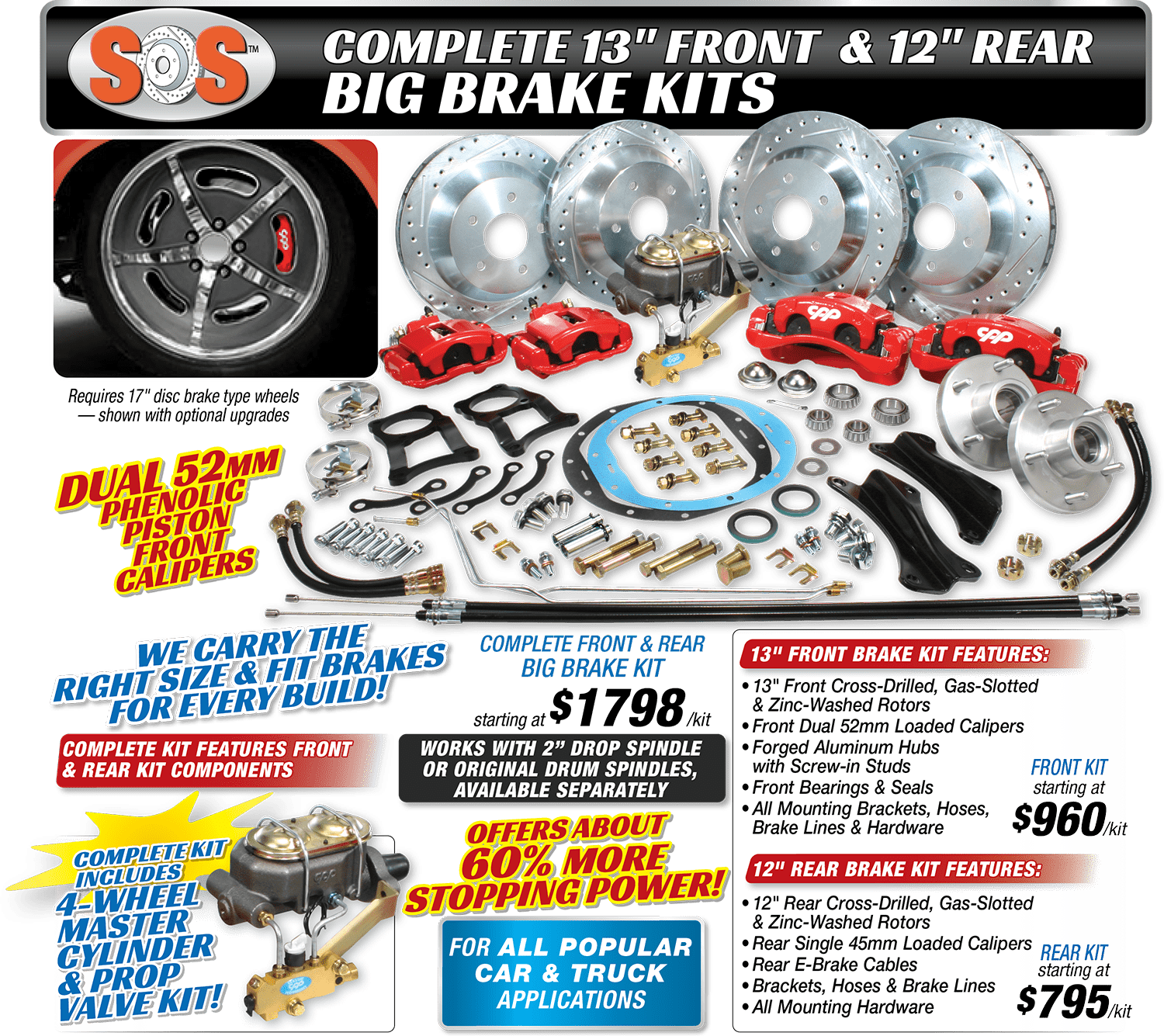
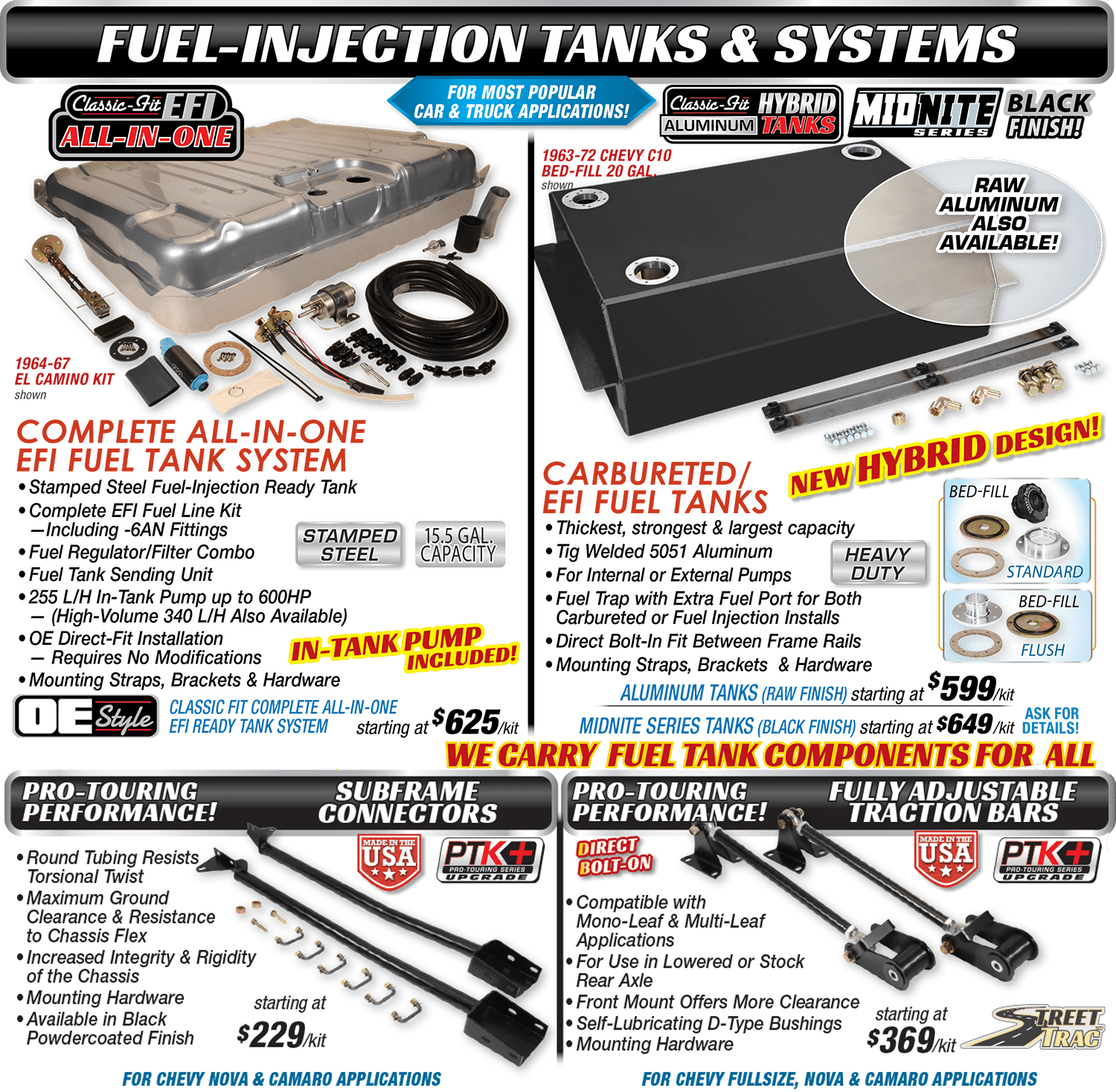
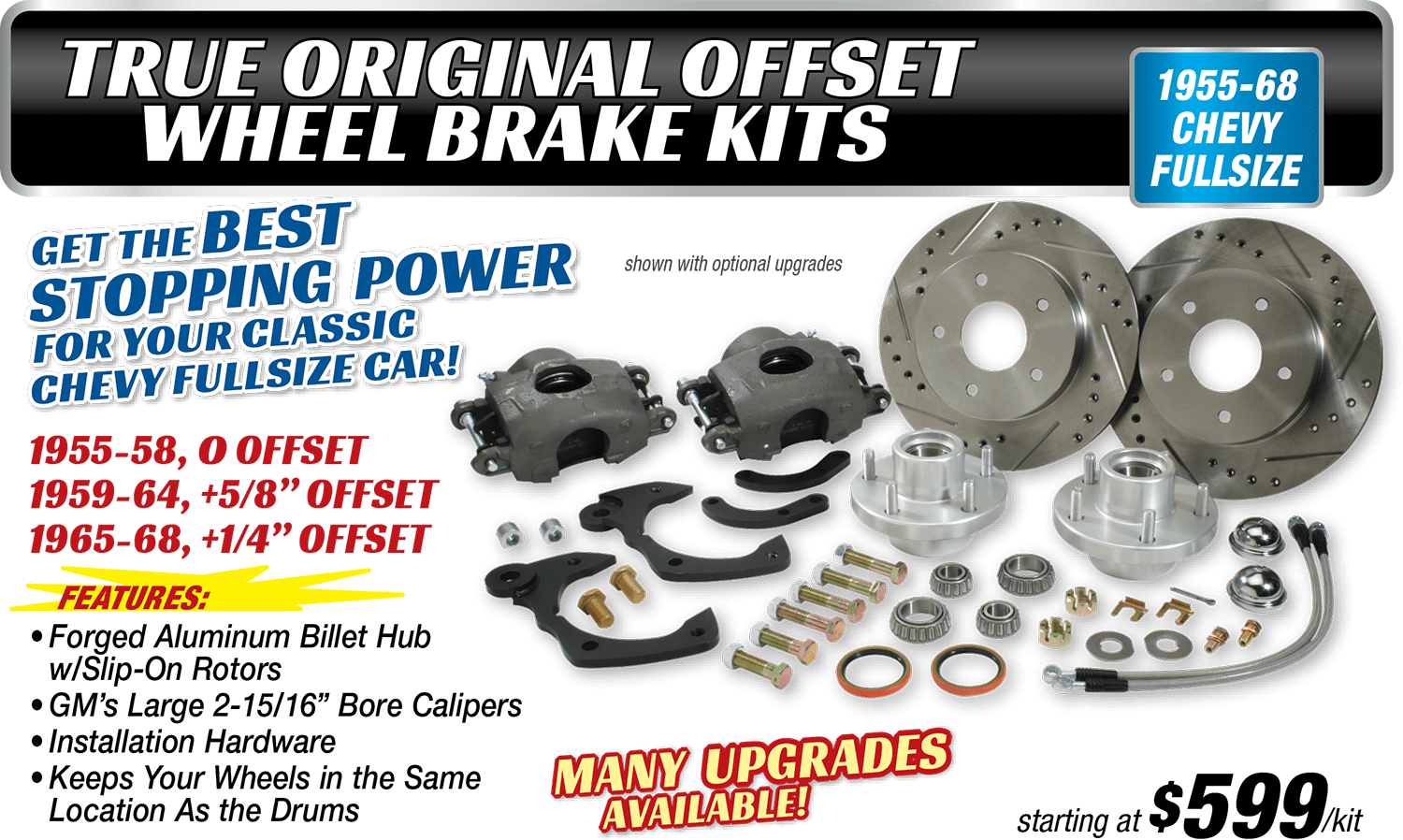
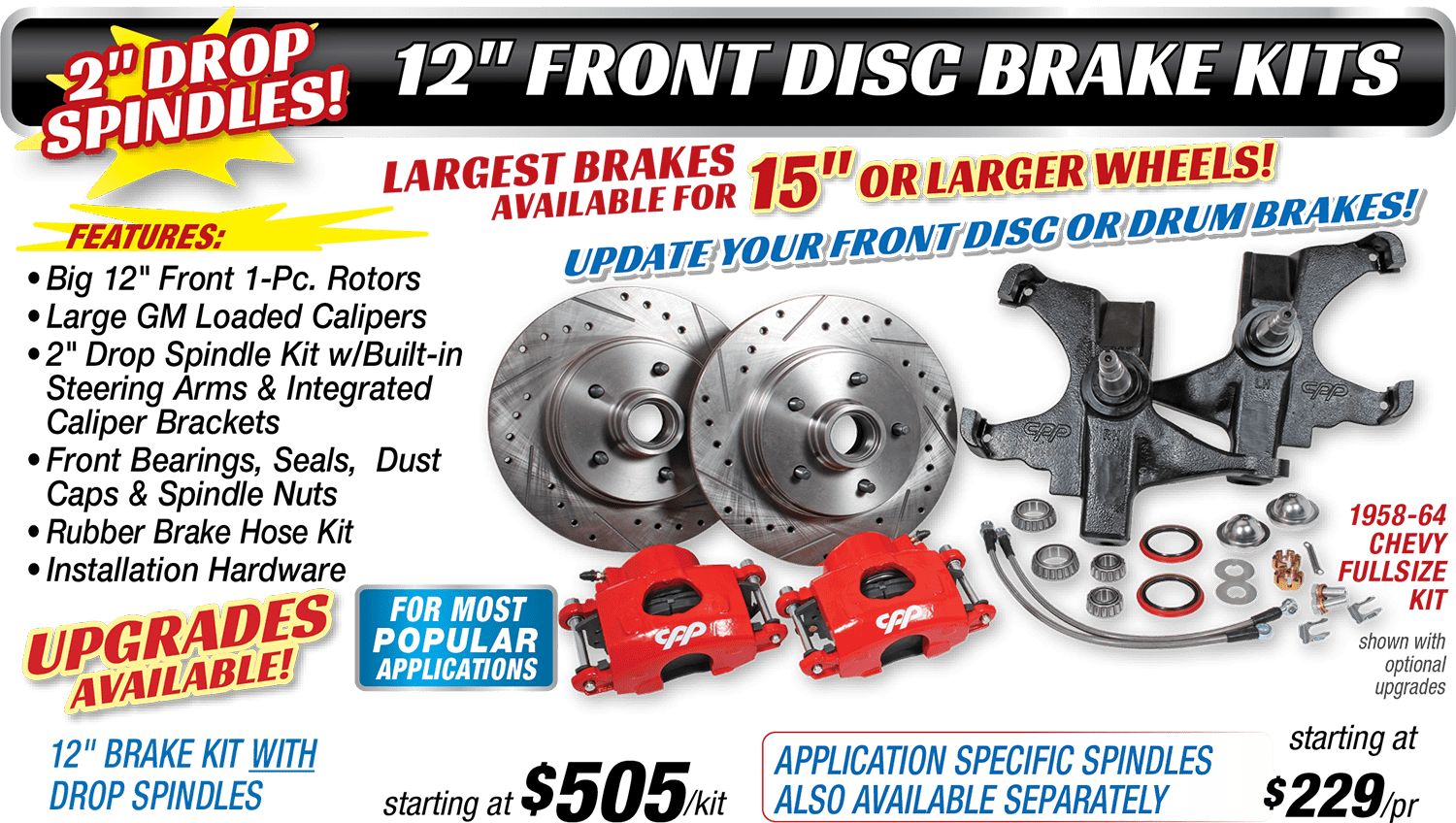
- CLASSIC PERFORMANCE PRODUCTS4-5, 89, 92
- DAKOTA DIGITAL91
- DETROIT SPEED & ENGINEERING47
- FITECH EFI85
- FORGELINE MOTORSPORTS73
- GOLDEN STAR CLASSIC AUTO PARTS7
- GOODGUYS ROD & CUSTOM ASSOCIATION47
- JEGS HIGH PERFORMANCE23
- LOKAR2
- NATIONAL STREET ROD ASSOCIATION69
- NEW PORT ENGINEERING89
- POWERMASTER PERFORMANCE77
- SCOTT’S HOTRODS85
- SPECIALTY AUTO PARTS USA, INC.77
- SPEEDTECH PERFORMANCE USA41
- THAT’S GREAT NEWS89
- TRIPLE CROWN OF RODDING, LLC49
- TUFF STUFF PERFORMANCE ACCESSORIES73
- VINTAGE AIR6
- WILWOOD ENGINEERING31