
 FEATURE
 IMAGES BY NOTSTOCK PHOTOGRAPHY
hese days it’s just about unheard of to find a first-gen Camaro for sale with unmolested sheetmetal that is as good as it appears from 10 feet away. Zoom in 10 inches and that skin begins to show hidden calluses from layers of filler and years of abuse. That adage stayed true for John van der Hulle when he bought this 1969 Camaro from a friend who knew of a dealer moving classic muscle cars as a side hustle. The pitch was seductive: A Z/28 with a hydraulic roller and solid bones. The kind of story that starts with good intentions and ends in an ugly reality.
“When I bought the car, the idea was to drive it for a year or two, then build it as a Pro Touring street machine,” John tells. “The engine wasn’t running well, so I tried a few things and nothing took. I was in the process of timing it and found the balancer was shot. I dug in further and discovered the engine was not a 355 hydraulic roller like I’d been told. It was just a clapped-out 350.”
By the end of that same weekend, the Camaro sat stripped to its bones, and the fairy tale was officially over. John discovered it was not in fact a Z/28. It was an X11 SS appearance package wearing badges it had not earned. Worse, it was a rust bucket hiding beneath shiny paint.
While the fresh sheetmetal was being hung, John was collecting parts with the enthusiasm of a man assembling his own future. He spent most of his life in motorsports. Endurance marine river racing, jet boats, dirt bikes, and off-road toys were part of life back home in New Zealand. He built his own engines for the boats, tuned them, and leaned on them hard. But a full car restoration at this level was a different animal.
Enter Dave Carnock of Carnock Creations in Des Moines, Iowa. The two met at the Goodguys Heartland Nationals. John explained his vision and shared a rendering of the car he had done by Street Rod Designs for the Camaro. Carnock was impressed with the direction John wished to take the Camaro. “Carnock spoke my language and we agreed on so many levels on so many things. I instantly knew he and his team were the right choice to move forward with on the build.”
By this time John had acquired most of the parts for the heart of the build. He configured the engine build with the help of Bob Beam at Brute Speed in Roanoke, Indiana. The direction was clear. This would not be a polite Pro Touring car. This would be a supercharged sledgehammer with little to no manners.
At the center sits an ERL Performance Superdeck 427ci mill, machined and assembled in Albany, Indiana. Bore measures 4.125 inches with a stout 4.00-inch stroke. The compression set at 9.5:1 to nicely play with boost. Inside spins a Callies Dragon Slayer crankshaft, Callies Ultra Rods, and Wiseco pistons. The camshaft is a Comp hydraulic roller with 0.614/624 lift, 277/293 duration, and a 114 LSA. LSA-ported cylinder heads feed the fire.
Up top the ProCharger F-1D supercharger force feeds the combination through a billet Motion Raceworks ICON throttle body and Plazmaman intake. Holley HP EFI handles fuel and spark duties with injectors, coil packs, and tuning precision. The accessory drive is ProCharger with cooling handled by a Meziere water pump, dual 14-inch Spal fans, and an Auto Rad aluminum radiator.
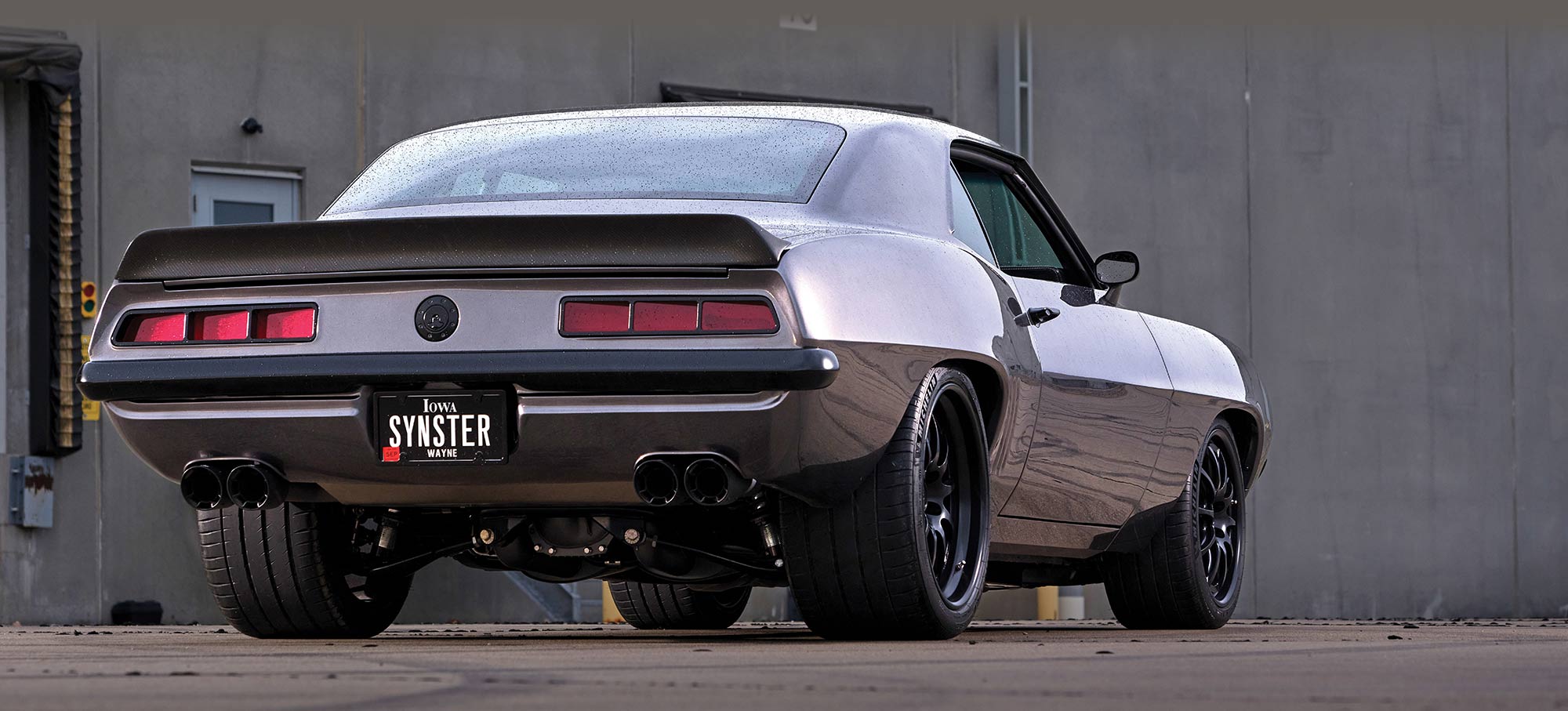
Exhaust exits through Ultimate Headers into a custom 3-inch system fabricated by Carnock Creations, capped with Borla Pro XS mufflers and carbon-fiber tips. The numbers tell the rest of the story. The conservative, pump-gas friendly tune was installed by Joe Keyman of Excessive Autosports in Sioux Falls, South Dakota. Even so, with 641 rwhp, it’s the kind of output that makes rear tires reconsider life choices.
Backing that boosted mill is an American Powertrain TREMEC T56 Magnum, shifted through an S1 sequential gearbox and clamped with a Ram Concept twin-disc clutch. A Precision Shaft Technologies driveshaft spins a late-model Camaro SS rear axle loaded with 3.91 gears and GForce axles. It’s a drivetrain built for road courses, dragstrips, and late-night industrial park therapy sessions.

Wilwood 14-inch rotors reside on all four corners—six-piston calipers up front and four-piston units in the rear. An ABS booster and proportioning valve give modern braking performance.
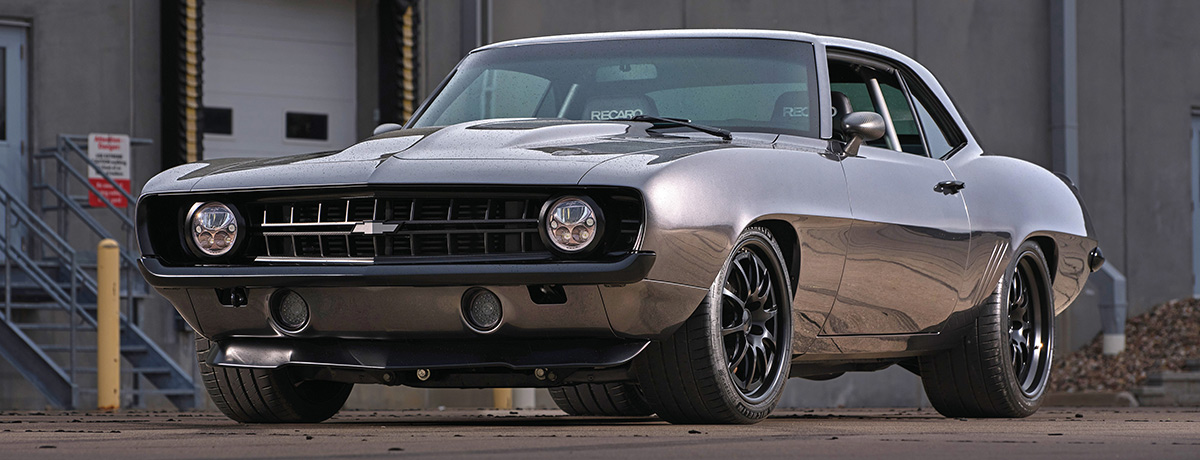
Forgeline GZ3R wheels measure 18×10 in front and 19×12 in the rear, wrapped in Michelin Pilot Sport rubber (275/35R18 front, 325/30R19 rear) fill the wheelwells with authority hinting that this Camaro is not here to pose.
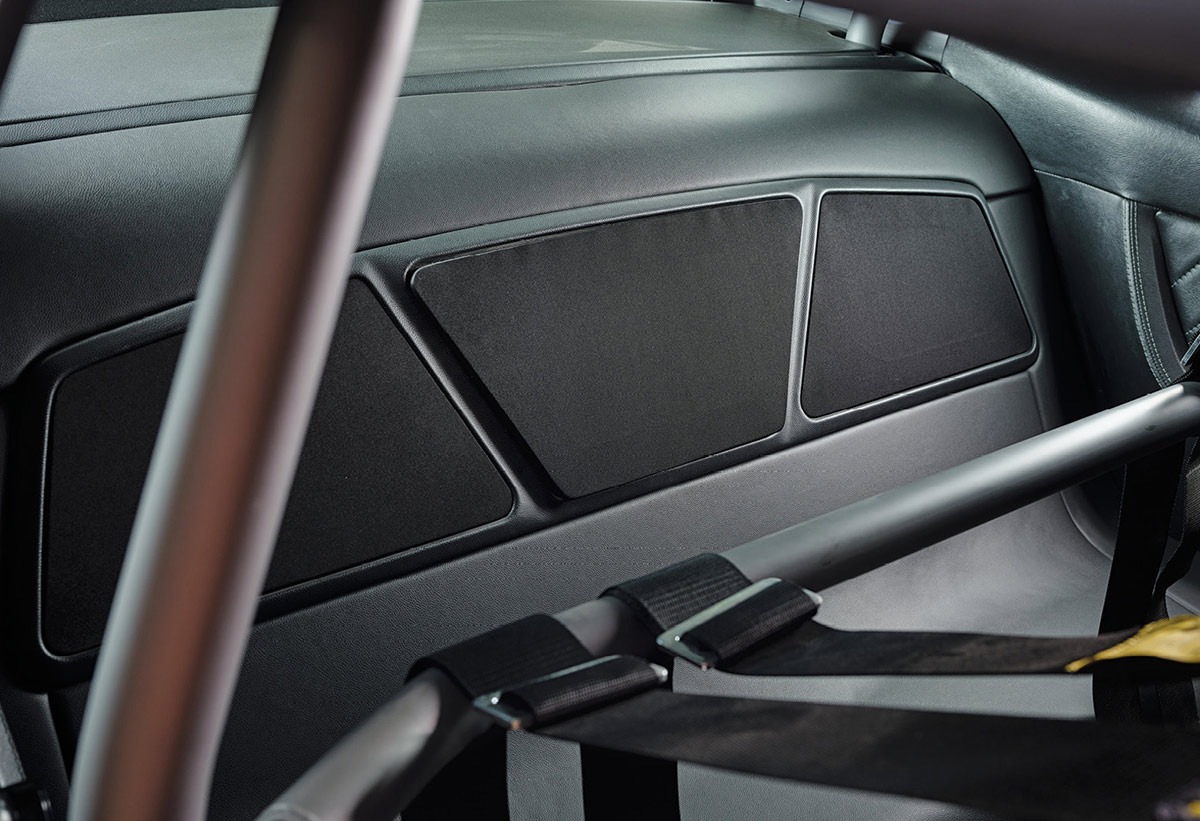
Inside, the cabin walks the line between track day and tailored lounge. TMI upholstery and dash components set the tone, with charcoal-colored German weave carpet underfoot. 515 Upholstery handled installation. Recaro Speed S seats hold the driver and passenger in place, anchored by Schroth Racing four-point harnesses tied to a Ridetech Tiger Cage. A Flaming River column supports a MOMO steering wheel while Lokar’s Clayton Machine Works pedals bring mechanical honesty to the driver interface. AutoMeter Carbon Fiber Ultra Lite gauges report the vitals.
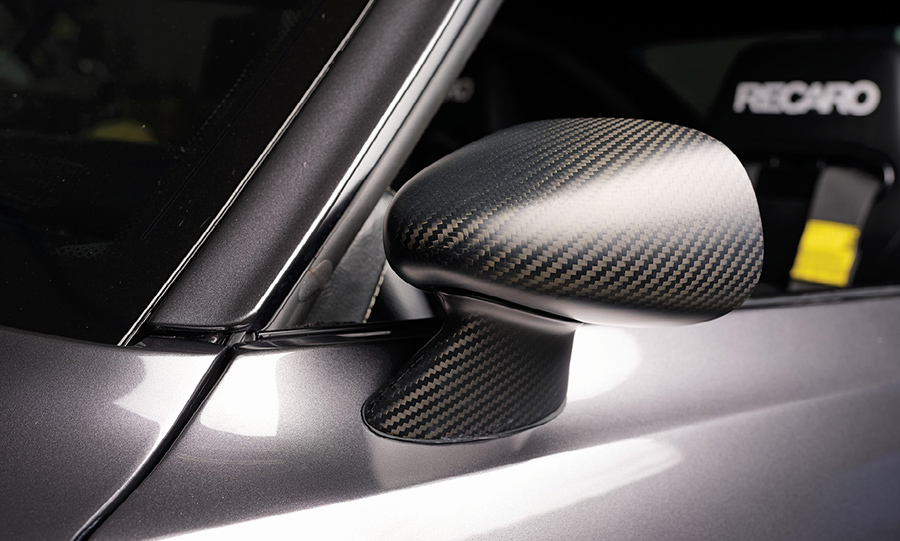
The exterior reflects John’s original intentions with disciplined restraint. Carnock handled bodywork and paint, laying down Sikkens custom-mix Charcoal base topped in House of Kolor clear. The hood remains stock but wears custom louvers and latches. The bumpers are custom tucked and play well with Eddie Motorsports door handles and Anvil Auto Bullet mirrors.
The build stretched over 11 years, between the sheetmetal at Carolton’s in Washington, coming back to Iowa, then at Carnock’s to be finished, it never drifted from its initial trajectory. “The quality of the build initially by Carlton, then taken to the next level by Carnock and his team is beyond anything I could have imagined,” John says.
The proof arrived at the Goodguys Lone Star Nationals in Texas where the Camaro made the Muscle Machine of the Year finals. John and Carnock drove the 100-mile reliability run, lapped Eagle Canyon Raceway, attacked the Goodguys AutoCross, roasted a set of Michelins in the burnout contest, and even made passes on the dragstrip.


John’s recipe for muscle car fun: Replace metal, add boost, then drive it like you mean it!


TECH
VEHICLE: 1969 Chevy Camaro
TYPE: ERL Superdeck
DISPLACEMENT: 427 ci
COMPRESSION RATIO: 9.5:1
BORE: 4.125
STROKE: 4.00
BUILDER: ERL Performance (Albany, IN)
MACHINE WORK: ERL
ROTATING ASSEMBLY: Callies Dragon Slayer crank, Callies Ultra rods, Wiseco pistons
CAMSHAFT: Comp hydraulic roller 0.614/0.624 lift, 0.277/293 duration, 114 LSA
CYLINDER HEADS: LSA ported
VALVETRAIN: Comp Cams shaft-mount rocker arms and War Hawk short-travel race hydraulic lifters
INDUCTION: Billet Motion Raceworks ICON 102mm throttle body, Plazmaman billet intake manifold
FUEL INJECTION: Holley HP
POWER ADDER: ProCharger F-1D, big pulley
EXHAUST: Ultimate Headers, custom 3-inch exhaust by Carnock Creations (Des Moines, IA), Borla Pro XS mufflers, carbon-fiber exhaust tips
VALVE COVERS: Billet Swiftek
AIR CLEANER: K&N
ACCESSORY DRIVE: ProCharger
ANCILLARIES: Meziere water pump, SPAL 14-inch fans, Auto Rad core support, aluminum radiator, intercooler and condenser, Mechman alternator, Motion Raceworks breathers, and catch can, Holley ignition, Taylor wires, Anvil Auto carbon-fiber inner fenders, Eddie Motorsports hood hinges
OUTPUT: 641 rwhp, 587 lb-ft torque on 91-octane pump gas
TRANSMISSION: American Powertrain TREMEC T56 Magnum
CLUTCH: Ram Concept 10.5 twin disc
SHIFTER: S1 sequential
DRIVESHAFT: Precision Shaft Technologies
REAR AXLE: Late-model Camaro SS, 3.91:1 gears, GForce axles
FRONT SUSPENSION: Art Morrison Enterprises GT Sport Subframe, C6 spindles, C6 control arms, QA1 double-adjustable coilover shocks, QA1 springs, AME GT Sport sway bar, Detroit Speed & Engineering rack-and-pinion steering
REAR SUSPENSION: AME Multilink IRS, QA1 double-adjustable coilover shocks, QA1 springs
WHEELS: Forgeline GZ3 18×10 front, 19×12 rear
TIRES: Michelin Pilot Sport, 275/35R18 front, 325/30R19
UPHOLSTERY: TMI
CARPET: Charcoal German Weave
INSTALLATION: 515 Upholstery (Des Moines, IA)
INSULATION: Dynamat
SEATS: Recaro Speed S
SAFETY HARNESS: Schroth Racing four point
ROLLCAGE: Ridetech Tiger Cage
STEERING: Flaming River column, MOMO steering wheel
PEDALS: Lokar/Clayton Machine Works
DASH: TMI
DOOR PANELS: TMI
INSTRUMENTATION: AutoMeter Carbon Fiber Ultra Lite
WIRING: American Autowire by Carnock Creations
HVAC: Vintage Air
CONTROL PANEL: Vintage Air
KICK PANELS: The Shop LLC
REAR PACKAGE TRAY: The Shop LLC
ENTERTAINMENT SYSTEM: Pioneer head unit, JL Audio HD amplifiers, Focal speakers, JL Audio 10-inch subwoofer supplied by The Shop LLC
AUDIO INSTALLATION: Jack Carnock at Carnock Creations
BODYWORK AND PAINT: Carnock Creations
PAINT: Sikkens Custom Charcoal base, House of Kolor clear
HOOD: Stock with custom louvers, custom hood latches
GRILLE: Steinhauser Design carbon fiber
INNER FENDERS: Anvil Auto carbon fiber
BUMPERS: Custom tucked
CHIN SPOILER: Spoilers by Randy
REAR SPOILER: Anvil Auto carbon fiber
HEADLIGHTS: Fesler
TAILLIGHTS: Fesler
DRIVING LIGHTS: Fesler
DOOR HANDLES: Eddie Motorsports
GLASS: Fesler flush-mount
SIDE MIRRORS: Anvil Auto carbon-fiber Bullet
BODY MODIFICATIONS: Custom cowl, semi-shaved driprails, custom tail panel, relocated fuel filler, deleted trunk lock