






Interior Makeover
The 6L80E
Transmission

Preview Issue





 TOC
TOC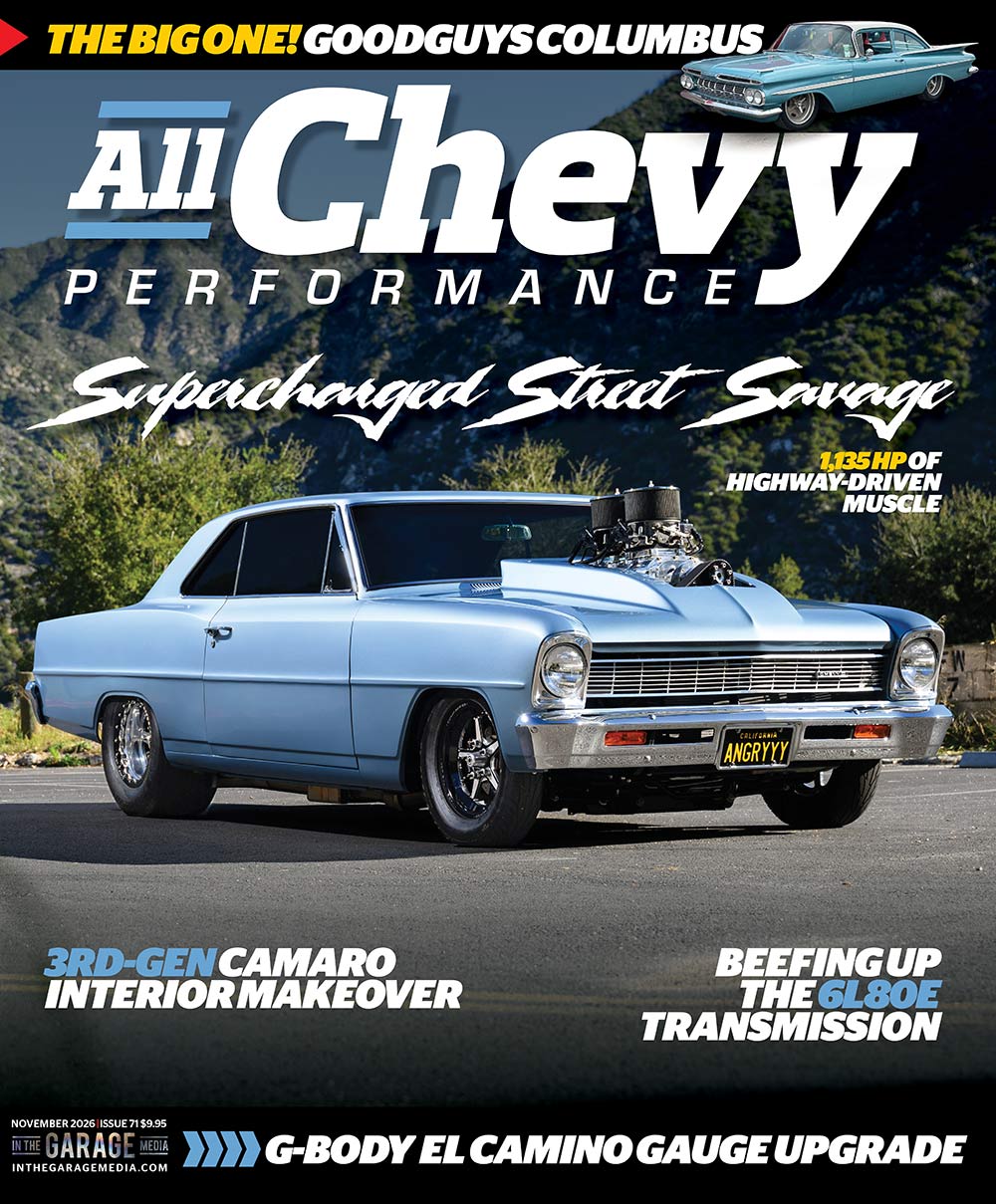
Cover image by Luke Munnell









“Rotten” Rodney Bauman, Jefferson Bryant, Tommy Lee Byrd, Ron Ceridono, Ron Covell, Grant Cox, Fuelish Media, John Gilbert, Tavis Highlander, Jeff Huneycutt, Barry Kluczyk, Scotty Lachenauer, Patrick Lauder, Jason Lubken, John Machaqueiro, Ryan Manson, Jason Matthew, Josh Mishler, NotStock Photography, Todd Ryden, Jason Scudellari, Jeff Smith & Chuck Vranas – Writers and Photographers
Travis Weeks Advertising Sales Manager
Patrick Walsh Sales Representative
ads@inthegaragemedia.com
AllChevyPerformance.com
ClassicTruckPerformance.com
ModernRodding.com
InTheGarageMedia.com
info@inthegaragemedia.com
Editorial contributions are welcomed but editors recommend that contributors query first. Contribution inquiries should first be emailed to info@inthegaragemedia.com. Do not mail via USPS as we assume no responsibility for loss or damage thereto. IN THE GARAGE MEDIA, INC. reserves the right to use material at its discretion, and we reserve the right to edit material to meet our requirements. Upon publication, payment will be made at our current rate, and that said, payment will cover author’s and contributor’s rights of the contribution. Contributors’ act of emailing contribution shall constitute and express warranty that material is original and no infringement on the rights of others.

Copyright (c) 2026 IN THE GARAGE MEDIA, INC.
PRINTED IN U.S.A.


 firing up
 BY NICK LICATA
here was a point in time when I wanted my car to be the loudest, rowdiest muscle car on the planet, or at least on my block. I wanted it to announce its presence with authority from afar. Judging by the looks I got from my neighbors, mission accomplished. My exhaust was loud and offensive. I loved it … for about 2 weeks. Then the novelty wore off.
As I’ve gotten older, what was once about being tactical has now become more about being practical. I still like the sound of a healthy V-8 settling into a lumpy idle, and it doesn’t bother me if the exhaust gets loud when the tach swings north, but when it’s booming while cruising at 1,900 rpm, that’s no longer my idea of a good time.
Same goes for the suspension. I used to drive my Camaro with the suspension set on “kill” at all times. Every freeway expansion joint felt like a speed bump. Apparently, I thought an autocross would suddenly break out while driving on the 57 freeway. These days, I prefer my suspension set up with the capability of carving corners without riding like a steel floor jack with license plates.
Back in the day, buying a car meant making a beeline for the nearest audio shop before anything else. Every vehicle needed a kick-ass aftermarket system, complete with a subwoofer shaking the trunk—and in the case of my truck, one stuffed behind the seat. Don’t get me wrong, I still like my car audio to have some punch but sometime along the way I became the guy who instinctively turns the volume down three houses before pulling into my driveway. What’s that about? Once again, age seems like the culprit.

 PARTS BIN


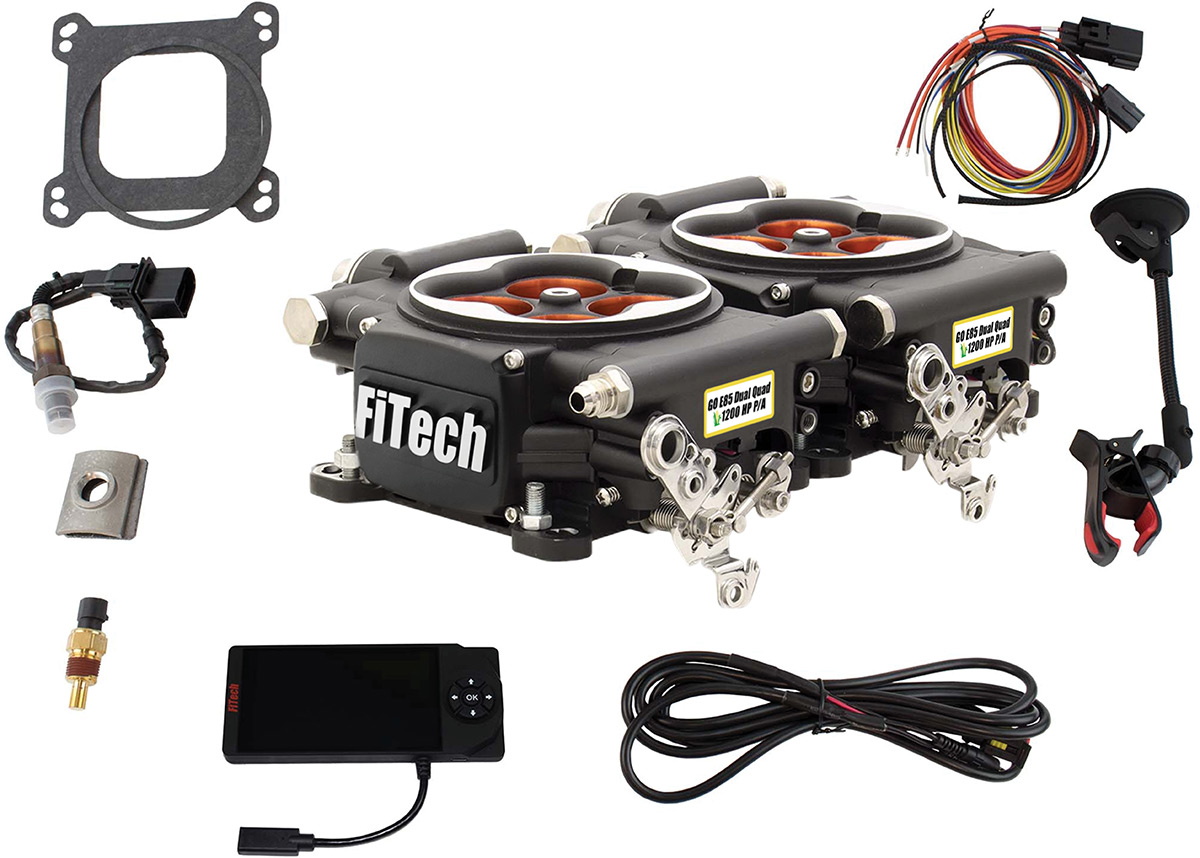
For more information, contact FiTech Fuel Injection by calling (951) 340-2624 or visit fitechefi.com.

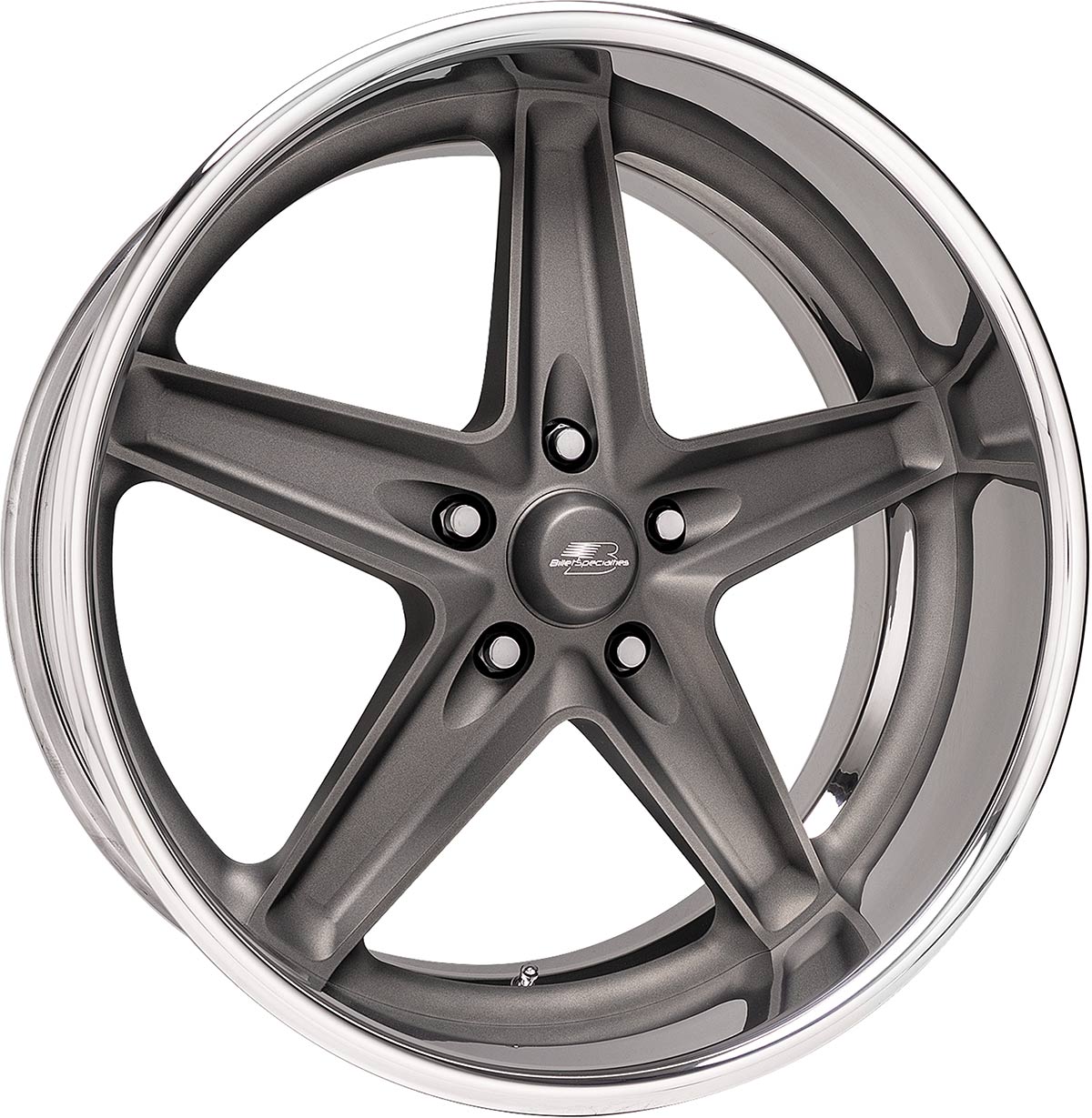
For more information, contact Billet Specialties by calling (866) 240-4182 or visit billetspecialties.com.

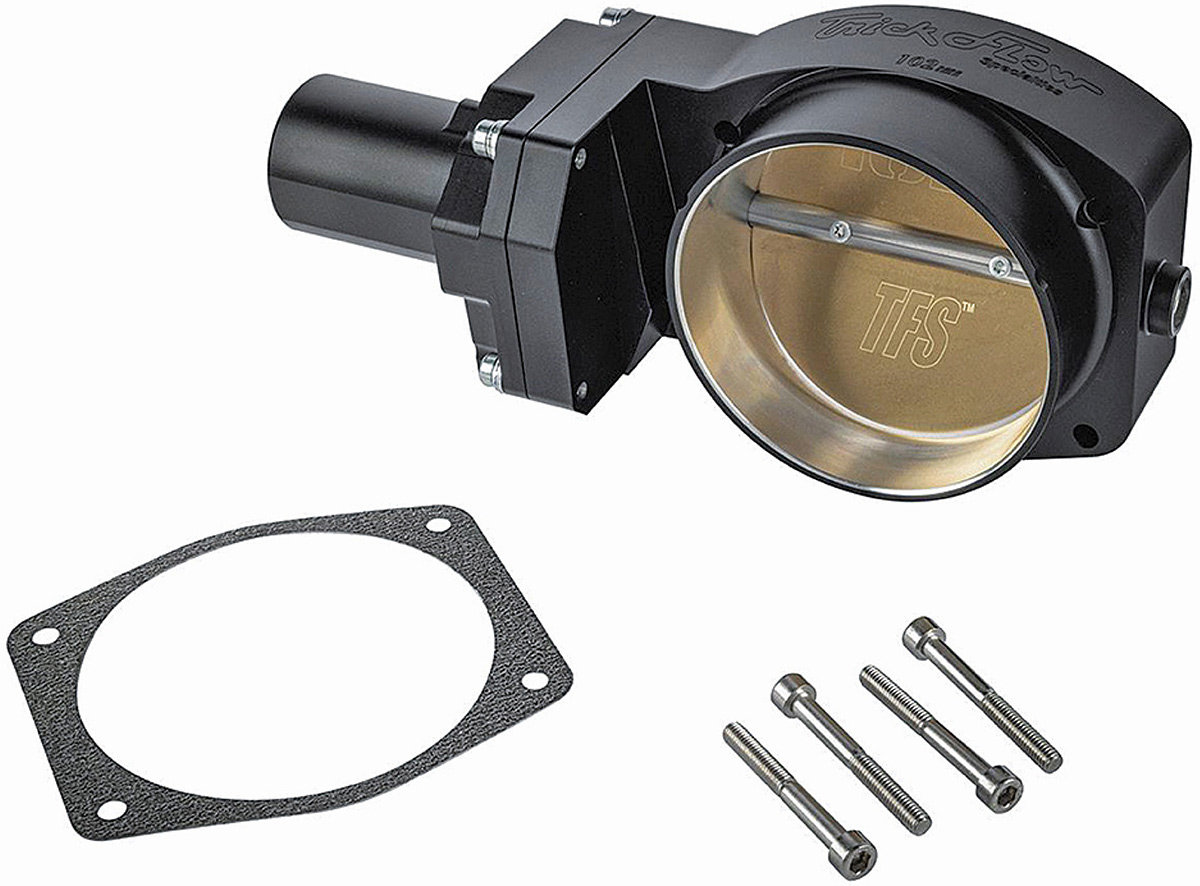
For more information, contact Summit Racing by calling (800) 230-3030 or visit summitracing.com.


 CHEVY CONCEPTS

 Text & Rendering by Tavis Highlander
his concept simplifies things a little bit by not going overboard in any one area. The body would stay totally stock and would be paired with a factory color. Marina Blue just pops on this classic 1967 Chevelle, so let’s run with that.
The stance is where the focus really narrows in. Fifteen-inch Torq Thrusts are a classic choice that look the part for our theme. Pair those with some Coker Pro-Trac series tires and things are really heading down memory lane!
How you handle the suspension setup would be up to you and your budget. Tuck some rear tire with a gentle rake like I’ve shown here or keep it closer to stock. Other modifications would be kept to functional upgrades. Aftermarket suspension, sound deadener, and a few other parts to make it reliable and driver friendly are all you need. Keep it simple and drive it!
 FEATURE
 IMAGES BY LUKE MUNNELL
ome owners take their projects down to the bare bones in one fell swoop while others allow their projects to evolve over time, changing personalities with every new engine, suspension upgrade, and late-night wrenching sessions. Such was the case with Jarred Connor’s blown 1966 Chevy Nova that took a mere 26 years to get where it is today.
Calling it a 26-year build sounds a bit misleading as the car has rarely stood still. It’s been a constant work in progress, serving as a father-and-son project, a weekend race car, street cruiser, a testbed for increasingly wild combinations, and finally, the blown big-block bruiser you see here. Every version was enjoyed before the next, making the journey every bit as rewarding as the destination.

 TECH
TECH
 IMAGES BY THE AUTHOR
t has been two decades since General Motors introduced the 6L80E six-speed automatic transmission. Developed for trucks and higher-performance cars, including the Corvette, it was a clean-sheet design—unlike almost all previous GM electronically controlled four-speed automatics, which were based on earlier versions of hydraulically controlled gearboxes.
Compared to a 4L80E, the 6L80E (and later 6L90E) is approximately the same length, but a bit wider and about 20 pounds heavier. The gearbox is shifted via performance algorithms in the internal, adaptive, 32-bit Transmission Control Module. They’re designed to minimize upshifts during closed-throttle driving to prevent unnecessary shifting. Three-way solenoids and variable-bleed solenoids are employed to optimize shift quality.




 FEATURE
 IMAGES BY PATRICK LAUDER
ome cars are built to win trophies. Others are built to run numbers. A few become family heirlooms made of steel, gasoline, and shared memories. Steve Jackson’s 1955 Chevy 210 falls squarely into that last category.
The story, however, didn’t begin with the ’55. It started years earlier in a detached garage behind Steve’s childhood home. His father was drag racing before Steve was born, and some of his earliest memories are of watching his dad wrench on a 1957 Chevy race car while preparing for another weekend at Fremont Raceway. Those trips to the dragstrip and long hours spent around hot rods ignited a passion that never faded. By the time Steve was old enough to drive, cars were woven into the fabric of family life.
To understand why this bright red Tri-Five means so much to Steve, you have to go back nearly four decades to a field somewhere in the Bay Area.
 TECH
TECH
 BY RON COVELL
he technology behind modern street machines continues to evolve, and this stunning custom-built 1956 Chevrolet, recently completed by ZRodz and Customs of Knox, Indiana, is a showcase of what’s possible at the cutting edge of the craft.
Zach Ingram, founder of ZRodz, has made sustained investments in 3-D scanning and printing, CAD design, CNC machining, and advanced carbon-fiber fabrication. In this first installment, we’ll explore the engine, chassis, drivetrain, and underhood panels of this award-winning build. Future articles will go deeper into the details.
The guiding philosophy from the start was to preserve the classic proportions of the 1956 Chevy, while refining its details for a more elegant presentation. The most dramatic changes were reserved for the engine compartment, the interior, and the undercarriage. Eric Brockmeyer produced a series of renderings early in the process that set the visual direction for the build.
 FEATURE
 IMAGES BY THE AUTHOR
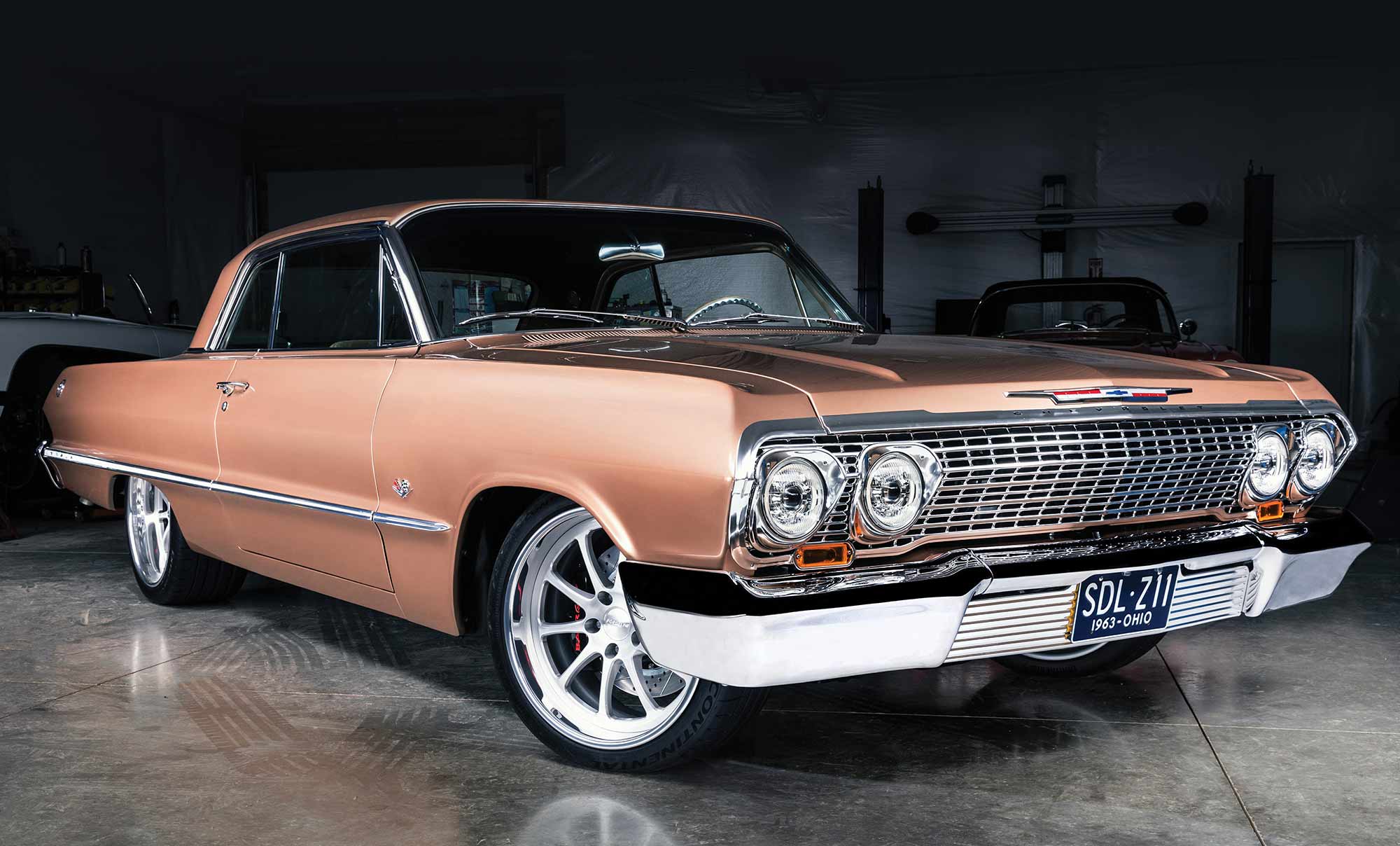
ost car enthusiasts can tell you about their first car, but very few can say they still own it. How many folks can point back to the early 1960s and make that claim? Allen Haire can. In 1963 he walked into a dealership and bought his first brand-new car. “I was always a Chevy guy, and I loved that new 1963 Chevy Impala with a 409,” he states. A lifelong Bowtie loyalist, he chose it not just for its looks but for its performance potential: a four-speed transmission and the torque-heavy-equipped W-series engine that had already developed a reputation among street racers. As part of his thought-out purchase, he bypassed the SS option, which was primarily an appearance option that included bucket seats, a center console, and special badging so that he could get the much-desired bench seat. RPO Z11 was very much on his mind but way out of his budget and accessibility level. Those lightweight cars were not something that the average person could simply find on a showroom floor or order without significant “insider” help.
IMAGES BY THE AUTHORost car enthusiasts can tell you about their first car, but very few can say they still own it. How many folks can point back to the early 1960s and make that claim? Allen Haire can. In 1963 he walked into a dealership and bought his first brand-new car. “I was always a Chevy guy, and I loved that new 1963 Chevy Impala with a 409,” he states. A lifelong Bowtie loyalist, he chose it not just for its looks but for its performance potential: a four-speed transmission and the torque-heavy-equipped W-series engine that had already developed a reputation among street racers. As part of his thought-out purchase, he bypassed the SS option, which was primarily an appearance option that included bucket seats, a center console, and special badging so that he could get the much-desired bench seat. RPO Z11 was very much on his mind but way out of his budget and accessibility level. Those lightweight cars were not something that the average person could simply find on a showroom floor or order without significant “insider” help.
 TECH
TECH
 IMAGES BY RYAN FOSS VIDEOGRAPHY BY RYAN FOSS PRODUCTIONS
or some of us, a project car might mean a multi-year endeavor involving everything from paint and body to suspension work, engine assembly, upholstery, fit, and finish. The build is the journey, and the finish is the end. For others, the build is a means to an end, a task to be completed as quickly as possible with the goal of enjoying driving said project sooner than later.
Given the age of a majority of vehicles we cover here at All Chevy Performance, the latter is the less likely scenario, as it’s near impossible to stumble upon a running, driving 1969 Chevelle that only needs a little TLC and not a complete rebuild. It’s not 1980 and most of what we would consider classic muscle are over 50 years old. But as the years go by and the market shifts, vehicles from other, more recent decades begin to look more and more appealing.
For instance, take Ryan Foss’ recently acquired 1992 Chevy Camaro. For years, this would have been considered too new for most classic car shows and magazines. But given the car is now 34 years old, it’s hard to argue it not qualifying as such. And being some 20-plus years younger than the aforementioned Chevelle means that it is possible to still find running, driving examples in the wild. For Foss, his situation required such a vehicle, as his idea of a project is not spending the next decade wrenching away.
 FEATURE
 IMAGES BY PATRICK LAUDER
ometimes the best project cars start with a carefully planned search. Other times, they begin with a leap of faith that fails to stick the landing.
For Chris Corona, it was a little of both.
Long before the striking supercharged 1966 Nova SS sitting before you existed, Chris was just another teenager who wanted a muscle car but lacked the budget to buy one. Roughly 30 years ago he scraped together $250 and dragged home a tired 1968 El Camino. Calling it “rough” would be generous, but to Chris it was an education that started outside the classroom.
“I couldn’t afford a cool muscle car back in my high school days, so I had to settle for the Elco,” Chris says. “It was way before YouTube, so I had to learn everything by trial and error. My dad helped when I got stuck, and I’d ask friends questions whenever I could. I made plenty of mistakes, but that’s how I learned.”
 TECH
TECH
 IMAGES BY DAVE STOKER
hevrolet’s G-body series of vehicles were unique in that they had the basic ingredients of a performance car. They were an intermediate-size, rear-wheel-drive vehicle with a full perimeter frame, the last of the sort offered by General Motors. Although the basics were there, G-bodies were not often thought of as performance cars when new, as the only V-8 engine options were the anemic 305 or, even worse, the 267. However, thanks to the creativity on the part of several race teams, G-bodies were extremely successful in NASCAR during the late ’70s and early ’80s. Today G-bodies are gaining popularity not only because they’re available and affordable but their performance potential is being rediscovered. These cars are naturals for LS swaps. There are easily installed performance upgrades available, including suspension components and direct-fit gauges from Classic Instruments.




 FEATURE
 IMAGES BY THE AUTHOR
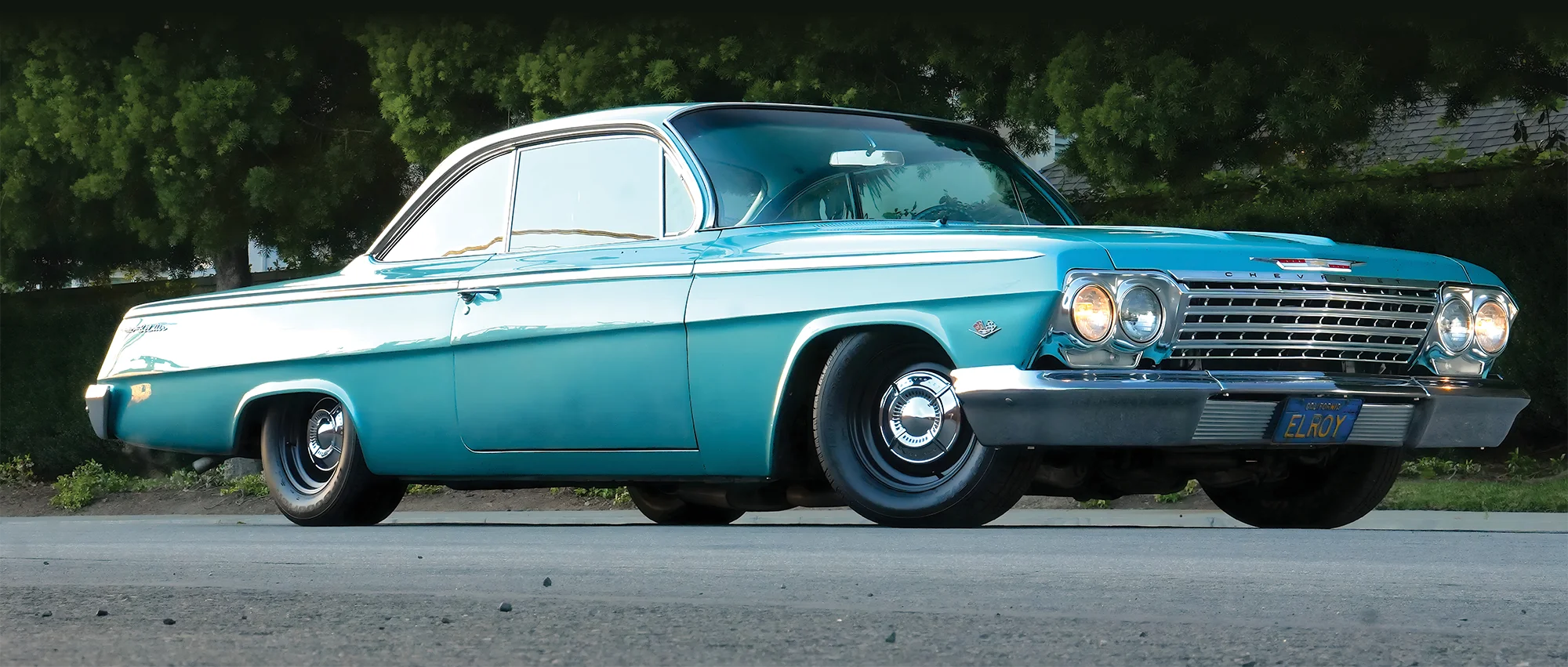
hen a lot of people moved out of California, Scott Toth moved in. We guess you could say he’s a California boy at heart who was born in the wrong place. At least he got here as soon as he could, and oh boy, did he buy into the SoCal lifestyle. The 55-year-old teenager runs a pool service and repair business (a Cali business if there ever was one) in Huntington Beach, California, and when he’s not hanging around swimming pools or hanging ten over the Pacific from one of his many surfboards, he can be found working on his 1962 Chevy bubbletop or cruising along PCH with it.

 Event
Event


 IMAGES BY THE AUTHOR
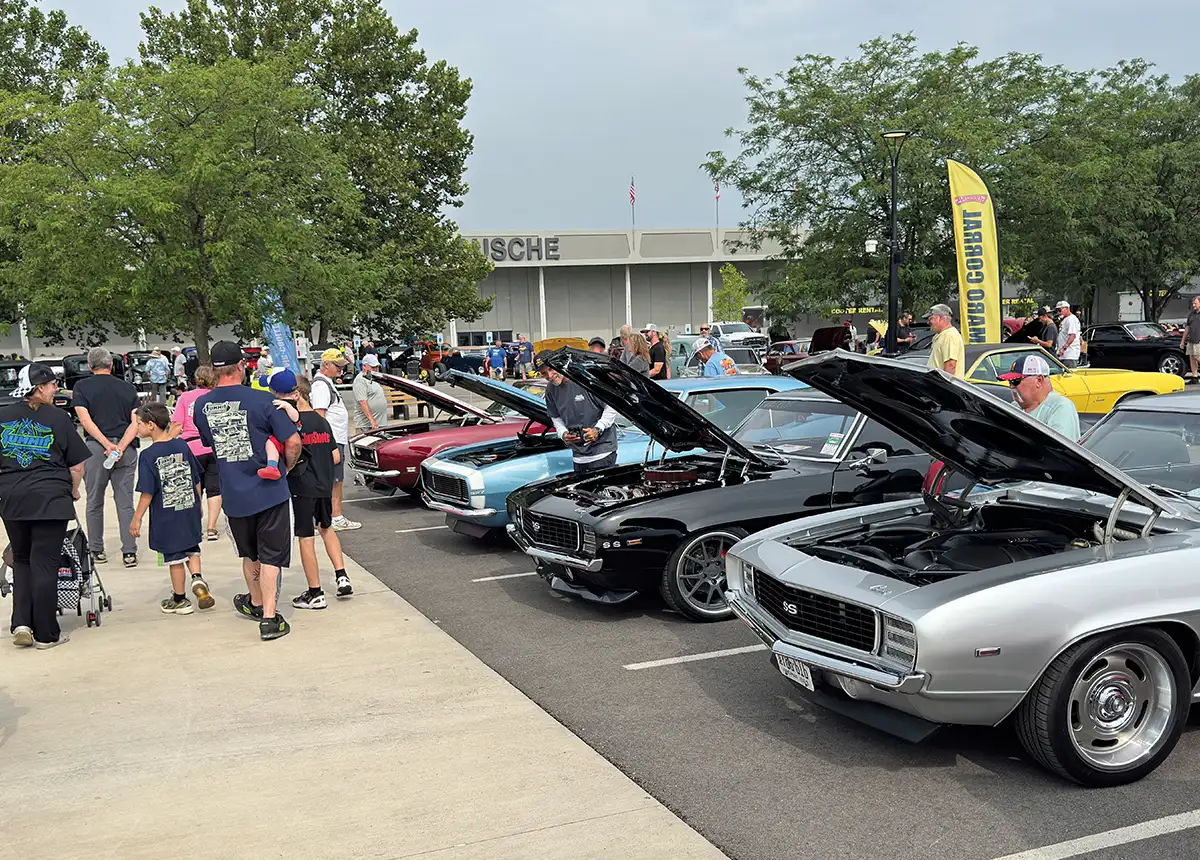
ost folks who are into the car show scene, especially throughout the Midwest, know that July means one thing: Goodguys Columbus. Now in its 28th year, it’s simply known as “The Big One.” The event hardly needs an introduction as its history speaks for itself. Held at the Ohio Expo Center, this year’s gathering fell on the weekend of July 10-12 and once again lived up to its reputation as one of the premier hot rod events in the country. As always, Chevy muscle cars came out in big numbers.
Columbus is especially significant because it’s where the Goodguys 2026 Forgeline Street Machine of the Year and Classic Instruments Street Rod of the Year are crowned. Needless to say, the heavy hitters came out swinging. The nation’s best builders showed up with projects they’ve spent years perfecting, all hoping to take home one of the hobby’s most coveted awards and earn recognition for building a vehicle that raises the bar to new heights.


Advertiser
- Aeromotive, Inc.89
- American Autowire45
- Art Morrison Enterprises21
- Auto Metal Direct9
- Automotive Racing Products7
- Billet Specialties81
- Borgeson Universal Co.43
- Classic Industries29
- Classic Performance Products4-5, 89, 92
- Custom Autosound73
- Dakota Digital91
- Eddie Motorsports69
- FiTech EFI69
- Flaming River Industries27
- Forgeline Motorsports71
- Goodguys Rod & Custom Association59
- JEGS High Performance37
- Lokar2
- National Street Rod Association53
- Powermaster Performance81
- Scott’s Hotrods71
- That’s Great News89
- Trick Flow Specialties73
- Vintage Air6
- Wilwood Engineering11

