






2ND-Gen Camaro Sound
System Installation
Installing & Tuning
8-Stack Injection
2ND-Gen Camaro Sound System Installation
Installing & Tuning 8-Stack Injection

Preview Issue






 TOC
TOC
Cover image by Fuelish Media









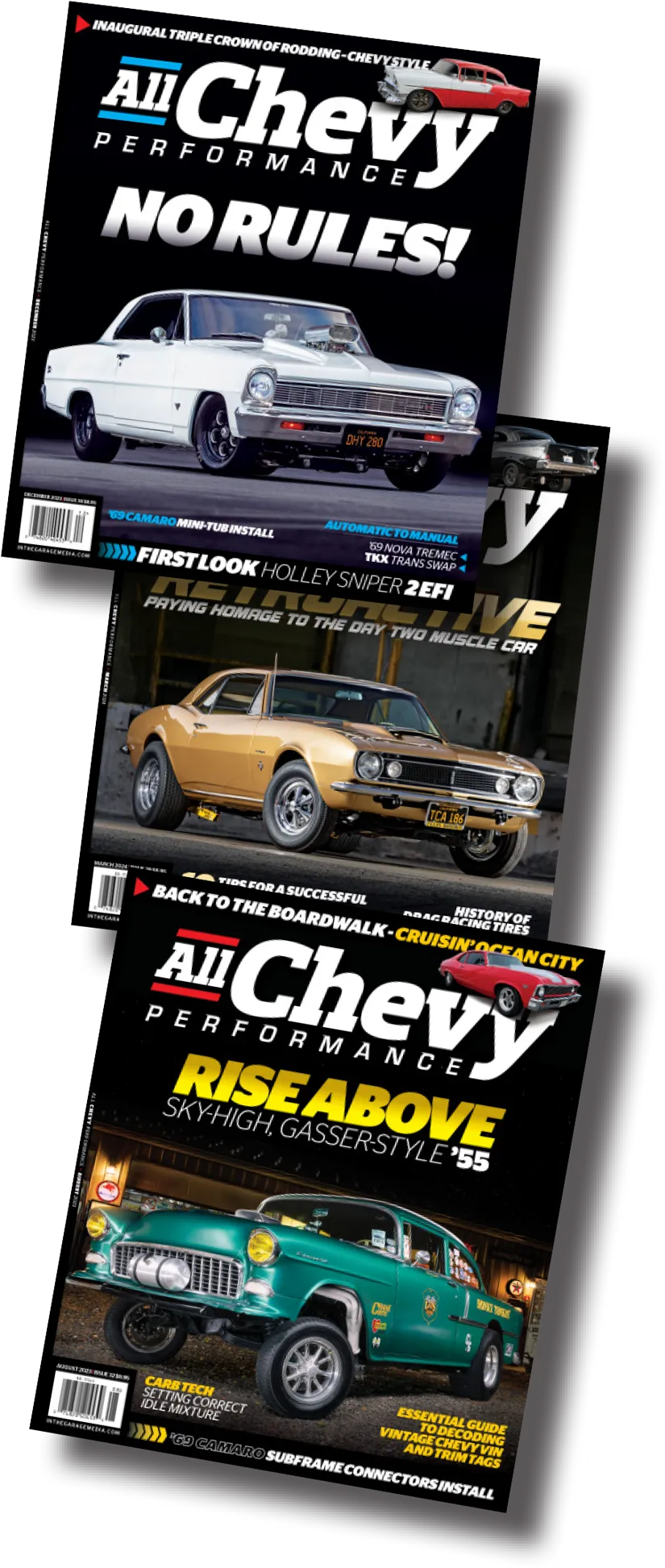
“Rotten” Rodney Bauman, Jefferson Bryant, Tommy Lee Byrd, Ron Ceridono, Ron Covell, Grant Cox, Fuelish Media, John Gilbert, Tavis Highlander, Jeff Huneycutt, Barry Kluczyk, Scotty Lachenauer, Patrick Lauder, Jason Lubken, John Machaqueiro, Ryan Manson, Jason Matthew, Josh Mishler, NotStock Photography, Todd Ryden, Jason Scudellari, Jeff Smith & Chuck Vranas – Writers and Photographers
Travis Weeks Advertising Sales Manager
Patrick Walsh Sales Representative
ads@inthegaragemedia.com
AllChevyPerformance.com
ClassicTruckPerformance.com
ModernRodding.com
InTheGarageMedia.com
info@inthegaragemedia.com
Editorial contributions are welcomed but editors recommend that contributors query first. Contribution inquiries should first be emailed to info@inthegaragemedia.com. Do not mail via USPS as we assume no responsibility for loss or damage thereto. IN THE GARAGE MEDIA, INC. reserves the right to use material at its discretion, and we reserve the right to edit material to meet our requirements. Upon publication, payment will be made at our current rate, and that said, payment will cover author’s and contributor’s rights of the contribution. Contributors’ act of emailing contribution shall constitute and express warranty that material is original and no infringement on the rights of others.

Copyright (c) 2026 IN THE GARAGE MEDIA, INC.
PRINTED IN U.S.A.


Cleveland, OH
(216) 281-8777

 firing up
 BY NICK LICATA
ake a walk through any car show or cruise night and start counting. Before long you’ll notice a pattern: The Bowties usually outnumber everything else. Ford, Pontiac, and Mopar all have their place in the muscle car universe, but when it comes to population, the sheer numbers of Chevrolets on hand speak for themselves.
Ford and Mopar certainly delivered legendary high-performance models back in the day, but Chevy’s dominance of accessibility due to volume is unmatched. Being a Chevy guy and editor of this magazine doesn’t mean I’m not a fan of other brands. I like ’em all; it’s just that the non-Chevy crowd tends to occupy the smaller corner of the parking lot.
This is due to a number of reasons: One is the legendary small-block V-8. Introduced in 1955, this engine revolutionized the industry. It was compact, light, affordable, and had the potential to make a lot of power. Because GM produced tens of millions of these engines, parts became readily available. Whether you are entertaining a budget build or a high-end performance machine, the small-block offered plug-and-play versatility that Ford or Mopar couldn’t match.
Another reason is production numbers. In the “golden era,” Chevy created a massive amount of vehicles. The Camaro, Chevelle, and Nova, not to mention the Tri-Fives, sold in high volumes, so a robust supply of used parts remained available for decades, giving rise to the vast aftermarket ecosystem. Today, you can pretty much build an entire Chevy muscle car using only aftermarket parts, as they are plentiful and affordable.

 PARTS BIN



For more information, contact Ridetech by calling (812) 482-2932 or visit ridetech.com.


For more information, contact Summit Racing by calling (800) 230-3030 or visit summitracing.com.

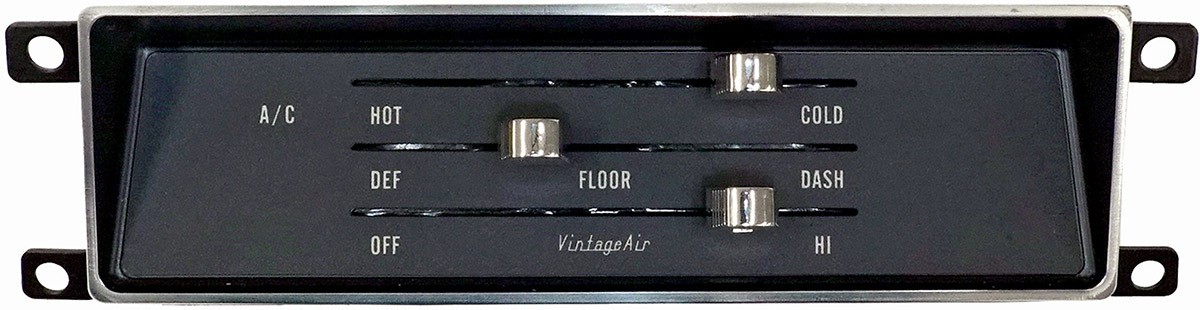
For more information, contact Vintage Air by calling (800) 862-6658 or visit vintageair.com.

 CHEVY CONCEPTS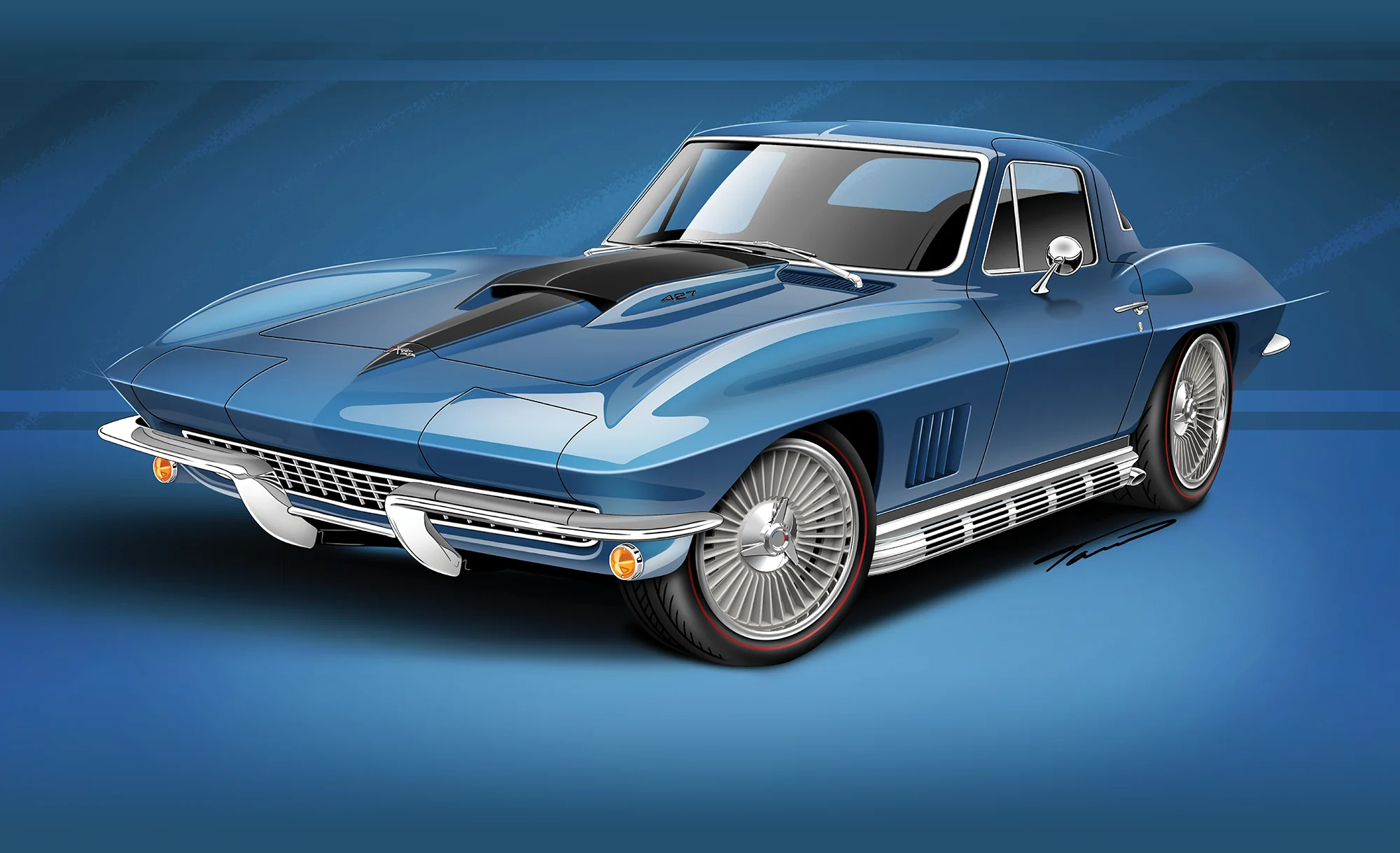


 Text & Rendering by Tavis Highlander
ome classic combinations will just work for all of time. One such combo is a 1967 Corvette with a stinger hood and side pipes. Killer Hot Rods has put together a plan to preserve that classic look while also making the whole package much more enjoyable to drive. The foundation will be a Roadster Shop SPEC 7 chassis with IRS. Underhood will be a BluePrint LS Compatible 427 with retro styling.
On the outside, the body will be Marina Blue with a black stripe. Side pipes look like OEM but will actually be the path for electronic cutouts around the Borla mufflers. Large 14-inch Baer rotors with six-piston calipers necessitate bigger wheels to clear them. An 18- and 19-inch combo of custom-machined turbine-style wheels with three-spoke knockoff center caps are in the works to complete the whole package.
 FEATURE
 IMAGES BY THE AUTHOR
orking on a custom car of your own is always a gratifying experience, but the process can be much more enjoyable when you include a couple of your best friends. This 1967 Chevy Nova wagon was a collaborative effort by a group of three pals: Mike Wahl, Manny Llamas, and Jose Ybarra—guys who grew up in Southern California’s custom car culture. Now, if you are familiar with these guys, then you know that whatever they pour their time and effort into, it’s bound to be killer!


 TECH
TECH IMAGES BY THE AUTHOR
his is no fabricated war story. The potentially fatal incident we will describe happened to a good friend at the dragstrip. He was at a local track in Texas with his two young sons. They had been sitting in the wooden grandstands watching the races while waiting for their car to cool down. After watching a few cars make passes, they return to the pits. Just after they vacated their seats, a car on the track experienced a significant explosion. They returned to the stands and found a 6-inch portion of ring gear teeth from a flexplate buried in the wooden grandstands near where they had been sitting. That shrapnel could have caused severe bodily harm or death to anyone who would have been unlucky enough to be in its path.
With that sobering image firmly planted in your head, there’s much to discuss regarding proper flexplate safety and installation. Because it is so easy to make four-digit horsepower and torque numbers, other related devices can sometimes be overlooked. The focus for this story will be on that under-appreciated component that completes the connection between the crankshaft and the torque converter.



 FEATURE
 PHOTOGRAPHY BY JASON LUBKEN
ike most muscle car guys, Dave Hergenrader can trace his automotive affliction back to childhood. The addiction usually starts innocently enough: a cool older brother, a loud V-8, and a willingness to get dirty. Before long you’re hooked. But before we dig into this 1989 IROC-Z Camaro we’ll roll down the window to how it all started.
For Dave, a custom cabinet builder from Lincoln, Nebraska, the introduction came at age 13 while helping his older brother wrench on a 1967 Chevy Impala. It’s the car that lit the fuse. By high school he had a 1964 Chevy of his own, the kind of car that teaches young gearheads the difference between necessity and opportunity. If something broke, you fixed it because Monday morning was coming.
 TECH
TECH
 IMAGES BY THE AUTHOR
ess is always more, and that adage applies to performance cars as much as anything. Sure, blowers and stacks, even turbos, look good sticking up through the hood Gasser style, but isn’t it just sneakier to hide stack injection under the hood and not let everybody know the power you are hiding?
Take for example Jeff Pont’s 1969 Camaro. It’s definitely an understated animal but beneath the hood lurks a beast producing in excess of 500 hp.
The Camaro was first owned by Jeff’s late father Duane and was one of his fondest joys. Unfortunately, Duane was diagnosed with lung cancer and died; nevertheless, Jeff vowed to honor his father with a build for dad to be proud of. Originally, Duane’s Camaro was powered by a GM 502ci Ram Jet big-block Chevy with a TREMEC five-speed. With the factory 502 Ram Jet port fuel injection (PFI) intake, it produced 502 hp and 568 lb-ft of torque. At some point, valve covers machined with the words “PREPARED EXCLUSIVELY FOR DUANE PONT” were installed.
 FEATURE
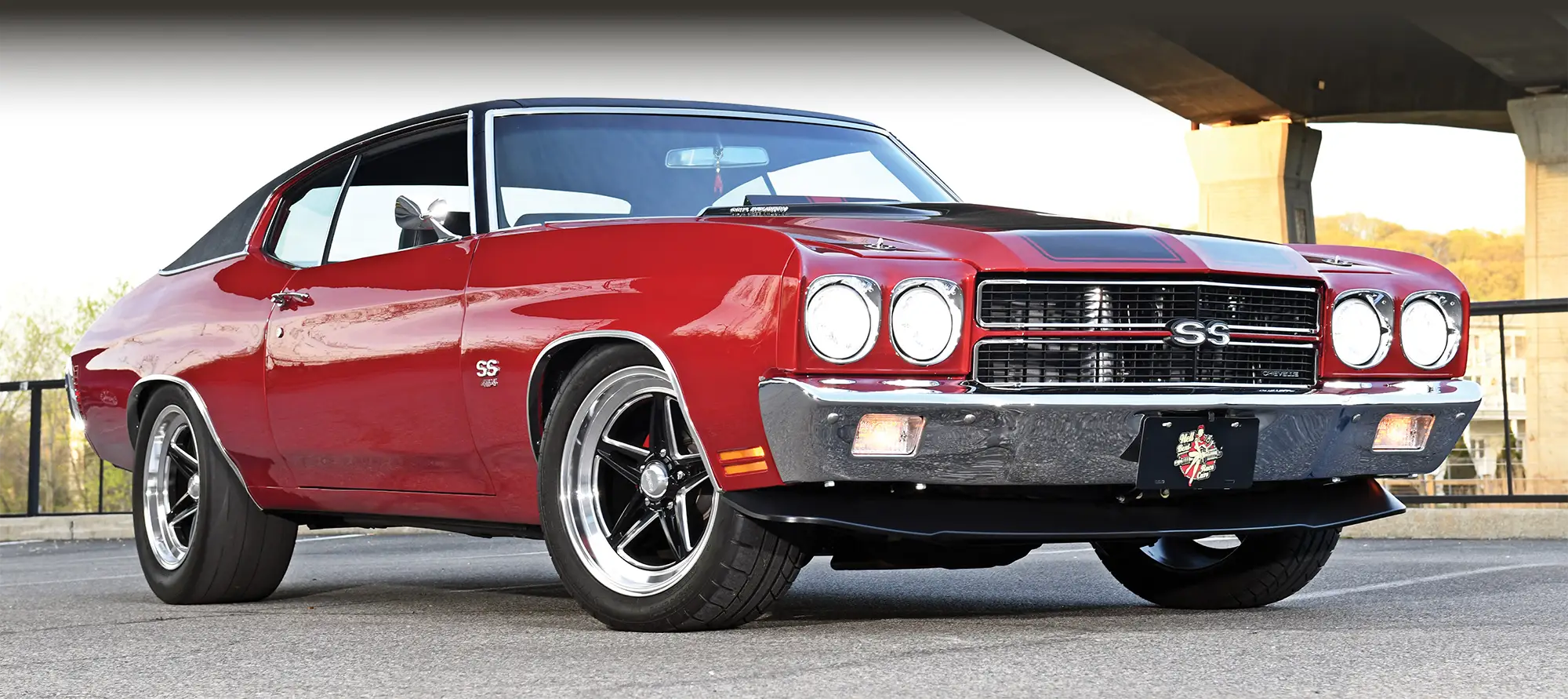
anny Grella remembers the moment he was bit by the Bowtie bug. “While I was growing up, many of the guys in the neighborhood drove muscle cars. It immediately created a passion in me, as I was drawn to their looks and the sound of their cars rumbling down my street,” Manny says. However, there was one particular car that really made an impression on the youngster. “When I was a kid, my grandpa drove a ’71 Chevelle Malibu, a car that he bought new off the showroom floor. It was red and had a black vinyl top. This car solidified my love for the model, and I knew that someday I was going to have one of my own.”
Now, Grandpa’s car was a base model powered by the workhorse 307ci small-block, so this Malibu wasn’t going to blow the doors off any of the more potent rides on the streets of Long Island. However, it was a good starter car for any burgeoning muscle car aficionado. As luck would have it, when Manny turned 16, the used A-body was passed down to him by his grandpa. “When he handed me the keys, he told me to take good care of it,” Manny fondly remembers. “The car was always garaged from day one, so I did the same and kept the Malibu out of the weather.”
 Images by THE AUTHOR
Images by THE AUTHOR
Images by THE AUTHORanny Grella remembers the moment he was bit by the Bowtie bug. “While I was growing up, many of the guys in the neighborhood drove muscle cars. It immediately created a passion in me, as I was drawn to their looks and the sound of their cars rumbling down my street,” Manny says. However, there was one particular car that really made an impression on the youngster. “When I was a kid, my grandpa drove a ’71 Chevelle Malibu, a car that he bought new off the showroom floor. It was red and had a black vinyl top. This car solidified my love for the model, and I knew that someday I was going to have one of my own.”
Now, Grandpa’s car was a base model powered by the workhorse 307ci small-block, so this Malibu wasn’t going to blow the doors off any of the more potent rides on the streets of Long Island. However, it was a good starter car for any burgeoning muscle car aficionado. As luck would have it, when Manny turned 16, the used A-body was passed down to him by his grandpa. “When he handed me the keys, he told me to take good care of it,” Manny fondly remembers. “The car was always garaged from day one, so I did the same and kept the Malibu out of the weather.”
 TECH
TECH IMAGES BY THE AUTHOR
here’s nothing finer than firing up your favorite Chevy muscle car, rolling down the windows, and hearing the wicked V-8 exhaust note out back. It gets even better once you hit the road with a full playlist of your favorite tunes to make the journey complete through a classic-looking radio and sound system from Custom Autosound.
Set the way-back machine to 1971 with Chevrolet offering a number of options to get your groove on, starting with push-button AM or AM/FM radios complemented by an 8-track player and even a rear seat speaker for a truly immersive music experience. Imagine listening to Deep Purple’s “Highway Star,” Alice Cooper’s “Under my Wheels,” or even The Who’s “Going Mobile,” and it doesn’t get any better!
To bring the experience full circle over 50 years later, we’ve become more in tune with our listening pleasures for more technology being integrated into our muscle cars. Cutting-edge components with capabilities similar to OEM offerings in new cars bring a fresh level of sophistication along with them.


 FEATURE
 IMAGES BY THE AUTHOR
ome say that one man’s misfortune is another man’s good fortune, which is only partially true in how Dale Golucke ended up finally scoring a 1966 Chevelle, a car his twin brother had back in high school. Actually, this story is more along the lines of “there is luck in bad luck.”
Dale was renting some garage space next to a body shop on the edge of El Paso, Texas, where the carcass of a 1966 Chevelle was parked. Being in far west Texas, the body was decent but the engine and trans were long gone, the interior was completely hollowed out, even the glass was missing. The good news was the car was a true Super Sport, it still had its 12-bolt, and there were a few new parts in the trunk. Of course, it wasn’t for sale.
 TECH
TECH IMAGES BY THE AUTHOR
here’s no doubt that Chevy’s LS engines are an excellent powerplant for any classic ride that you want to be able to hop in and drive without worrying about what’s going down under the hood. These modern mills can deliver care-free performance right out of the box, giving you the utmost confidence to drive your car, and lean on it hard, anywhere at any given time. Though we try and try again, we sometimes just don’t have that same conviction with some older, OEM engines … especially ones that haven’t been maintained properly or given enough attention over the years.
Though LS engines can be more dependable, to some, they lack that aura and classic vibe offered from the engines of the ’60s and ’70s. There’s nothing more aesthetically appealing than a fresh period-correct engine sittin’ pretty in its corresponding engine bay.
Fortunately, there are aftermarket companies that have developed parts and add-on kits that can be easily retrofitted to your LS engine to make it more appealing to the eye, especially to those classic car lovers out there.


 FEATURE
 IMAGES BY MARC GEWERTZ
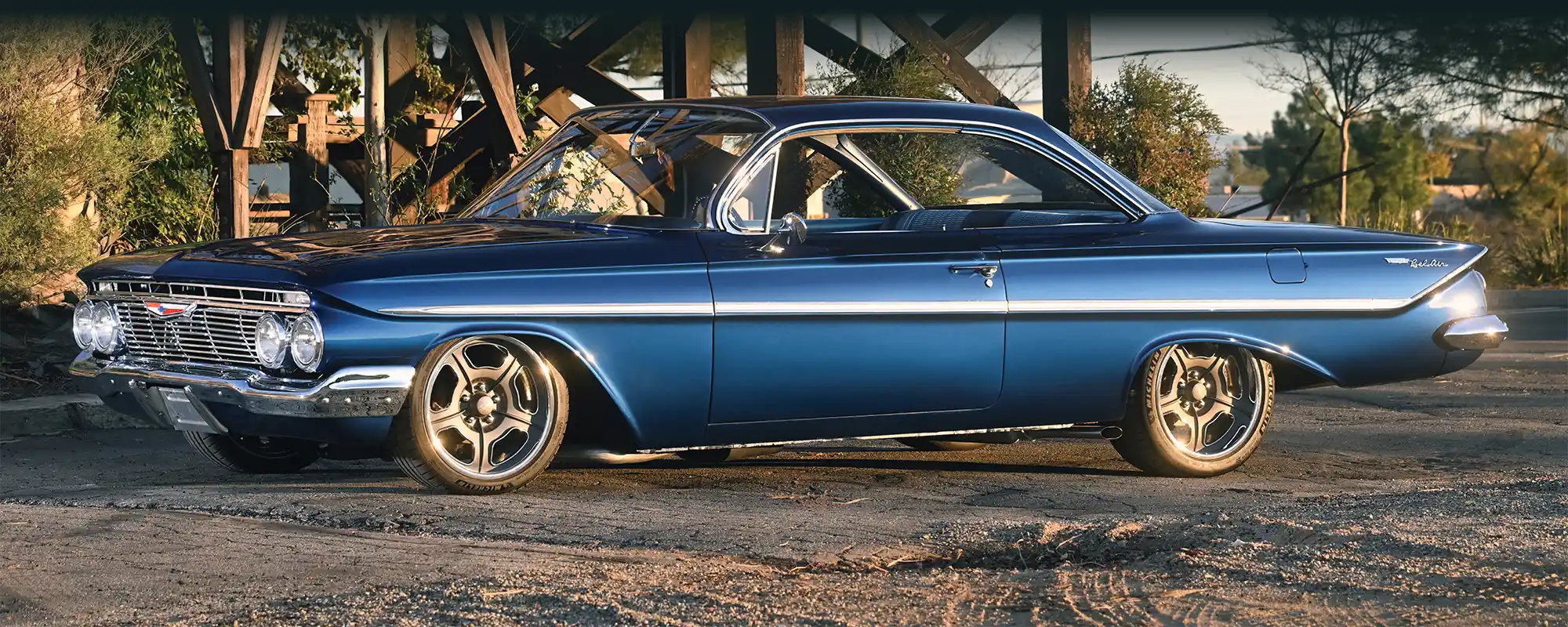
here’s a certain kind of car story that sounds too strange to be true until you’re standing in the middle of it, brushing dirt off quarter-panels while opening doors that haven’t creaked since Duran Duran ruled MTV back in the early ’80s. This 1961 Chevy Bel Air was one of those stories.
This one came to Paul Marcinek as a bit of a surprise as his brother had been car hoarding classics without his knowledge for decades.
 EVENT
EVENT IMAGES BY THE AUTHOR
ome might say the glory days of drag racing are long gone, but there is an organization that thrives on honoring the gassers and super stock racers of old. It’s the Southeast Gassers Association, and it has been the most authentic representation of vintage drag racing action for more than a decade. The group features a championship points series at eighth-mile tracks around the Southeast, and it’s known for its high-rpm, door-to-door, heads-up action.
Event organizers work hard to develop rules to keep racing tight without the use of dial-in, breakouts, or time indexes. True heads-up racing is part of the successful formula for the Southeast Gassers Association, as the action is intense from the moment the cars hit the track until the final pair goes down the track. The cars are split into multiple classes: A/Gas, B/Gas, C/Gas, and Super Stock are part of the points championship, while H/Gas (four- and six-cylinder cars) and A/FX are exhibition classes.
The rule book is long and extensive, but the general idea for the class breaks includes a basic pounds-per-cubic-inch guideline. A/Gas is 6 lb/ci, B/Gas is 8 lb/ci, and C/Gas is 10 lb/ci. C/Gas is the easiest to illustrate because the math is easy: a 3,000-pound car can run a maximum of 300 ci. No matter the class, every car in the Southeast Gassers Association must have a manual transmission. That means big time rpm and hard-charging action as the drivers bang through the gears.




Advertiser
- American Autowire29
- Art Morrison Enterprises55
- Auto Metal Direct21
- Automotive Racing Products39
- Borgeson Universal Co.45
- Classic Industries23
- Classic Performance Products4-5, 89, 92
- Dakota Digital91
- FiTech EFI73
- Forgeline Motorsports73
- Golden Star Classic Auto Parts7
- Goodguys Rod & Custom Association61
- Hemmings59
- JEGS High Performance27
- Lokar2
- National Street Rod Association57
- OPTIMA Batteries71
- Powermaster Performance85
- Schwartz Performance89
- Scott’s Hotrods75
- Speedtech Performance USA85
- Steele Rubber Products9
- Summit Racing Equipment11
- That’s Great News89
- Tuff Stuff Performance Accessories71
- Vintage Air6
- Wilwood Engineering31

