






TKX Five-Speed Swap
How Master Cylinder Bore Size
Affects Brake Pedal Feel
How Master Cylinder Bore Size Affects Brake Pedal Feel
Preview Issue






 TOC
TOC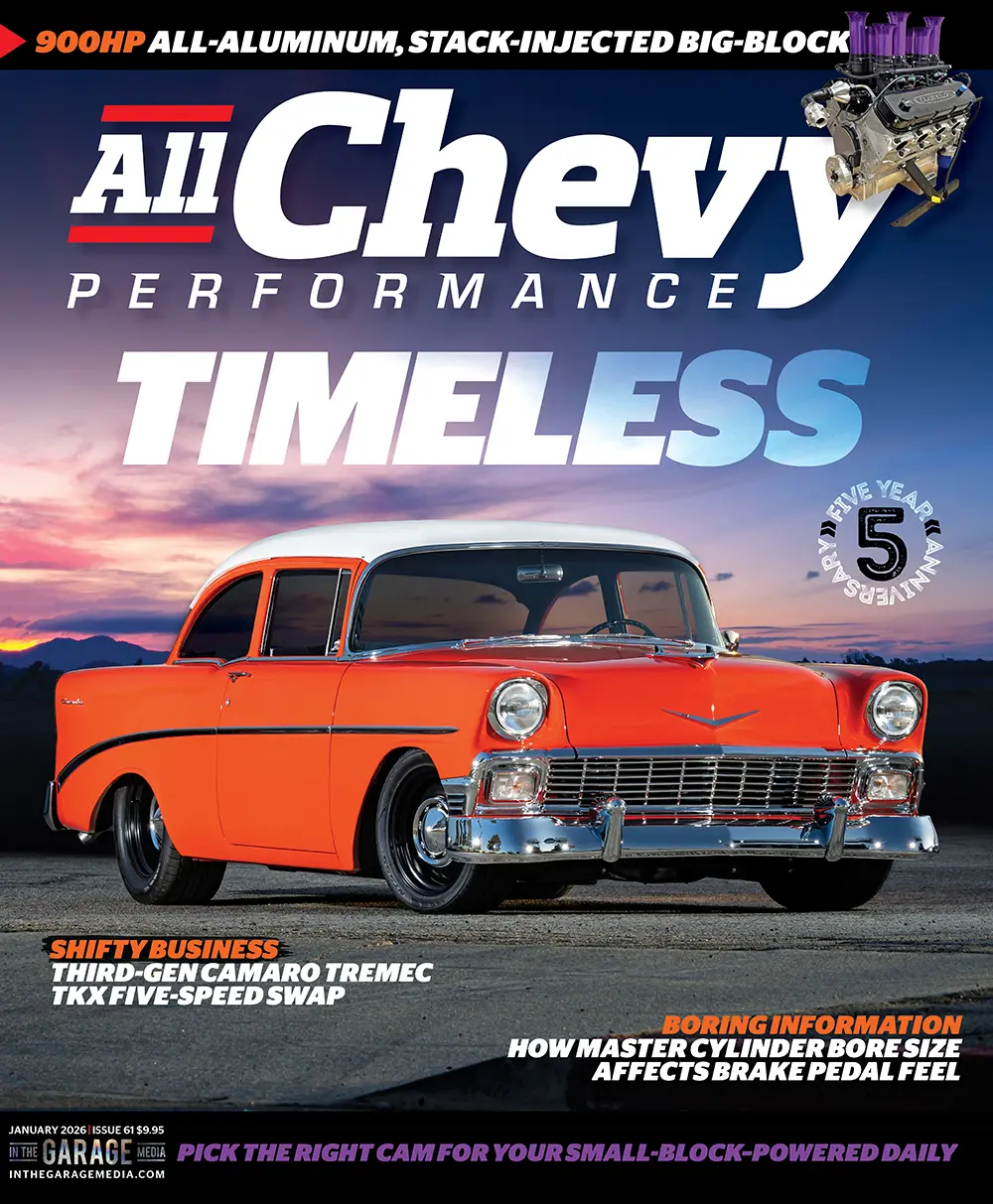
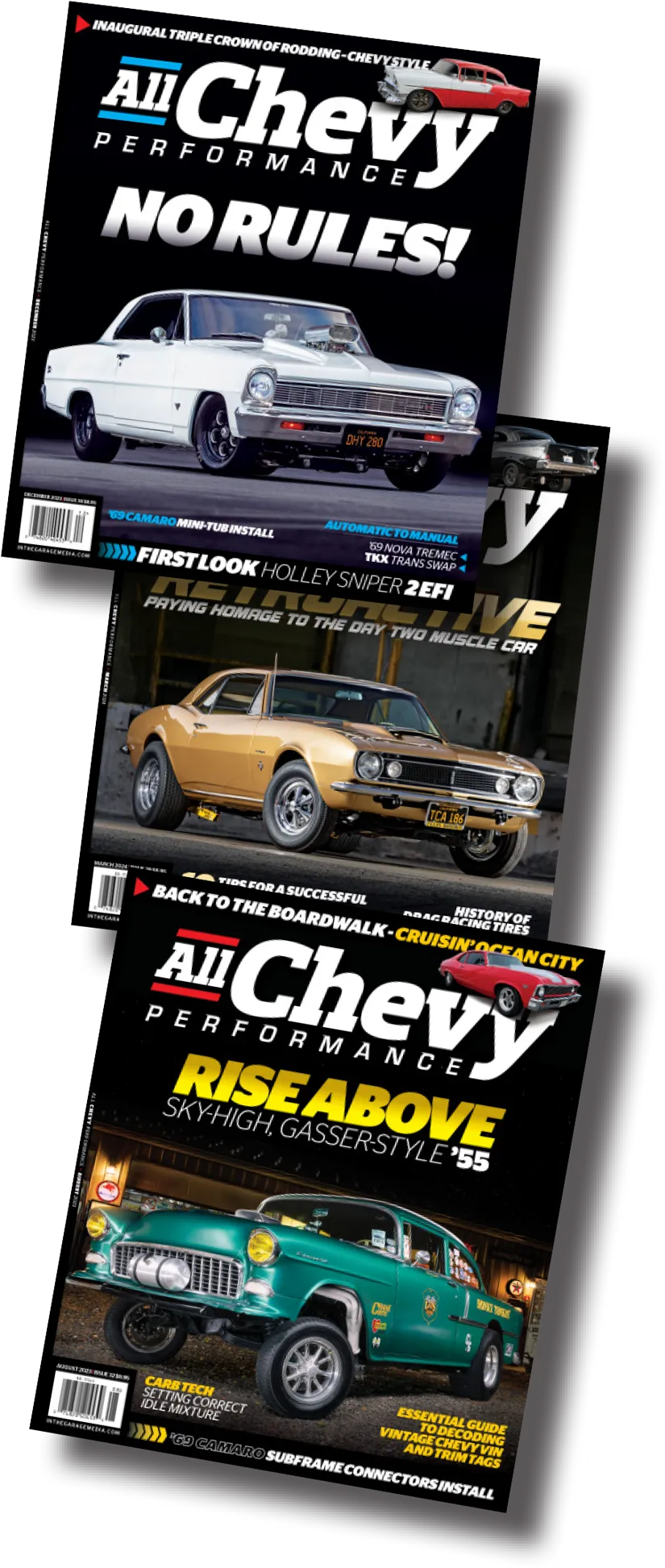
Cover image by Fuelish Media.












Cleveland, OH
(216) 281-8777


“Rotten” Rodney Bauman, Jefferson Bryant, Tommy Lee Byrd, Ron Ceridono, Ron Covell, Grant Cox, Fuelish Media, John Gilbert, Tavis Highlander, Jeff Huneycutt, Barry Kluczyk, Scotty Lachenauer, Patrick Lauder, Jason Lubken, John Machaqueiro, Ryan Manson, Jason Matthew, Josh Mishler, NotStock Photography, Todd Ryden, Jason Scudellari, Jeff Smith, and Chuck Vranas – Writers and Photographers
Travis Weeks Advertising Sales Manager
Patrick Walsh Sales Representative
ads@inthegaragemedia.com
AllChevyPerformance.com
ClassicTruckPerformance.com
ModernRodding.com
InTheGarageMedia.com
inthegaragemedia.com “Online Store”
For bulk back issues of 10 copies or more, contact store@inthegaragemedia.com
info@inthegaragemedia.com
Editorial contributions are welcomed but editors recommend that contributors query first. Contribution inquiries should first be emailed to info@inthegaragemedia.com. Do not mail via USPS as we assume no responsibility for loss or damage thereto. IN THE GARAGE MEDIA, INC. reserves the right to use material at its discretion, and we reserve the right to edit material to meet our requirements. Upon publication, payment will be made at our current rate, and that said, payment will cover author’s and contributor’s rights of the contribution. Contributors’ act of emailing contribution shall constitute and express warranty that material is original and no infringement on the rights of others.

Copyright (c) 2025 IN THE GARAGE MEDIA, INC.
PRINTED IN U.S.A.


 firing up
 BY NICK LICATA
aptop computers, smartphones, car batteries, coffee makers, toasters, microwaves, and cheap mattresses all share a typical lifespan of about five years. Same goes for small retail shops and restaurants. Thankfully, us folks here at In The Garage Media are in the process of beating the odds and are celebrating our fifth anniversary of All Chevy Performance magazine.
It hasn’t been easy. It’s been challenging while at the same time rewarding. The looming deadlines are never-ending, and as editor, trying to keep the content of a monthly automotive magazine fresh is no small task. I’m fortunate to work with an outstanding roster of tech writers and feature photographers. Those names you see on the byline of each article are, without a doubt, the most knowledgeable, creative, and talented in the industry, and we are lucky to have them contributing to this publication.
There were doubters who informed us that launching a printed Chevy-only magazine in a digital-first world is a risky move that is likely to fail. Suffice it to say, we’ve beaten the odds. Besides, we here at In The Garage Media have generally been the type to take risks rather than advice. When someone says we can’t do something, we just take it as a challenge.

 PARTS BIN





 CHEVY CONCEPTS
InTheGarageMedia.com


 Text & Rendering by Tavis Highlander
simple 1967 is what owner Joey Weinmann is going to start with, but this build will end up being far from simple. The premise was to keep the overall feel of a 1967 and simply enhance what’s there. Something similar to how a Singer Porsche is approached. Major body mods will include flaring the fenders to fit much wider tires and provide an aggressive stance. The front fascia has also been customized to work with the new chin spoiler. Side skirts continue the aero add-ons and lead to the rear diffuser tray. Capping off the exterior elements are the reimagined 1969 Camaro hood vents that have been moved forward and recessed into the sheetmetal. These now function as heat extractors.
 FEATURE
 Images by THE AUTHOR
ot many car enthusiasts still own their very first vehicle. That’s because most first rides are certified hand-me-down jalopies. This is why it’s so refreshing to hear stories about folks who have held on tight to their very first clunker. Even through times of seemingly endless downtime and repairs, the gleaming light at the end of the tunnel can be all the hope needed to keep on pushing.
Meet Craig Weaver—owner of this gorgeous 1956 Chevy 210. While it surely is an absolute stunner now, Craig can account for the car’s downtrodden past. “This was the first car I ever bought,” he states. “I have owned it continuously since I purchased it on January 2, 1985. The first time I saw it was in a field with weeds as high as the front fenders. It had no engine or front grille, and the interior was non-existent. My cousin towed me home with a rope tied to the back of his truck. I sat on a milk crate while steering 3 miles home, hoping the brakes would hold up.”
 TECH
TECH
 Images BY THE AUTHOR
here are a tremendous number of variables to consider when it comes to choosing a camshaft. This makes a story like this difficult to assemble because we just don’t have the space to take all the details into account. A 160-page book might do the job, but we will nevertheless take our best shot.
For the sake of brevity, this story will address choosing a streetable, flat-tappet hydraulic camshaft for the classic small-block Chevy. Many of the variables for this selection will carry over to other Chevy engines like the inline-six, big-block, and even LS engine but we’ll focus just on the small-block for this story. Plus, if you choose to go the hydraulic roller cam route, the same cam timing variables also apply. In order to whittle away at the complexities, we’ve created a simple chart that lists the most important items in order of importance. We’ve placed usage at the top of the list since that is the fundamental application that will direct the rest of the decisions. So, let’s dig in.




 FEATURE
Jeff Mumford’s 1970 Camaro is the Ultimate Street Machine
 Images by The Author
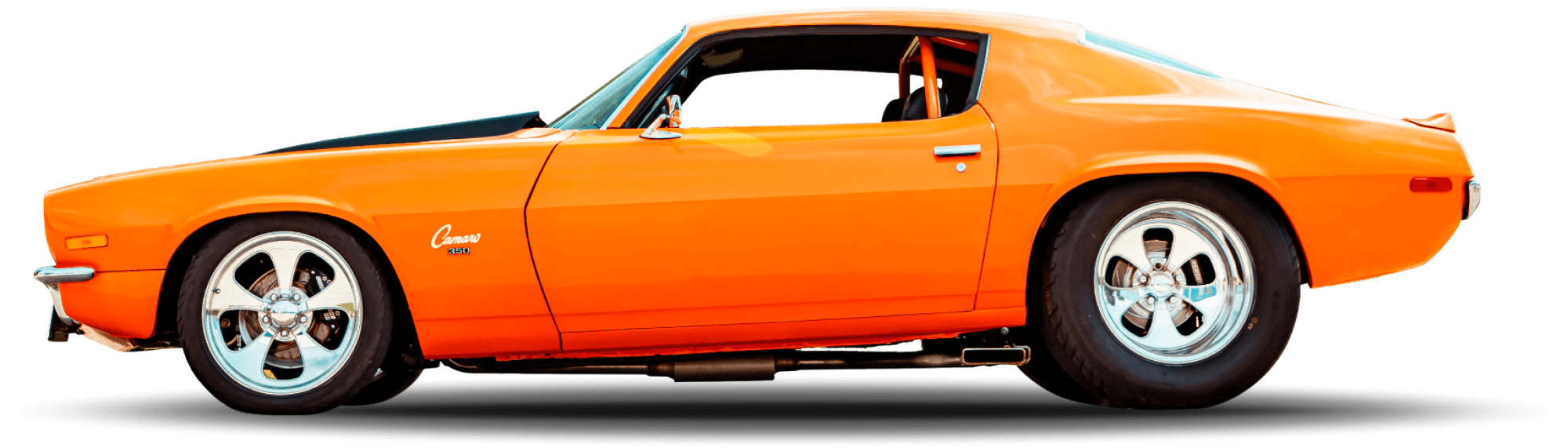
s car people, we tend to romanticize time periods because of certain positive aspects that stand above the negative ones. The 1970s is perhaps the most vivid example of this phenomenon, because even if you didn’t live through the decade, you know there was a mixture of good, bad, and just plain ugly. For Jeff Mumford, a longtime car guy from Taylorsville, Kentucky, he wanted to hand pick the goodness from the ’70s street machine days and apply those elements to his 1970 Camaro Rally Sport. The result is a car that he calls “Snot Rocket,” a period-correct street machine that has all the right elements without the gaudy details that often accompany these radical creations.
 TECH
TECH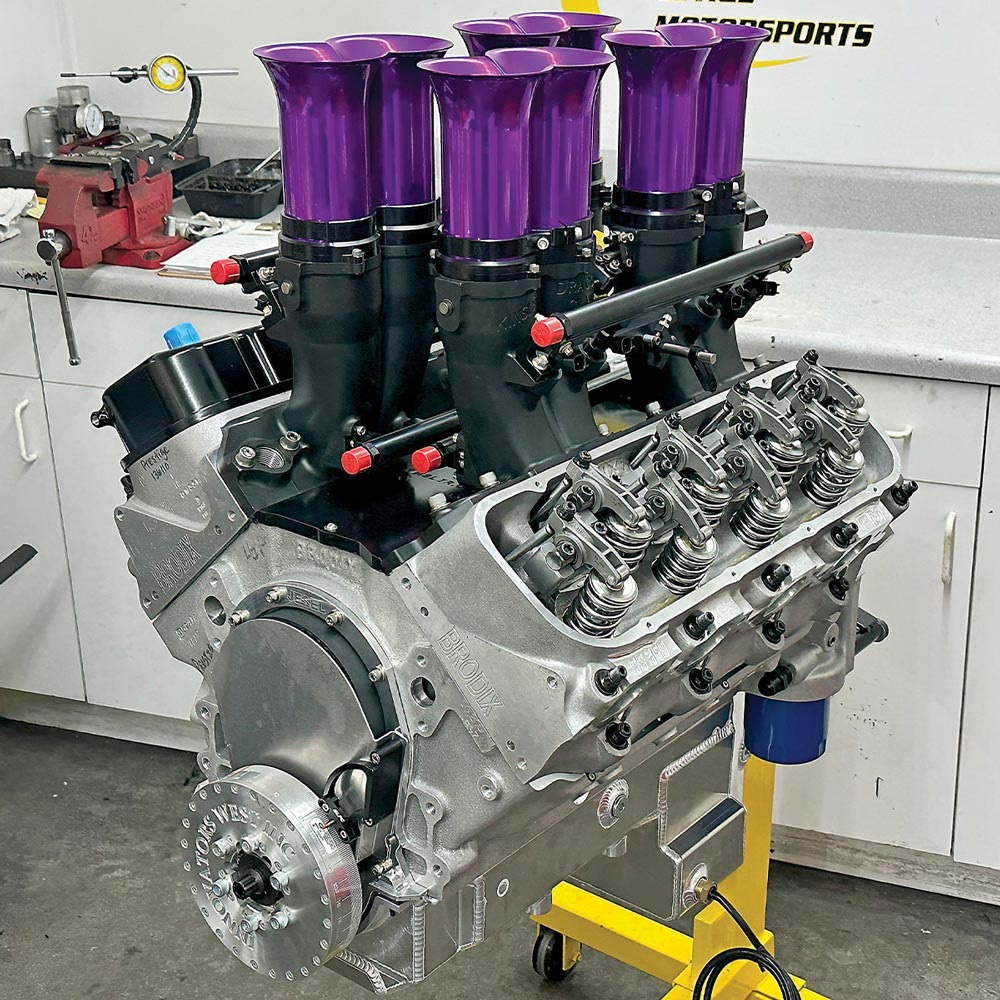
 Images by The Author
n the 1960s, many of Lola Cars’ most successful racing machines were powered by Chevrolet small- and big-block V-8 engines. Company founder Eric Broadley recognized early on the advantages of building his lightweight British racers around potent, reliable American V-8s. Despite being a relatively young constructor, Lola quickly earned a winning reputation, thanks in large part to the performance of its Chevy-powered cars.
The Lola T70, introduced in 1965, was designed from the outset to accept large American V-8 power. In 1966, driving a Chevy-powered T70 Spyder, John Surtees captured the inaugural Can-Am championship, winning all but one race that season. Lola T70s claimed five of the six Can-Am races that year in a dominant showing against rivals like McLaren and Chaparral. These machines also proved their endurance capabilities; a Team Penske Lola T70 Mk3B, backed by a 5.0L Chevrolet, scored a celebrated overall victory at the 1969 24 Hours of Daytona. Throughout the late ’60s, Chevy-powered Lolas regularly challenged factory teams, such as Porsche, Ferrari, and Ford, underscoring Lola’s ability to blend British engineering with American horsepower.


 Feature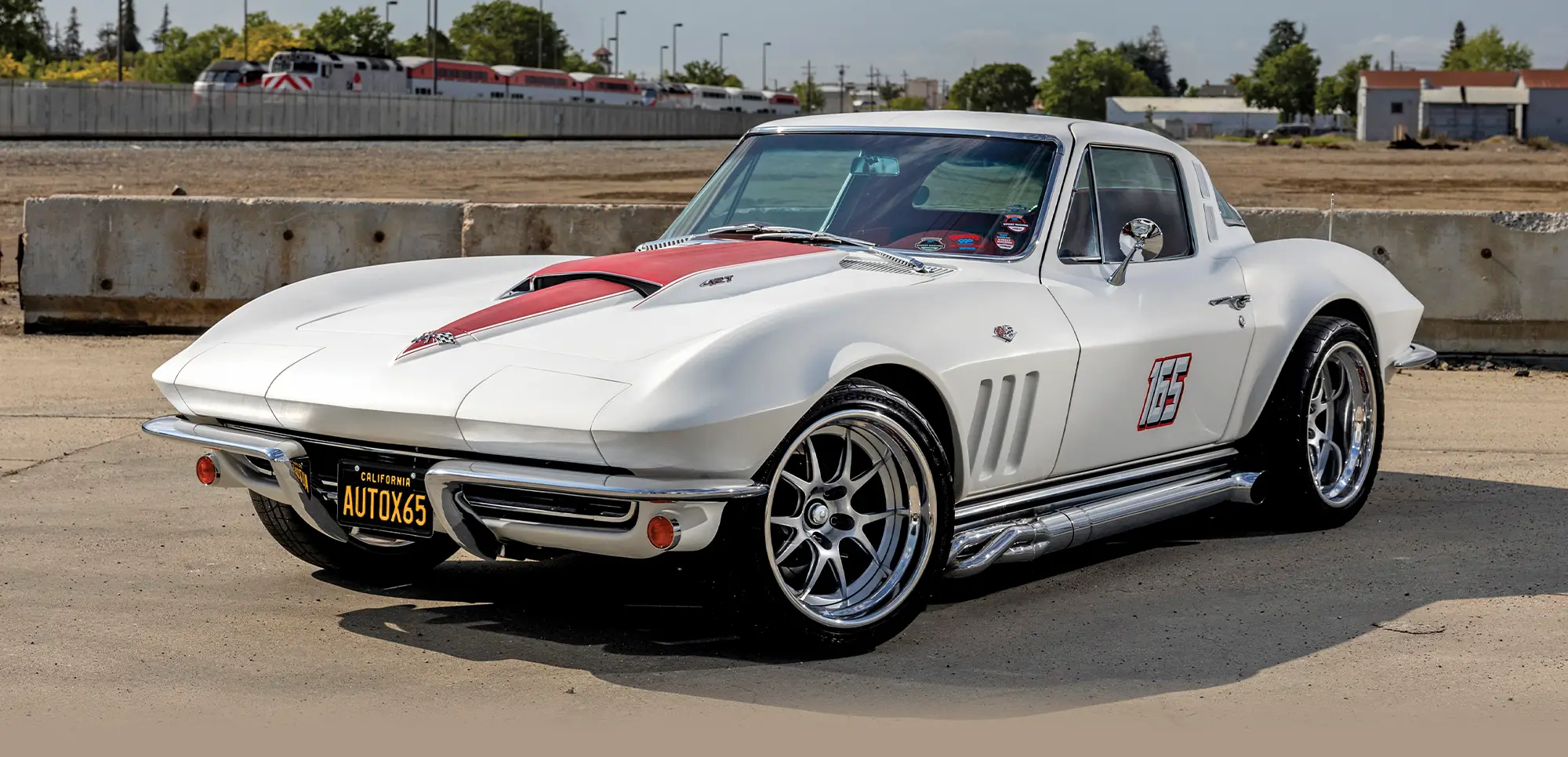
 Images by Patrick Lauder
yler Murphy has been into cars since he was just 17 years old, when his dad Pat bought him a 1967 Camaro back in 2002. At the time Tyler was an avid motocross racer and was committed to the sport but paid the price with broken bones and lots of bruises. Pat figured getting him into muscle cars would be a much safer outlet for his competitive nature. Tyler took the bait, ditched the motorcycle, and turned his focus on the Camaro.
The car came with a used 350 small-block that served him well as a daily driver throughout his high school years, but the tired mill lacked the power and excitement Tyler was after. He and Pat then swapped in a 421ci stroker and set the car up for straight-line action. The car was a blast on the strip but not so much on the street.
TECH Images by THE AUTHOR
e humans are great at adapting; it might be one of our greatest gifts, but it also might be one of our biggest blind spots. How the heck does this seemingly random insight have anything to do with stopping your Chevy muscle car? As it turns out, quite a lot.
When hopping into a 50-plus-year-old Camaro you just snagged off Facebook Marketplace, your brain tells you to expect less than perfect–especially in the stopping department. Technology has improved in newer cars, old parts wear out, and the reasonable expectation is that driving a classic car will come with compromises. Or maybe you just bought an absolute gem of a Chevelle restomod at an auction. It’s fitted with all the latest and greatest parts from reputable aftermarket brands, so you expect it to be the best it can be. After the first testdrive around the block, you might notice the brakes are a little more “touchy” than you’re used to. Or maybe you rolled past the first stop sign because they took more effort than you expected. But, after a couple of weekend cruises, you’ve all but forgotten that there might be something a little off about your Chevy’s brakes.
All is fine and dandy for a while (remember, we are quite adaptable), but then, a couple months later, you’re driving through a school zone and you see a kid start to run into the road after a ball. You go for the brakes as quick and hard as you can. If your Chevy’s brakes were too touchy, you’re about to lock up two or more tires, which equal lack of control and longer stopping distances. If your brakes were too hard, you might be doing a two-foot stand trying to slow the car down, with little control over the outcome of the situation.


 FEATURE
 Images by THE AUTHOR
or most of his adult life, Joe Teger, of Flanders, New Jersey, had a good idea what his ultimate dream ride would be. “If I had to pick any muscle car, it would probably be a 1968 Camaro,” Joe says. “I like how sleek the 1967 and 1968 bodies look, and I love how clean the ’68 looks without windwings.”
Upon hearing this revelation, Joe’s good buddy, Mike Glasscar, got the wheels in motion, helping Joe procure his ride-or-die muscle car. “Come on, let’s go, I know where a ’68 is and you can buy it cheap!” Mike roared. Before you know it, the guys were in a backyard a few miles away, staring at a tarp that covered a Camaro carcass with its pertinent parts beneath it. Glasscar had recently discovered the neglected Camaro while replacing a client’s windshield. The car was bought brand new by a young lady and later gifted to her son, who had taken it apart for a restoration in 1987 and never put it back together.
TECH
 Images by Ryan Foss Video by Ryan Foss Productions
here are few things that can make a muscle car come alive like a manual transmission swap. That visceral feeling connecting man with machine is unmatched when compared to the experience, or lack thereof, found in an automatic trans car. Rowing through the gears and rolling onto the throttle while the rearend skates around ever so slightly after every gear is selected is just not nearly as enjoyable when you take the human element out of the equation. That slush box slipping through the gears leaving no clear clue as to what gear it’s in at any given moment not only leaves a lot of excitement at the door, it lacks it altogether. Yet, while there’s a place for an automatic transmission, there’s just no comparison when it comes down to the driving experience.
Our buddy Danny Nix has been laying down some miles on his 1989 Camaro RS, but when the front transmission seal started to leak recently, he decided it was time to replace the tired 700-R4 with a more modern TREMEC TKX five-speed manual transmission. As he hunted around for options, mulling over whether to build out the swap with individual parts or purchase them all as a kit, he found his solution with a PerfectFit kit from Silver Sport Transmissions (SST). Their kit not only provides everything from the transmission, bellhousing, clutch, and pressure plate, but also provides options such as mechanical versus hydraulic clutch and close- versus wide-ratio gearing options. A fabricated crossmember is included to support not only the rear of the transmission but also serves as the mounting point for the torque arm on Danny’s third-gen Camaro. All the small parts that might be subject to question when building a full kit independently are also included, taking the guesswork out of the equation, even down to the fluids.



 FEATURE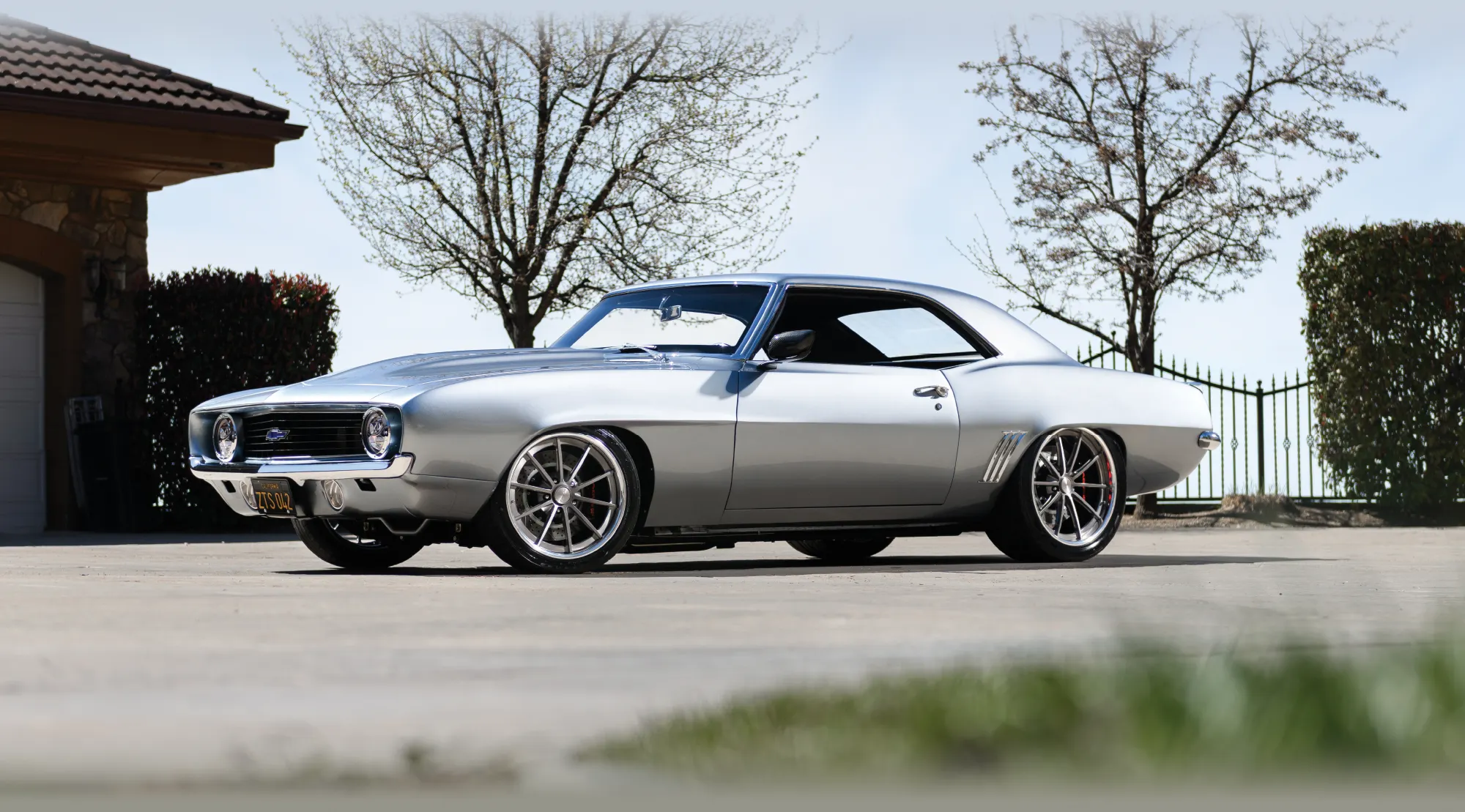
 Images by Luke Munnell
outhern California–rescued vintage muscle cars, especially those found in the high desert, are known for holding up surprisingly well despite the harsh summer conditions the desert relentlessly dishes out. The lack of moisture offers a safe haven for ’60s muscle cars—uh, check that—“most” ’60s muscle cars. The 1969 Camaro Brad Cimino spotted in an OfferUp ad spent a good chunk of its life sunbathing in the dry open air of Victorville. At first glance the car appeared to be a unicorn but was instead a beat-up old mule. No offence to mules, but once the car was blasted, it revealed a level of rust damage more typically found in an East Coast car that had sucked up enough road salt to alter the pH of the Atlantic Ocean.
Although Brad had been fussing with cars since he was a teenager, he realized he was in above his head on this one, so he handed the carcass over to his good buddy Nick Paulsen at Driven Hot Rods in Calimesa, California.
Advertiser
- American Autowire27
- Art Morrison Enterprises13
- Auto Metal Direct7
- Automotive Racing Products41
- Boese Engineering89
- Borgeson Universal Co.49
- Classic Industries45
- Classic Performance Products4-5, 89, 92
- Custom Autosound77
- Dakota Digital91
- Eddie Motorsports11
- FiTech EFI67
- Flaming River Industries31
- Forgeline Motorsports79
- Goodguys Rod & Custom Association29
- Granatelli Motor Sports, Inc.79
- Heidts Suspension Systems83
- Hemmings51
- Lokar2
- National Street Rod Association65
- Powermaster Performance33
- Schwartz Performance89
- Scott’s Hotrods77
- Silver Sport Transmissions67
- Steele Rubber Products9
- Wilwood Engineering47