
 TECH
 IMAGES BY THE AUTHOR
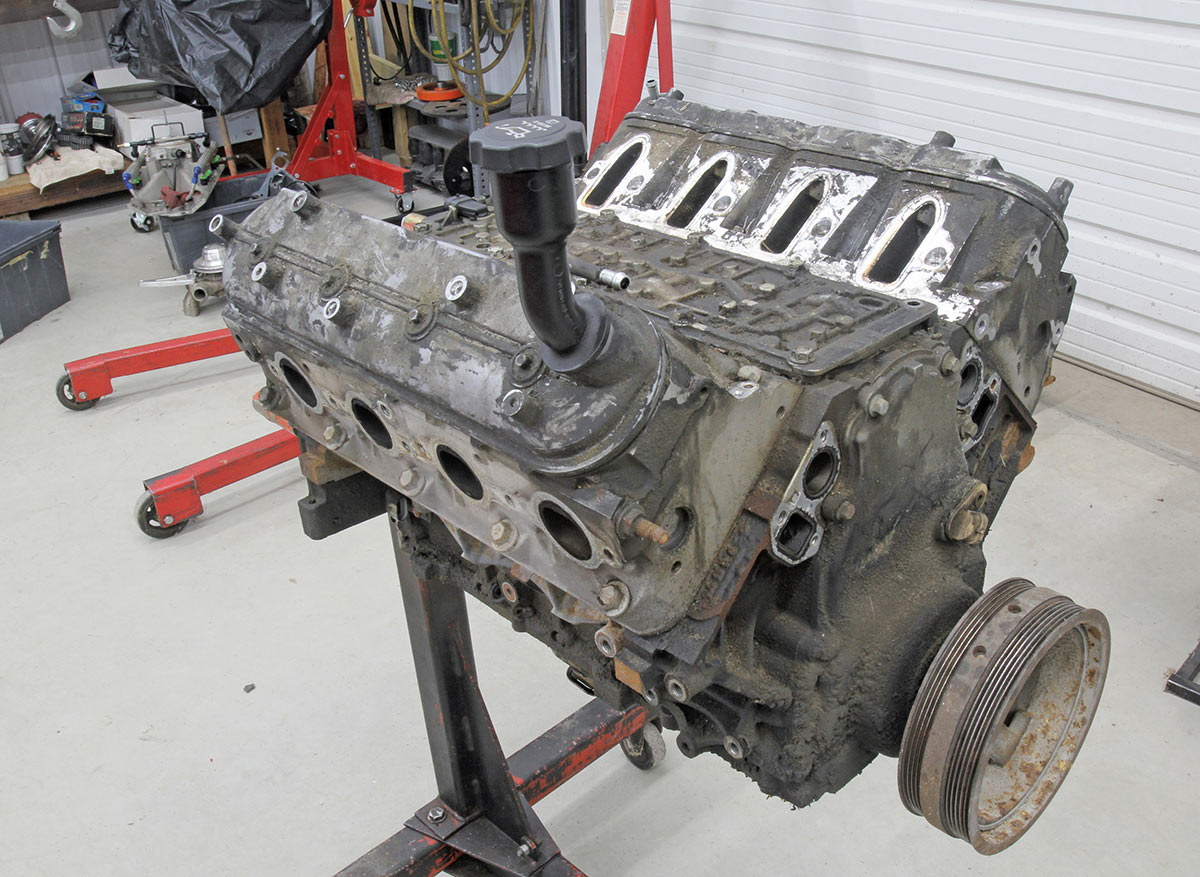
veryone and his uncle have a theory on how to build a street 5.3L LS, and we’re no different. Originally, we were just going to upgrade a Gen IV 5.3 by first deleting the Active Fuel Management (AFM) that we outlined in an earlier story for ACP. It didn’t take long for the plan to expand into rebuilding this engine because it was tired with 300,000 miles on the clock.
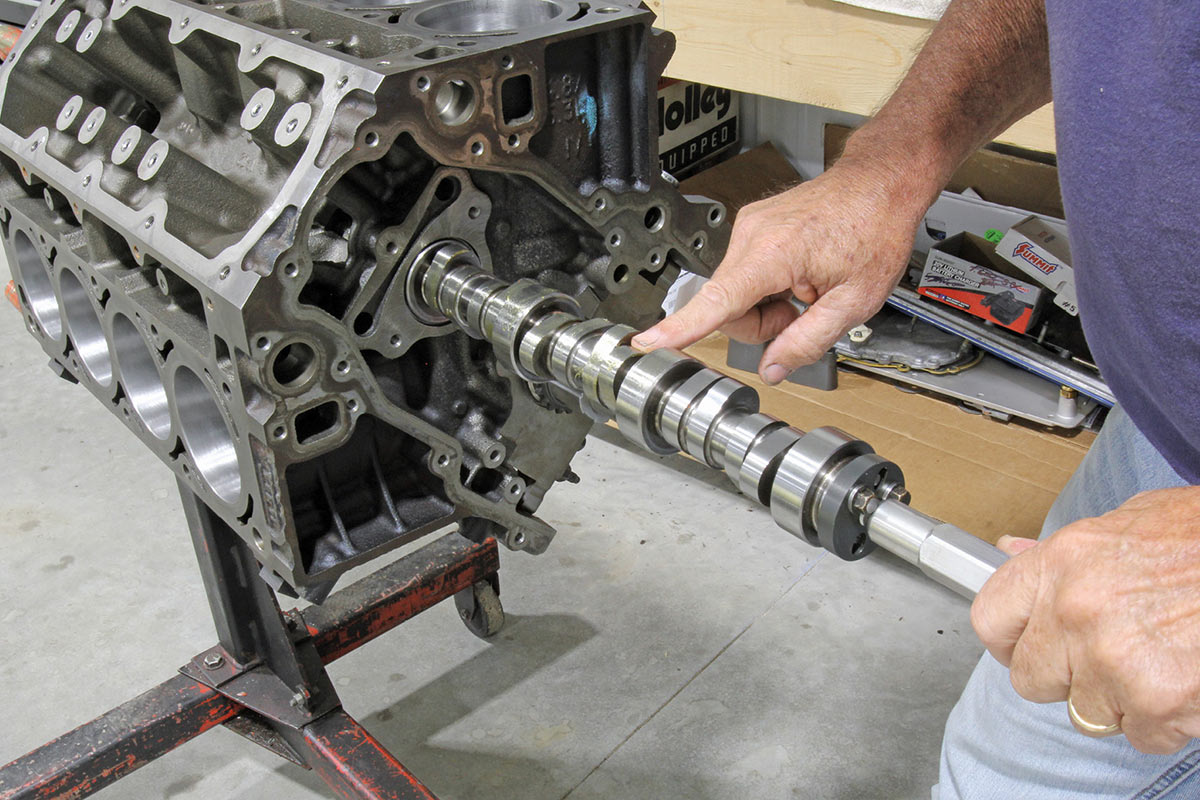
If you recall, our original story centered around a Scoggin Dickey Parts Center (SDPC) AFM delete kit that replaced the cam and added new LS7 lifters. SDPC’s own dyno testing showed that they could make 448 hp with their 5.7L LS6 Max cam in an otherwise-stock 5.3L engine using the Trailblazer SS (TBSS) intake manifold. A big reason we chose this cam was because SDPC priced it well under $400 that most LS roller cams command. Check it out for yourself, you won’t be disappointed.
Like most 5.3L truck engines, our 2007 Gen IV engine employed dished pistons and a questionable prior life with a 241 head on the left side and a 799 casting number on the right. Call this silly, but we were not interested in using two different casting number heads even though they offer the same chamber and valve sizes. Instead, we dug up a pair of 706 cathedral-port LS heads with smaller 1.89-inch intake valves (compared to 2.00-inch intakes on the 799/241 heads), but with a much shallower chamber. Our idea was to combine this tighter 61cc chamber with a pure flat-top 5.3L piston from an LY5 5.3L engine.
We ran the numbers through the Summit Racing online compression ratio program and came up with a 10.8:1 compression ratio. This is more than one full ratio point higher than a stock 5.3L truck engine, which will bump both horsepower and torque. The empirical data claims that increasing compression one full point (for example 9:1 to 10:1) is worth between 3 and 4 percent power. One additional point of compression on an engine making 400 hp should boost power by roughly 12 hp, so our idea has merit. No custom machine work was necessary.
The street engines we normally build all fall under the pump-gas–friendly category and this one is only slightly different. We usually choose mild cams to promote street manners and decent low-speed throttle response. But after several builds with mild cams, we were ready for something more aggressive.
As mentioned, the focus for this engine comes from the dyno test video from our pals at SDPC. You can find their dyno test video online where they tested four different camshafts in an otherwise-stock 5.3L truck engine using the TBSS SUV intake and headers. They tested four different cams, starting with the stock 5.3L cam all the way up through the cam, their LS6 PowerMax Plus.
We’ve listed the cam timing details in the camshaft specs chart on page 30, but this is a bit longer duration cam selection for a smaller 5.3L engine with 220 degrees of duration at 0.050-inch tappet lift. The payoff is with the results that SDPC posted with 448 hp at 6,100 and 433 lb-ft of torque. That computes to 1.33 lb-ft of torque per cubic inch and 1.37 hp/ci. Both of those numbers are very good.
Our approach would use this cam with more compression, slightly smaller intake valves, and a carbureted intake manifold instead of the longer runner TBSS intake manifold. But even with these minor changes, we expect our version to make roughly the same peak horsepower while giving up a little torque because of the carbureted intake manifold.
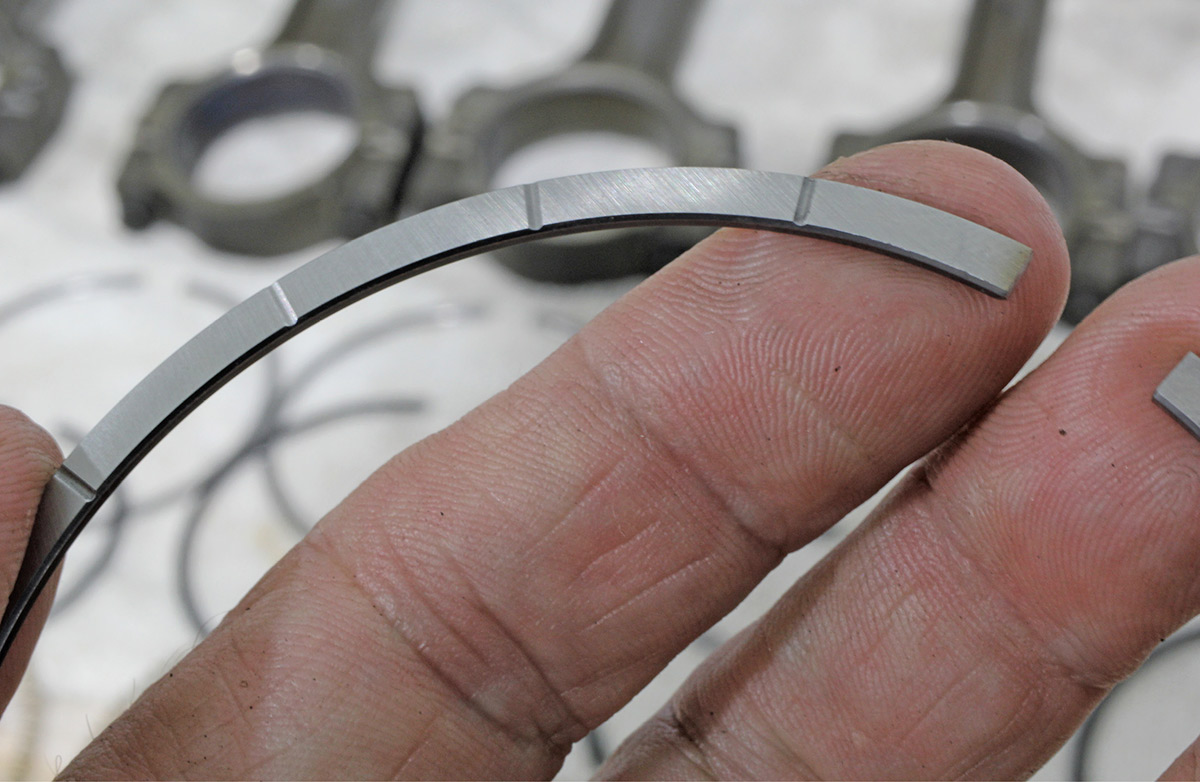
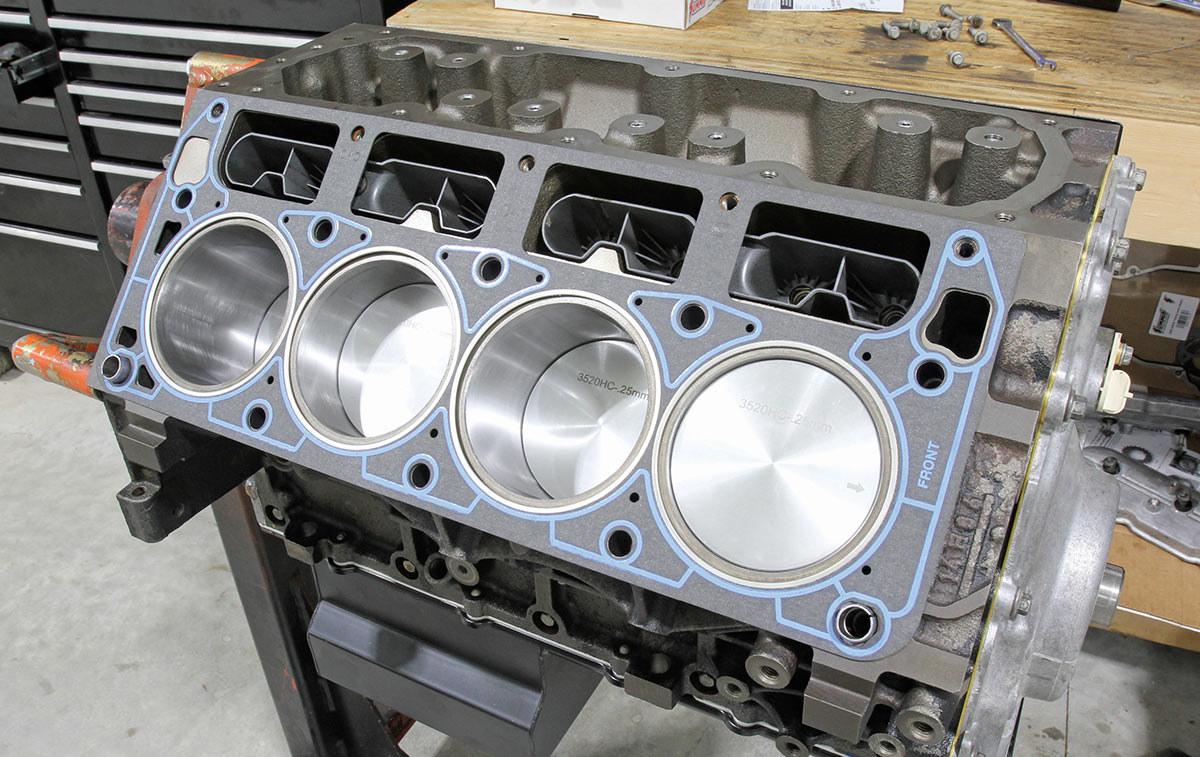
The steps behind building this 5.3L engine are just like any other near-stock rebuild. We ordered 0.010-inch oversize pistons from Summit Racing along with Summit’s slick GPX ring package. This is a matched set of rings that uses lateral gas ports milled into the top ring to improve top ring sealing, matched with a Napier-style second ring and slightly lower tension oil ring for the standard LS 1.5-, 1.5-, 3mm ring combination.
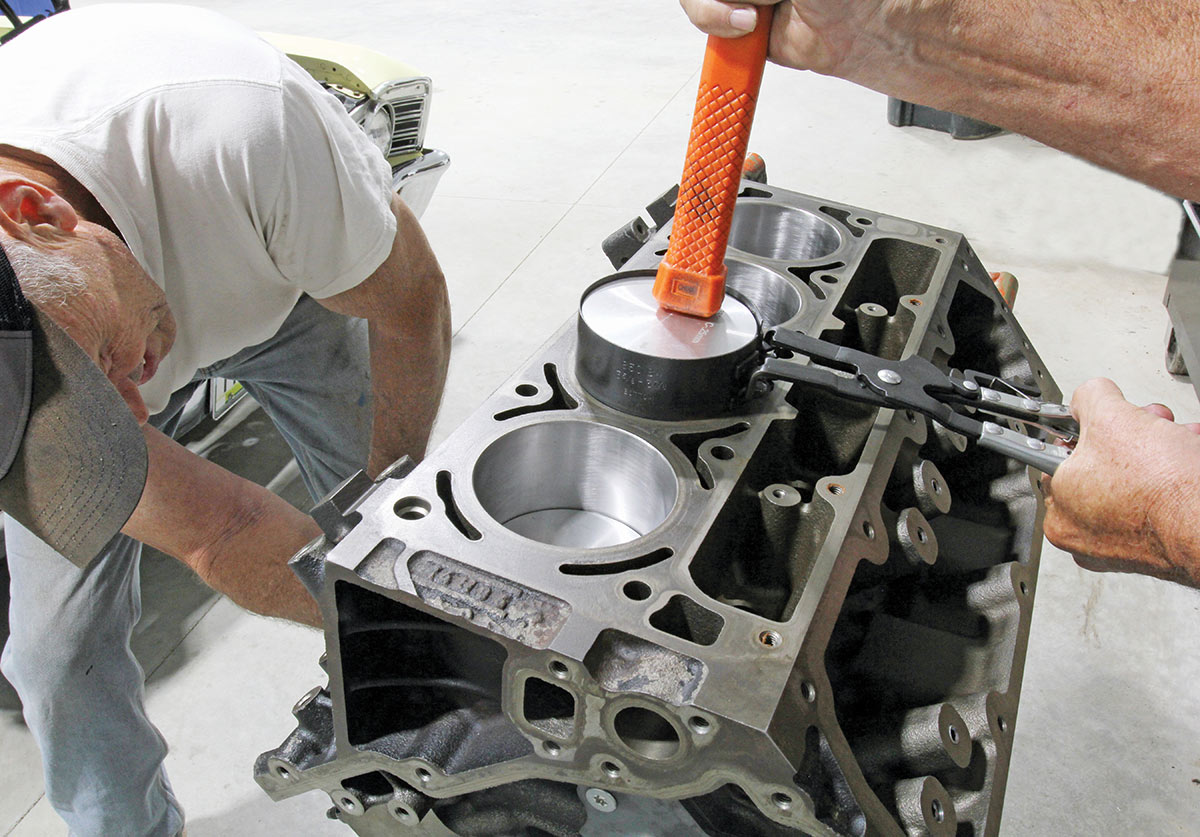
The rest of the 5.3L short-block is stock, including the crank and rods. We did run into a minor issue when setting the GPX ring endgaps. The pistons we chose were KB hypereutectics that demand a 40 percent larger top ring endgap. Once we finished gapping the top and second rings, we overlooked the endgap on the thin stainless oil rings. That caused a problem when the ring compressor would not allow the piston to fit into the bore because the oil rings butted. Our mistake.
Clearly, we needed to set the endgaps on the oil rings as well. Usually, we only remove a small amount of top and second endgap to properly set the rings. Because our pistons were 0.010 over, the standard bore rings needed additional material removed and that included the oil rings. The standard spec for street engine oil rings is 0.015 inch. We set ours to 0.017 inch just to be safe.
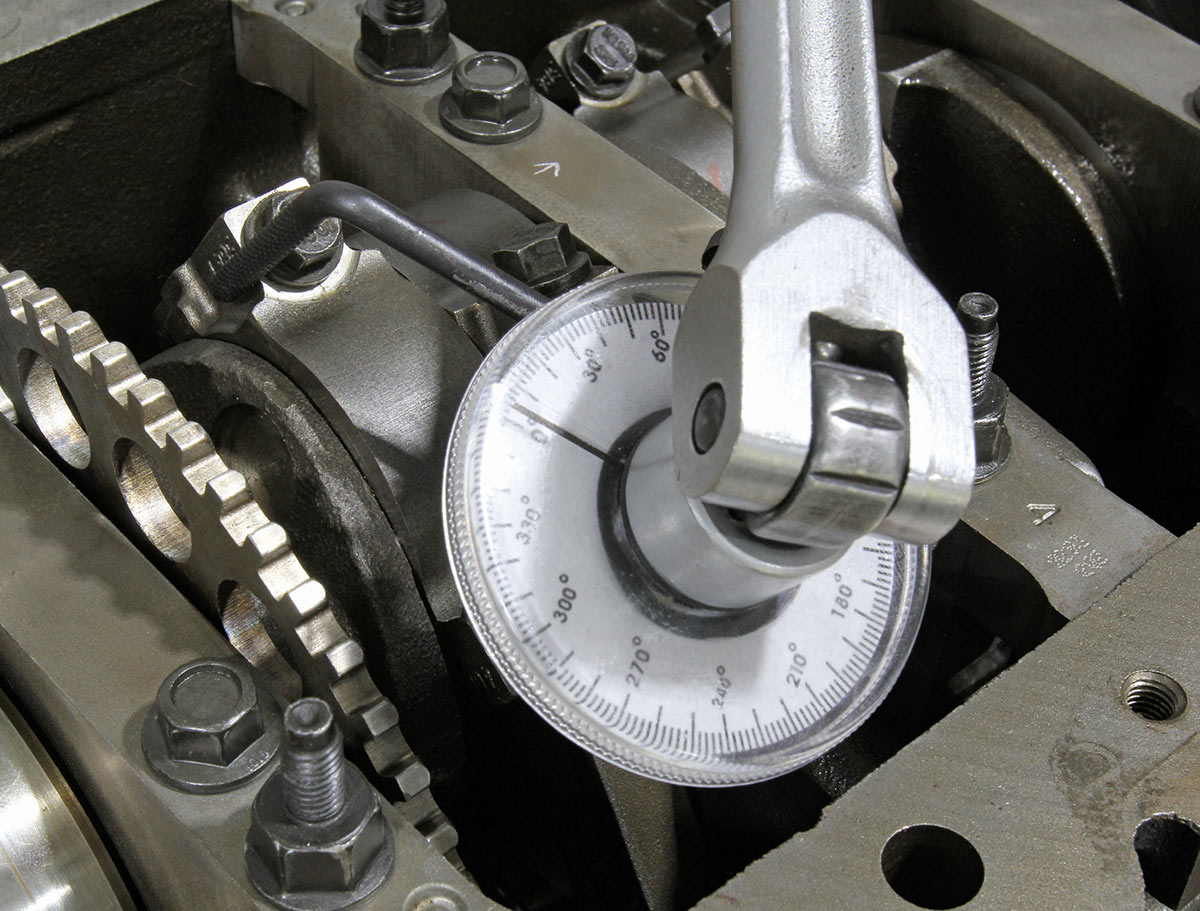
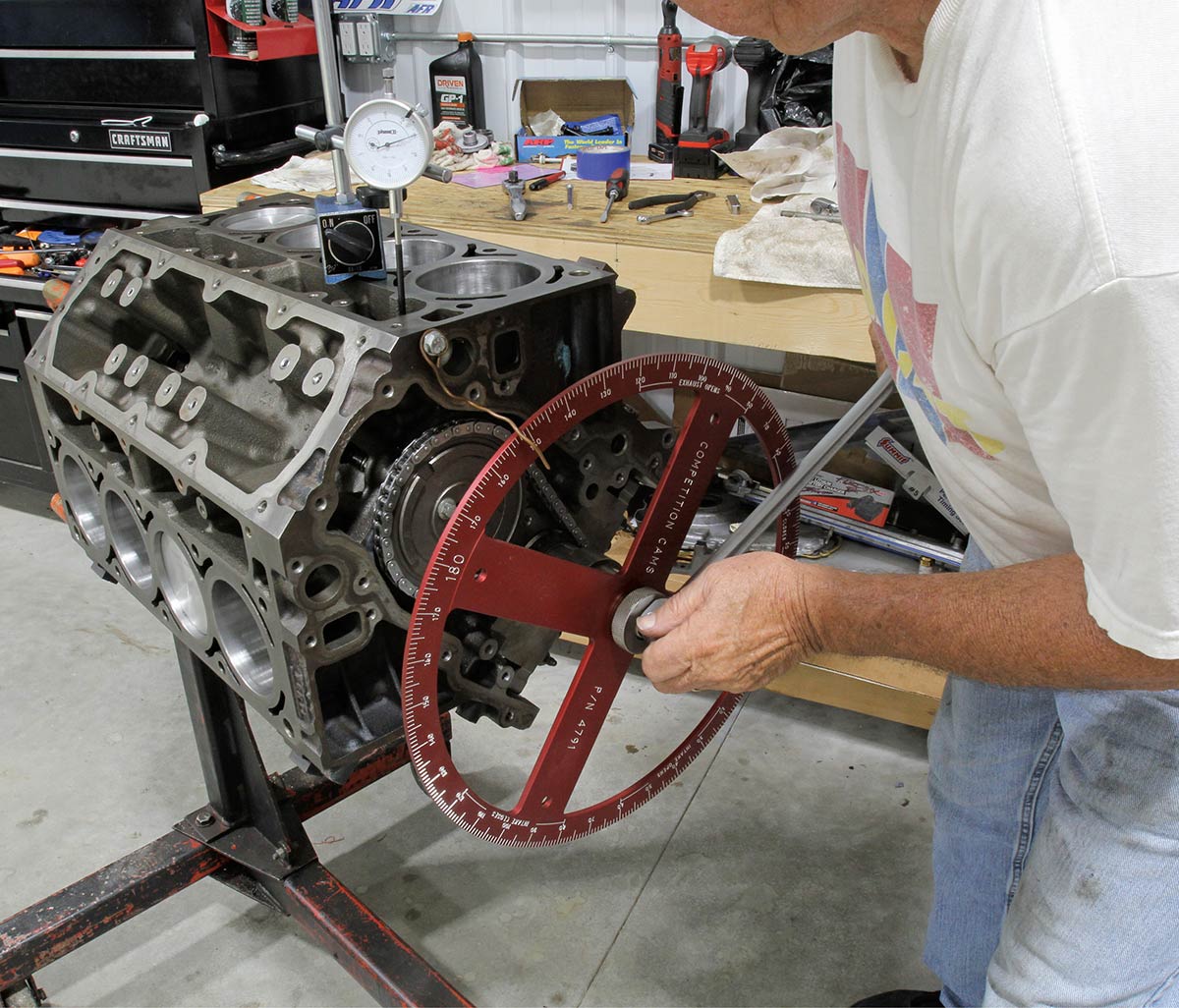
After setting all the bearing clearances using Clevite tri-metal bearings and installing the pistons, it was time to degree the SDPC camshaft. Using SDPC’s single roller timing set, the cam fell right into place with an intake centerline of 110.5 degrees on the 110-degree spec.
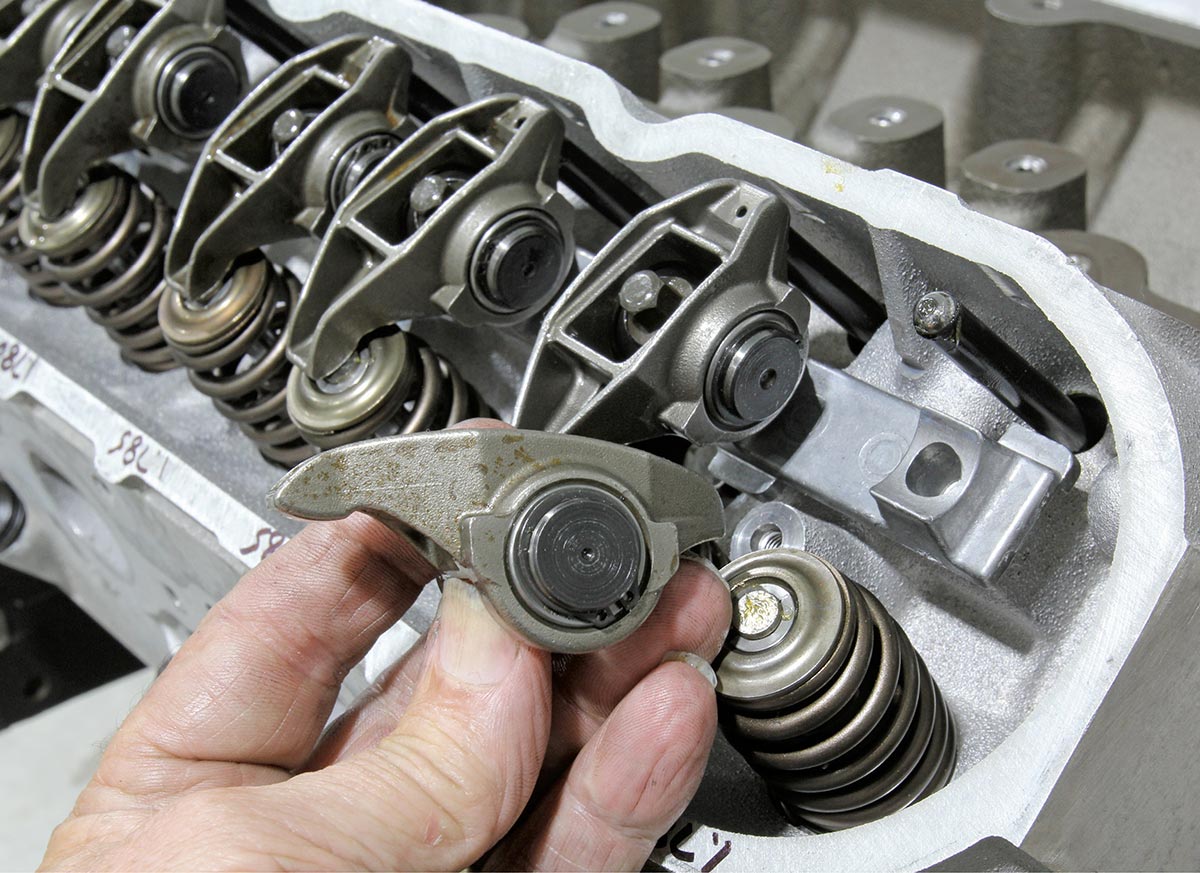
We had a local machine shop do a valvejob done to the stock 706 heads, but we did not perform any special pocket porting. We installed the LS6 springs and verified the installed height. We then used a set of ARP head bolts to secure the heads along with the 0.032-inch compressed thickness Cometic head gaskets. We used thinner gaskets to compensate for the below-deck piston deck heights. We followed that up by adding a set of Summit pushrods connected to the stock rockers that had been upgraded with a set of Summit trunnion bearings.
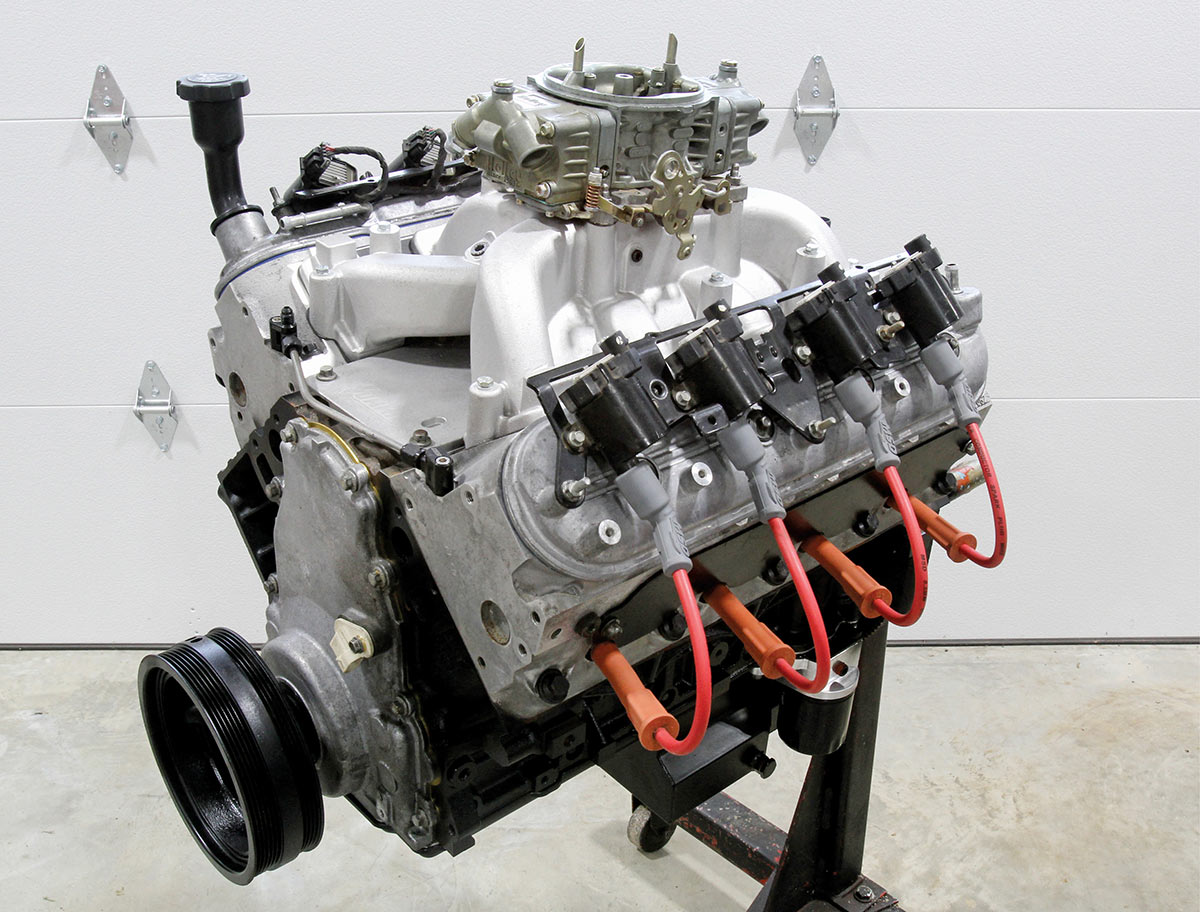
We topped our upgraded 5.3L with a Holley dual-plane carbureted intake manifold and our favorite 750-cfm Holley carburetor. When converting to carburetion, we also had to add MSD’s LS ignition box that is triggered by the signals from the stock crank and cam sensors. We were missing the coil sub-harness but found a set of wires from Summit to complete the ignition wiring. We connected the stock coils to the AC plugs with a set of MSD plug wires.
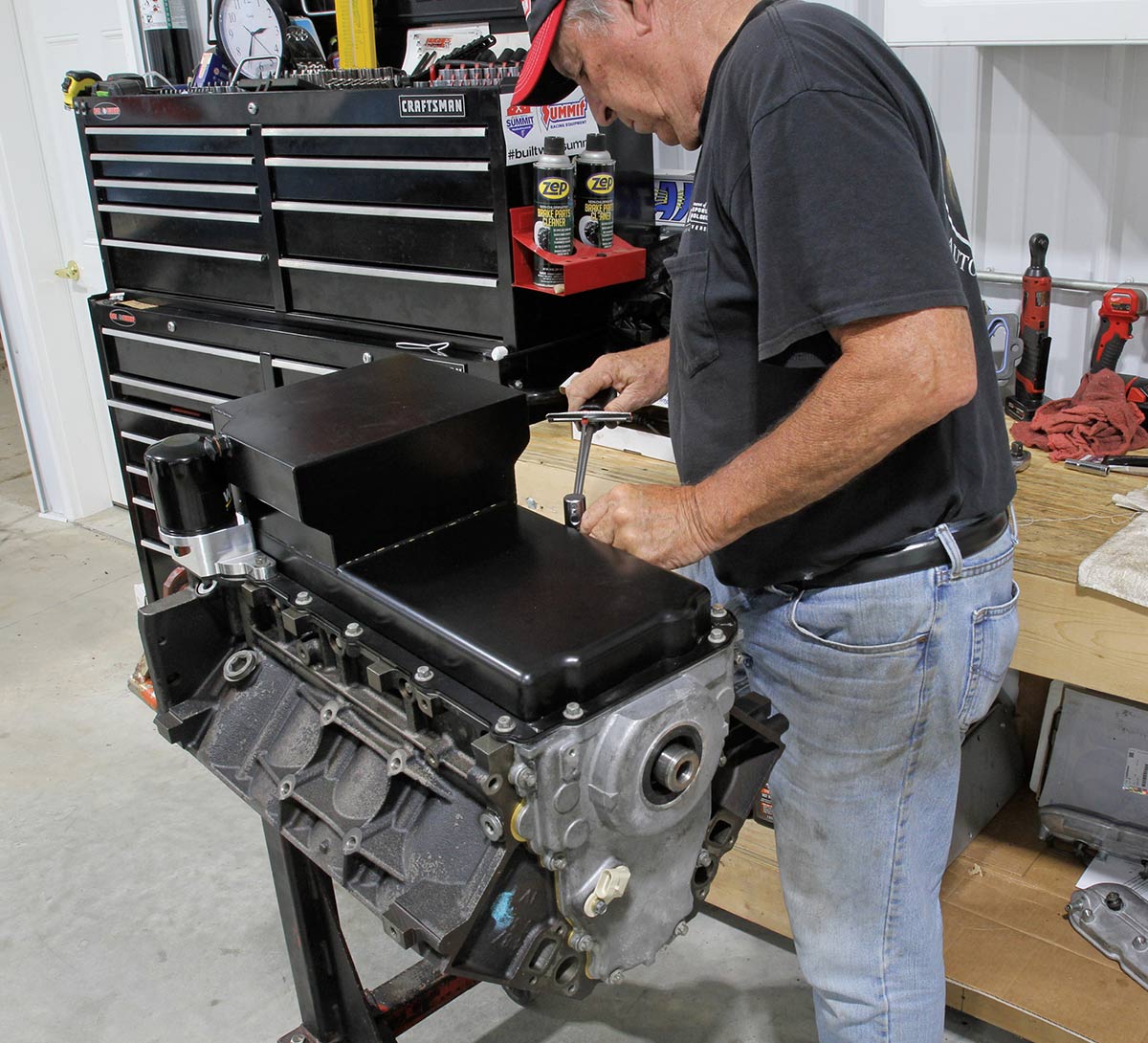
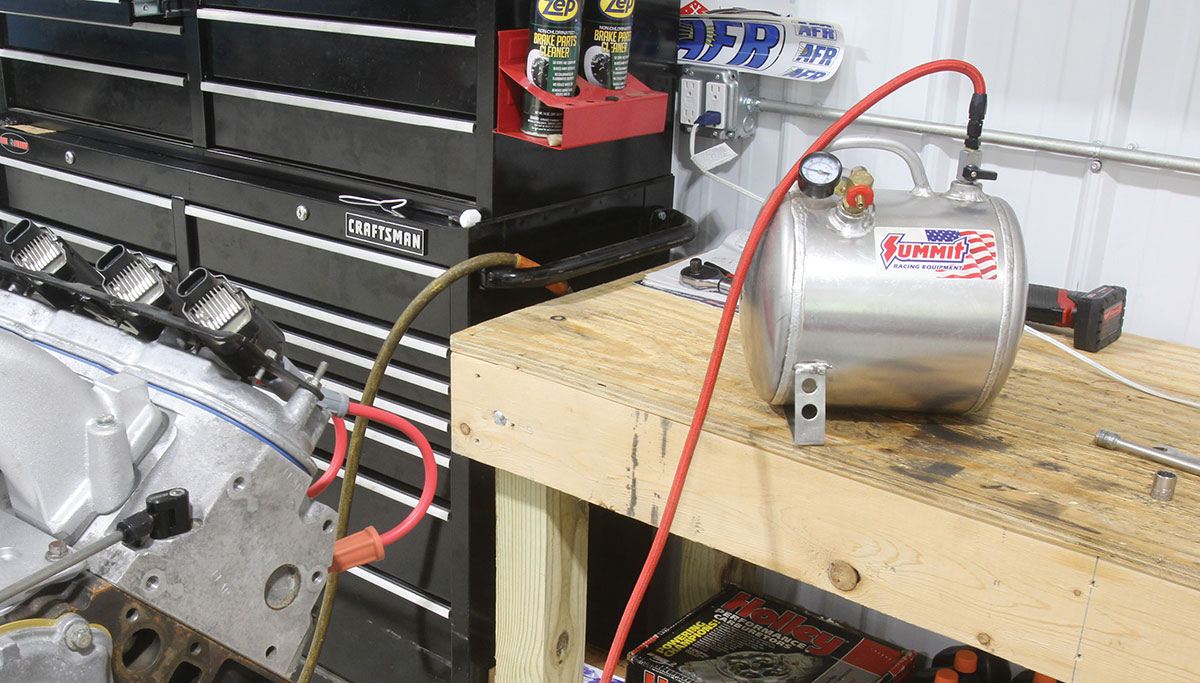
The final step was to pressure lube our new engine with Summit’s small aluminum pressure tank. We filled the tank with Driven GP-1 SAE 30W break-in oil and used 50-psi air pressure in the tank to push oil through the galleys so when we fired the engine there was plenty of lube throughout the entire engine.
Another option for this engine might be to outfit it like the SDPC test with a TBSS intake and EFI. While the TBSS intake is cool, it is tall and may not squeeze under an older muscle car hood line. One advantage of this intake is that not only is it affordable but will also make a little more low-end torque compared to our dual-plane intake.
Overall, with our added compression, SDPC LS6 PowerMax Plus camshaft, and our carbureted intake, we’re shooting for the same 448 to 450 hp as the SDPC dyno test despite our smaller intake valves. Yes, low-end torque will be down compared to a shorter duration cam but having more torque and horsepower above 3,000 rpm is the real reason for choosing this cam. This engine promises to feel strong, especially when paired with a stall speed converter and decent rear gears.
To put all this into perspective, we’ve built a 0.010-over LS engine displacing 327 ci. Back in the ’60s, the 327 was a great little engine. But even with today’s good parts, it would take an all-out, high compression, big roller-cammed Gen I 327 effort to make 450 hp. Gen IV LS engines don’t have to work very hard to make to 450 hp as evidenced by SDPC’s dyno test. Yes, that LS6 PowerMax Plus cam pushes the peak horsepower up to 6,100 rpm. The LS6 valvesprings can handle the rpm just fine, so you could shift this engine at 6,400 with no worries about losing control of the valvetrain.

It’s all a matter of what you want and what you’re willing to compromise on your way to making power. Regardless of which cam you choose, it will be a fun ride.