

 TECH
TECH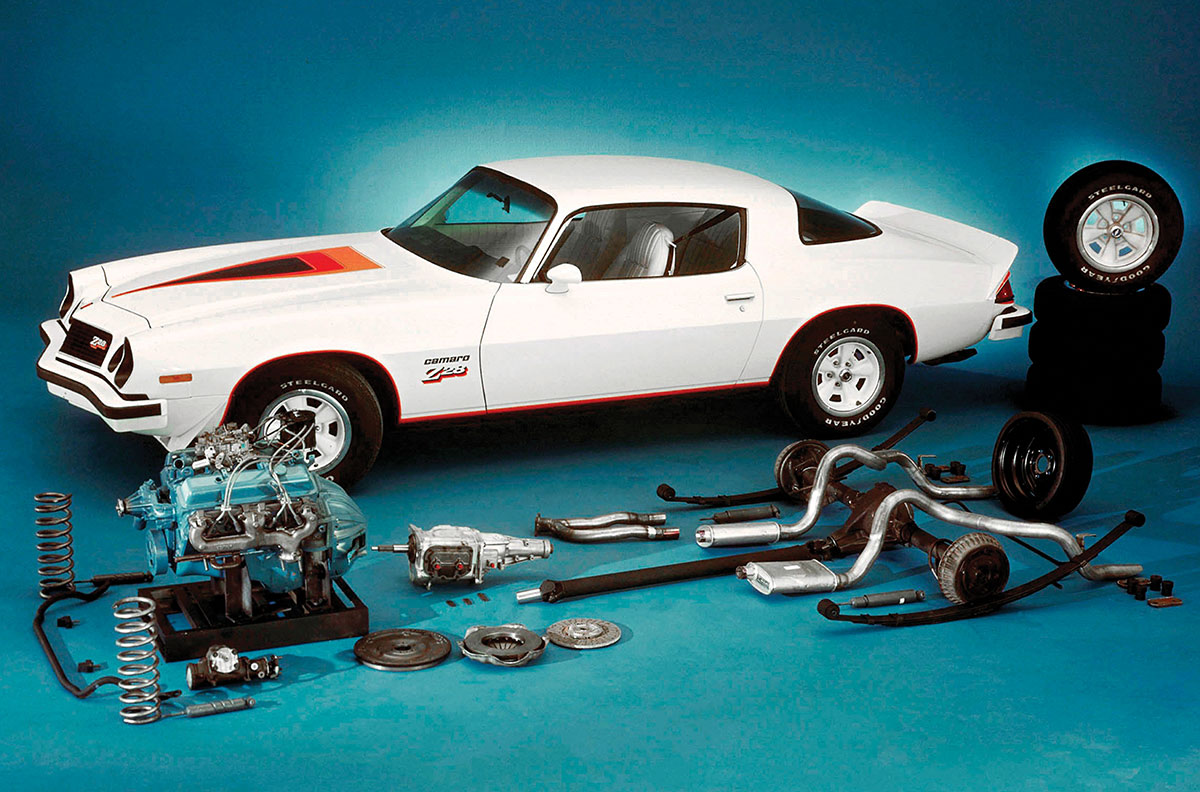
 Never an appearance package, the Camaro Z28 always backed up its aggressive style with elevated performance centered on handling. This factory image shows all the unique elements that went into the 1977 model.
 IMAGES BY THE AUTHOR & COURTESY OF GENERAL MOTORS
or just about 60 years now, the Camaro Z28 has not only been synonymous with high performance, it has epitomized it. What started as a homologation special to get Chevrolet on the grid in the knock-down, drag-out, road-course cage matches of SCCA’s Trans-Am series grew into a virtual brand of its own.
As with the Camaro itself, the Z28 has once again been consigned to the garage of history, but its enduring legacy is rooted in the simple fact it was never a poseur performer. From the first edition in 1967 to the final example in 2024, it was a model that always followed the maxim “form follows function.”
“The Z28’s focus was always on handling,” John Heinricy, the longtime racer and former chief engineer for the Camaro, says. “From that perspective—even when factory high performance lost its way in the ’70s—the Z28 stayed true to its roots. Chevrolet always understood the assignment.”
It all started in 1966—the inaugural year of the Trans-American Sedan Championship. Chevrolet sat it out, abiding by a gentleman’s agreement with Ford and Chrysler to stay out of factory-backed racing. But when both crosstown rivals broke the agreement and the series quickly mushroomed in popularity, Chevy was compelled to respond. With a hastily composed program led by engineer Vince Piggins, Chevrolet vowed to enter the fray in the 1967 season with a Camaro homologated ideally for it. SCCA demanded production of at least 1,000 road-going examples, each with an engine displacing no more than 305 ci.
Chevrolet didn’t quite achieve that goal in the Z28’s first year, as the model got off to a quiet start. In fact, it didn’t even have an official model designation and it wasn’t listed in the Camaro brochure. It became known simply for its Special Performance Package order code: RPO Z28. Chevrolet quickly realized the marketing opportunity during the height of the muscle car movement and made the car a distinct model of its own—and a legend was born.
The heart of each model was a unique engine, but also suspension elements and tuning not shared with other Camaros.
“It could always hold its own on a dragstrip, but from the very start the Z28 was bred for a road course,” Heinricy says. “Honestly, it was so much better at that than cars like the Mustang.”
The same thing went for braking, too. In fact, it was Heinricy’s work as an engineer and racer that helped advance the Z28 track legacy. In the late ’80s, he was instrumental in getting the 1LE performance package approved.
“There wasn’t any fanfare or marketing support with it,” Heinricy says. “It was designed strictly for racing.”
That’s just how the Z28 itself got its start, too. It wasn’t offered every model year of the Camaro’s six-generation run, but when it was, it came with the assurance there was more to its package than stripes or badges. That’s exactly what we’re exploring here. For the record, Chevrolet has spelled the model Z/28, Z-28, and Z28. For the sake of simplicity and consistency, we’re sticking with Z28 throughout this story.
Along with the 302 engine, RPO Z28 included dual exhaust, a heavy-duty radiator with a five-blade fan, F41 suspension with stiffer springs (including tapered monoleaf rear springs), a right-side traction bar, quick-ratio steering, 15×6 Rally wheels, and a 12-bolt rear axle with an open differential and a 3.73 gear ratio. There wasn’t Z28 badging at first, but twin stripes were included. There were mandatory options, too, including a close-ratio Muncie M21 four-speed transmission and power-assisted front disc brakes.
Additionally, a posi rearend was available, along with a rear spoiler and sintered-metallic rear brake shoes. Dealer-available upgrades included a cowl-attached cold-air intake and even a cross-ram intake system with dual Holley four-barrel carburetors. The RS package and other regular Camaro options were available, too, but the SS package and a convertible model were not allowed with the Z28 package. No automatic transmission or air conditioning, either.
Chevrolet only ended up producing 602 examples for 1967 but found a loophole to keep the car legal for racing. For the 1968 model year, the Z28 returned with identification badges on the front fenders and a few mechanical upgrades, including a new large-journal cylinder block. On the suspension side of things, the monoleaf design in the rear was changed—like other Camaro models—to a four-leaf design with staggered shocks.
In its final year of the Camaro’s first generation, the 1969 Z28 returned with the design changes that greeted all models, while the DZ 302 had further tweaks. The big news was four-bolt mains for the block, while the Holley four-barrel carb was rated at 780 cfm rather than the previous 800 cfm. Also, the shifter for the Muncie gearbox was blessedly changed to a Hurst unit. The wheels also stretched to 15×7 and there were slight changes to the front brakes, although four-wheel disc brakes became optional for the first time. Hardly anyone knew about them and only 206 cars were produced with the ultrarare RPO JL8 brake package.
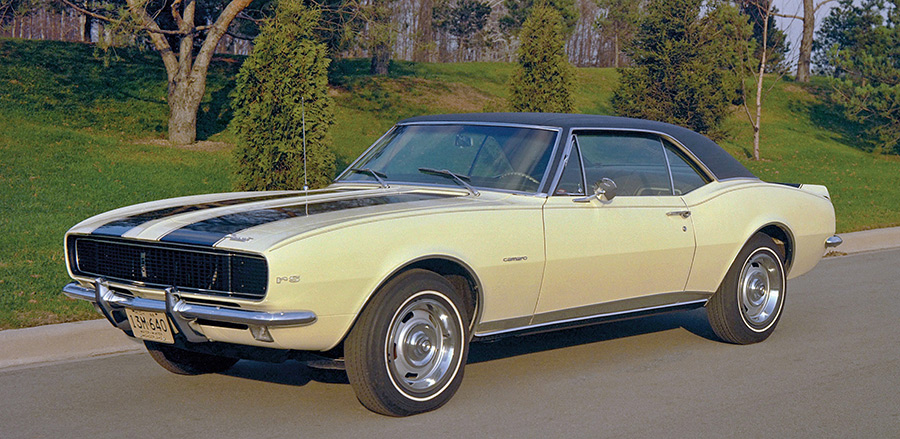 In 1967, the first Z28 slipped into production with little notice. It came with a lengthy roster of powertrain and suspension upgrades, but Chevrolet was adamant about what the car couldn’t have: no automatic transmission, no air conditioning, and no convertible roof.
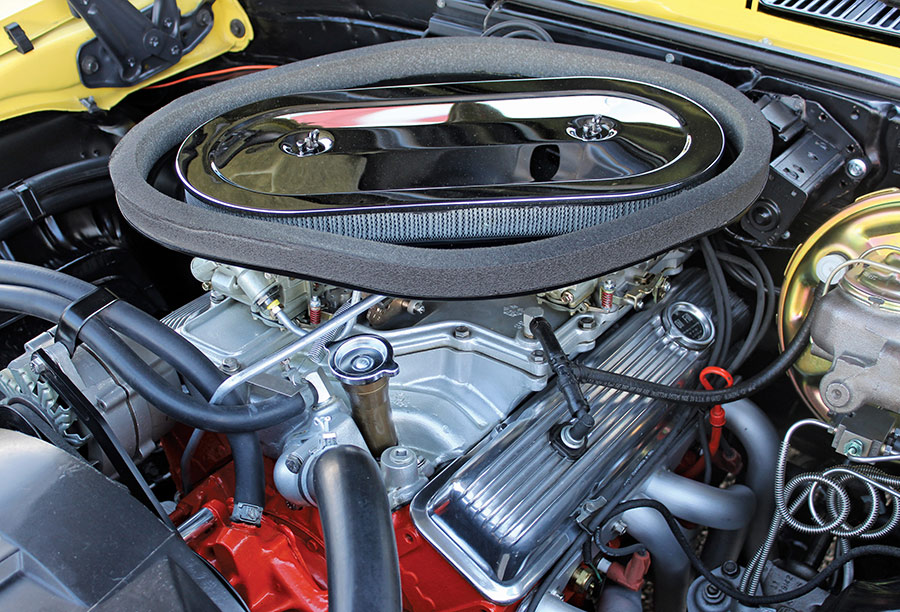 The heart of the Gen 1 Z28 was the rev-happy, DZ-code 302ci small-block engine. It used a small-journal two-bolt-main block in 1967, a large-journal block in 1968, and a beefier block with four-bolt mains in 1969. The cross-ram induction system seen here was an over-the-counter accessory ordered through dealers.
 By 1969 the Z28 was a high-performance phenomenon, with more than 20,000 examples produced. Four-wheel disc brakes were available for the first time, but only 206 cars were ordered with the JL8-code package.
An F41-code suspension was part of the package, too, but while it was available on other models, the Z28 maintained a few additional exclusive elements, including a beefy, 1-inch-diameter front stabilizer bar that was nearly 40 percent thicker than the one offered on other models. It helped the car stick in the corners like almost nothing else this side of Stuttgart or Maranello.
Across the industry, compression ratios and power ratings dropped in 1971. The bite it took out of the Z28 was about 30 advertised horsepower, but what didn’t change was the car’s handling prowess. The same suspension package carried over, although a slower steering ratio was used. Horsepower tumbled again for the next couple of years, while the only other noteworthy performance changes included another change to the steering gear to ensure it was more responsive than the revised 1971 system.
After the 1974 model year, the Z28 disappeared for two model years, reemerging in 1977. It still had its own engine—a 350 rated at an admittedly meager 185 hp—and a unique handling package. It wasn’t merely a carryover of the ’74 model, either. The spring rates were stiffer, the shocks were re-valved, and even the rubber bushings for the rear leaf springs were higher durometer. On top of that, the front stabilizer bar grew to 1.2 inches in diameter.
The 1977 Z28 kicked off a more high-profile appearance for the car, too, that would include a prominent yet decorative hood scoop in 1978 and bold lower-body graphics by 1979. The appearance would evolve for the remaining years of the Camaro’s second generation, but the performance capability remained essentially the same through 1981.
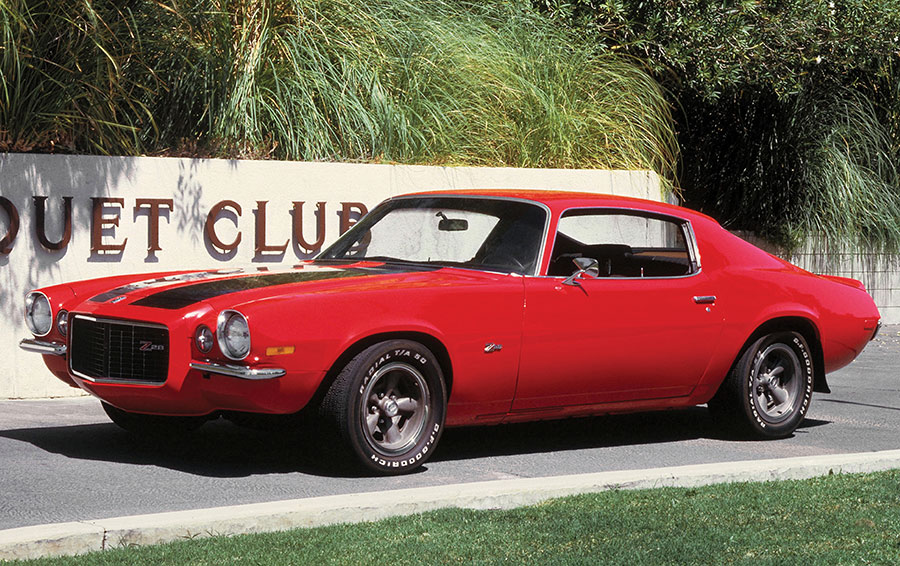 The Gen 2 Camaro Z28 introduced an all-new architecture. It shared the first-generation model’s 108-inch wheelbase but was nearly 3 inches wider—a change that enhanced the handling dynamics for which the nameplate was already renowned. Engineers also doubled down with even larger stabilizer bars and higher-rated springs.
 Another all-new, exclusive engine was introduced with the 1970 Z28: The LT1 350. It featured a block with four-bolt mains, an 11.0:1 compression ratio, forged pistons, solid lifters, a Holley 780-cfm carburetor, a baffled oil pan, and more. It was underrated at 360 hp.
 The muscle car era was effectively dead by 1974, but the Z28 retained an exclusive version of the 350 small-block, rated at 245 hp. It also continued to feature a specific steering-and-suspension package that made it one of the best handling cars of its day.
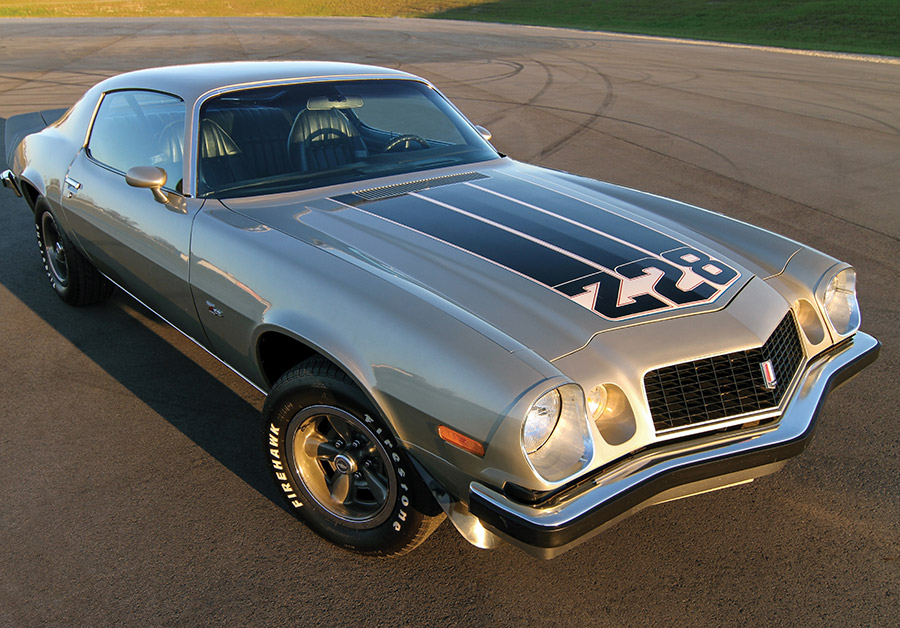 Fun fact: The large hood graphic on the 1974 Z28 was an option (RPO D88) and wasn’t originally intended to have a white background. It was supposed to be clear between the black stripes and “Z28” logo, but definitely looks better with the contrasting white background.
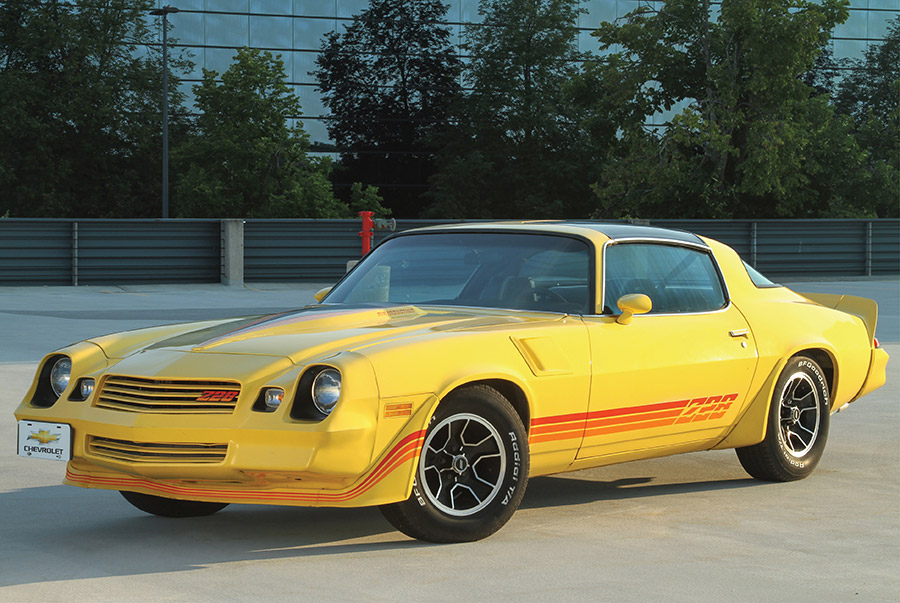 The Z28 wasn’t immune from the tape-stripes-and-spoilers mania of the late-’70s and early-’80s, as this 1980 model shows, but again the car maintained specific suspension elements and a unique powertrain option. The Z28 was the only Camaro available with a 350 engine by the start of the ’80s and in 1980 it was rated at 190 hp.
The Z28’s proven recipe of distinctive styling, an exclusive powertrain choice, and specific suspension tuning was as popular as ever. At the start of the generation, it included the 305ci Cross-Fire V-8 engine with electronic fuel injection, along with suspension elements featuring stiffer bracing and higher durometer bushing materials. There was also stiffer springs and dampers, along with thicker stabilizer bars. A four-wheel disc brake system was also available only on the Z28.
Engine choices would eventually include a high-output version of the carbureted 305 V-8, while the Z28 name would disappear from 1988-90, after the optional IROC-Z package—introduced in 1985—displaced it for a while. It was during that time that the 1LE package, with an even stronger brake system, an aluminum driveshaft, and more, was quietly slipped onto the options list.
The all-new, lighter architecture and more responsive handling made the Gen 3 Z28 a serious road-racing threat. It may not have necessarily been quicker than a Mustang GT in a straight line, but its cornering and braking capabilities were in league with Europe’s best. In fact, one of the biggest problems third-gen Camaro racers had was getting rear-ended in the corners by Mustang drivers who couldn’t brake as hard.
By 1991, the IROC series moved to the Dodge Daytona body, so Chevrolet dropped the IROC-Z model and reintroduced the Z28, which featured a unique hood and pedestal-style rear spoiler. It was also available with the 1LE package that continued helping racers hammer other Showroom Stock competitors across North America.
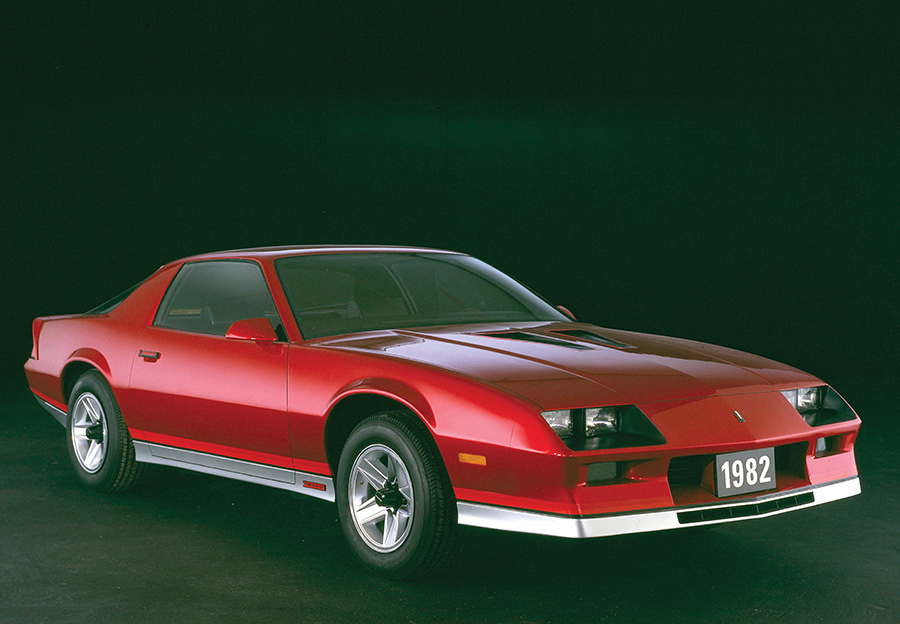 The Z28’s swing back toward high performance began with the 1983 introduction of the optional L69-code of the 5.0L H.O. engine, which featured a higher, 9.5:1 compression ratio, a revised intake manifold, higher-flow exhaust manifolds, and more—including a dual-snorkel air cleaner. It was rated at 190 hp and was available through 1986.
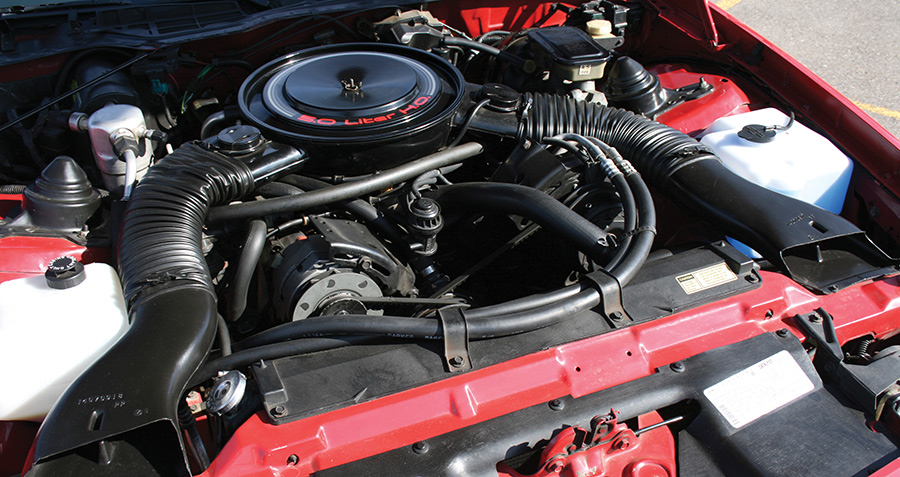 In 1982, the Gen 3 Camaro was introduced, and along with it an all-new Z28 that featured more modern suspension and steering systems, horsepower was still down. The Cross-Fire Injection EFI engine was the top offering and managed only a meager 165 hp.
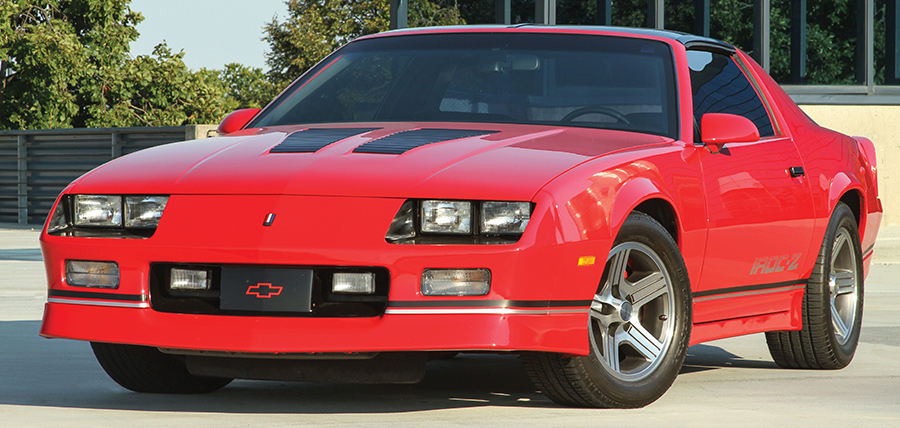 The 1985 introduction of the IROC-Z package upended the Camaro’s performance hierarchy. It became so popular that it replaced the Z28 in the lineup from 1988-90. It was initially offered with the carbureted 5.0 H.O. engine, but was later available with the 5.0- and 5.7L versions of the Tuned Port Injection small-block.
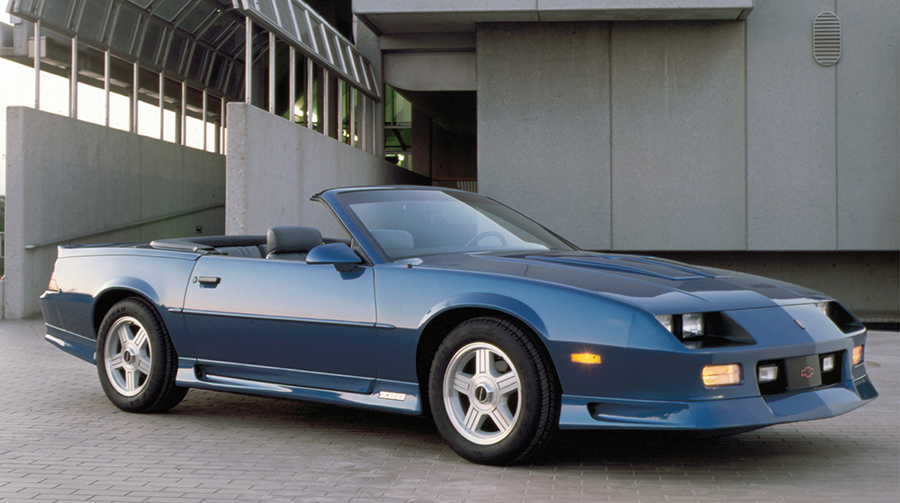 Chevrolet returned the Z28 to the lineup in 1991, carrying over the available 5.7L TPI engine from the IROC-Z, along with unique suspension and steering elements. Chevrolet also expanded availability of the Z28 convertible, which launched in 1987 with only 744 produced and disappeared with the Z28 model for the next three model years.
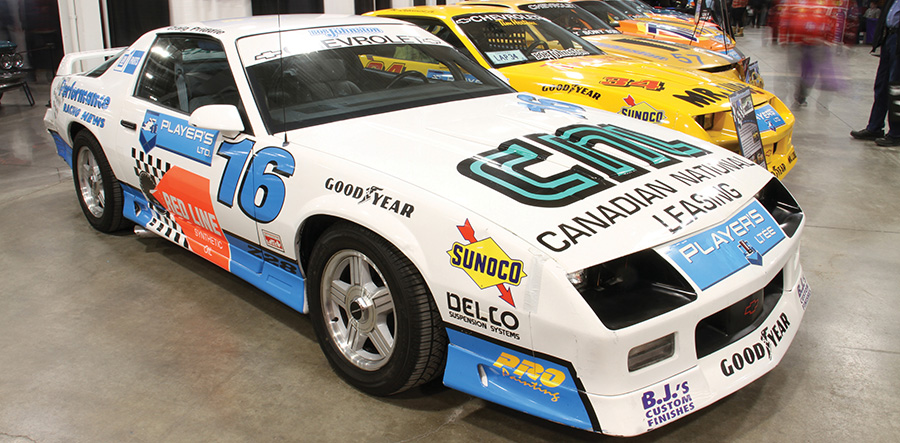 During the IROC-Z’s production, Chevrolet quietly slipped the 1LE performance package onto the Camaro’s option list to help road racers gain an edge on the track, including competitors in SCCA Showroom Stock classes and Canada’s hotly contested Players Challenge series. The option carried over into the Z28’s return to the lineup in 1991.
For a more elevated performance experience, savvy buyers or racers had to opt for the 1LE package, which was only available with the Z28. It included unique damper ratings, de-contented equipment to save weight, and the same aluminum driveshaft that was part of the Gen 3 1LE package. In short, it was an option that made the Gen 4 Z28 more like the original first-generation models.
Just as the Gen 3 Z28 was overshadowed by the IROC-Z, the introduction of the SS package in 1996 would once again dominate the Camaro’s performance lineup. The Z28 remained in production through the generation’s entire run, but it was the SS that got the special engine and even more specific suspension tuning.
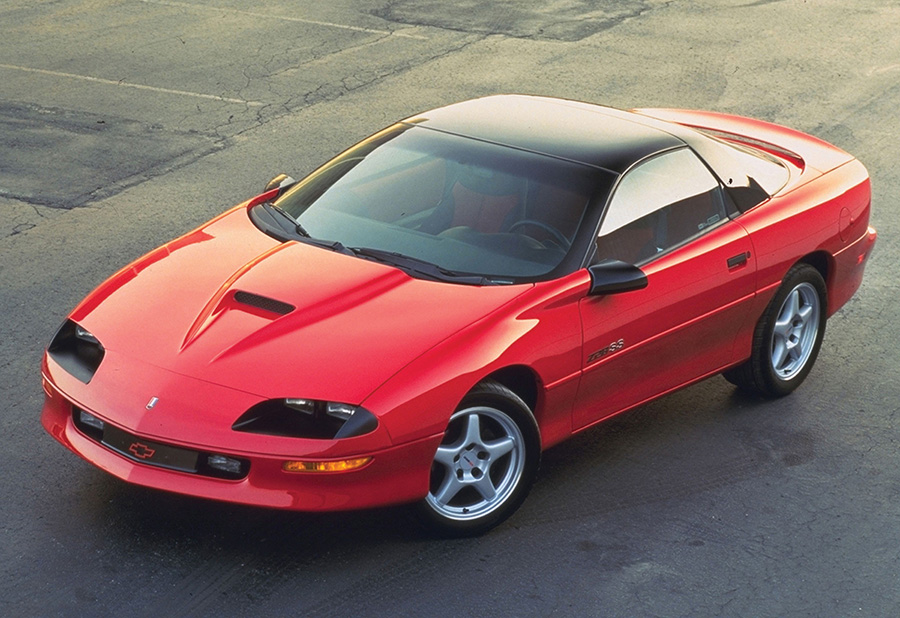 It was an all-new look with the Gen 4 Camaro, but the chassis and suspension configurations were largely unchanged. In this era, there wasn’t great distinction with the Z28, as it was the only model offered with a V-8 engine. A 1993 Z28 Indy Pace Car edition is shown.
 In 1996, the SS badge returned. It offered higher horsepower and a more performance-oriented suspension setup than the Z28. As with the IROC-Z a decade earlier, the SS would supplant the Z28 as the most capable car in the Camaro lineup—and for 1996 only, the car was officially known as the Z28 SS.
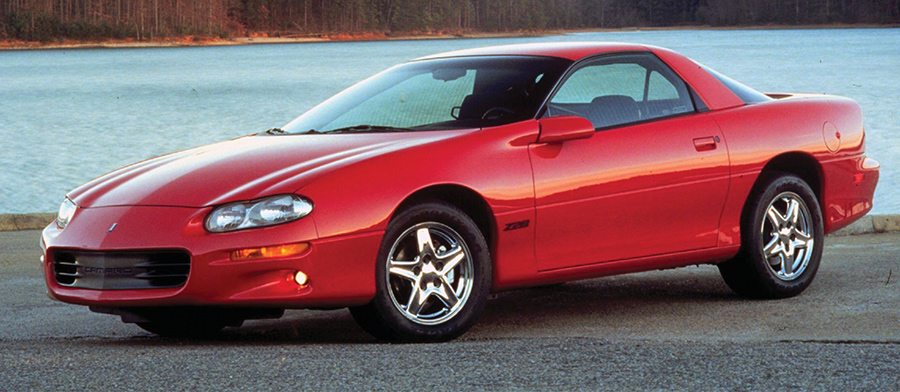 The Z28 continued to be offered with the SS throughout the fourth generation, including the design changeover in 1998 that also included the introduction of the 5.7L LS1 engine.
 Originally introduced in the C5 Corvette, the LS1 engine significantly elevated the Gen 4 Z28’s performance capability. It was rated at 310 hp, although SS models were rated at up to 325 horses.
 The Gen 5 Z28 was the last produced and inarguably the most aggressive, most powerful, and most track-capable variant in the Camaro’s history. Exclusive features included the 505hp LS7 engine, Multimatic spool-valve dampers, carbon ceramic brakes, and more.
“The supercharged car was a unique performer, but it didn’t fit the Z28 mold,” he says. “The Z28 needed to be the nimbler, track-focused handler of the lineup.”
And so, the Z28 was reborn with the naturally aspirated, high-revving LS7 engine originally introduced in the commensurately track-capable Corvette Z06. Along with the engine, the Z28 received carbon ceramic brakes, racing-style Multimatic DSSV spool-valve dampers, a limited-slip differential with helical gears, and lots more. To trim weight, some sound deadening was eliminated, a smaller battery was used, and even thinner side glass was installed.
Like the original Z28, the Gen 5 model wasn’t necessarily the fastest Camaro offered, but its focused performance was peerless. It was a true return to form.
Also like those early cars, production was scant. Only 509 were produced in 2014, which was less than the run of 1967 cars. For 2015, production inched up to 1,292, bringing the grand total for Gen 5 Z28s to a mere 1,801.
And that was all Chevy wrote. The Z28 did not return with the Gen 6 Camaro and with the Camaro rolling out of production for a second time at the end of 2024, it’s not likely there will be another anytime soon.
Over six decades, the Camaro Z28 redefined the muscle car, proving balanced performance was just as rewarding as straight-line thrills. It may have evolved with time and technology, but that balance remained its core.
The engineers always understood the assignment.
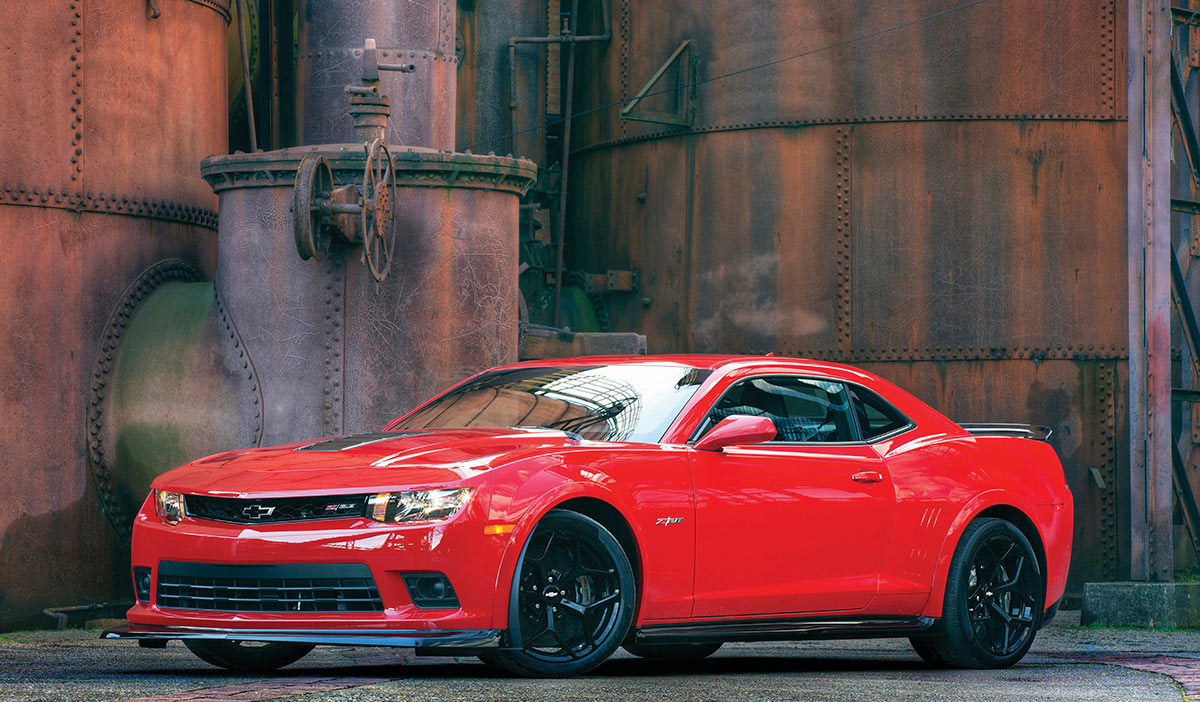 A little more than 1,800 Gen 5 Z28s were produced over two model years (2014-15), making it the rarest Z of them all.