






Engine Tuning
Maintenance Tips
Talk ON
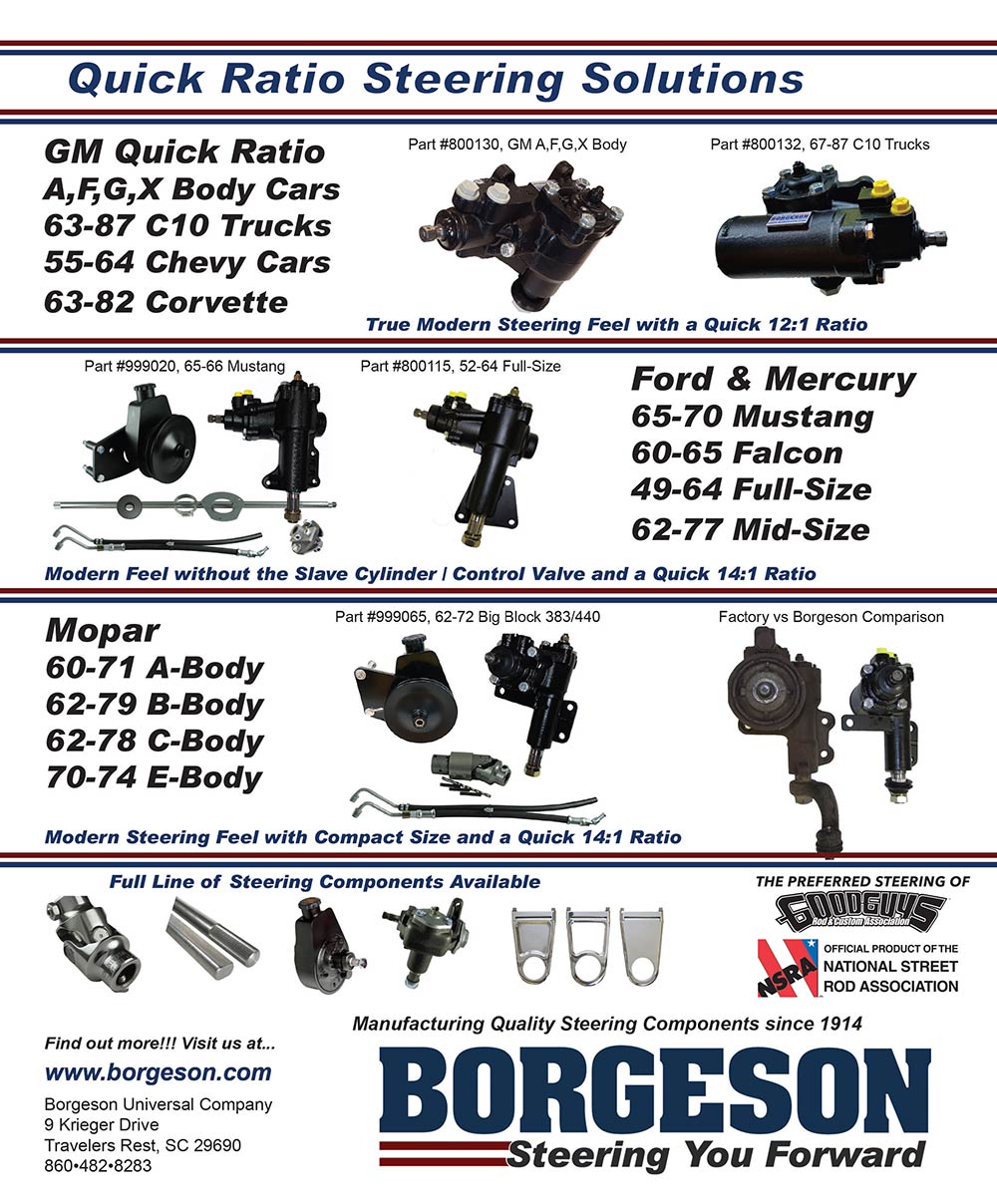
Steering
Linkage

Preview Issue




 TOC
TOC
Cover image by Jason Matthew






“Rotten” Rodney Bauman, Jefferson Bryant, Tommy Lee Byrd, Ron Ceridono, Ron Covell, Grant Cox, Fuelish Media, John Gilbert, Tavis Highlander, Jeff Huneycutt, Barry Kluczyk, Scotty Lachenauer, Patrick Lauder, Jason Lubken, John Machaqueiro, Ryan Manson, Jason Matthew, Josh Mishler, NotStock Photography, Todd Ryden, Jason Scudellari, Jeff Smith & Chuck Vranas – Writers and Photographers
Travis Weeks Advertising Sales Manager
Patrick Walsh Sales Representative
ads@inthegaragemedia.com
AllChevyPerformance.com
ClassicTruckPerformance.com
ModernRodding.com
InTheGarageMedia.com
inthegaragemedia.com “Online Store”
For bulk back issues of 10 copies or more, contact store@inthegaragemedia.com
info@inthegaragemedia.com
Editorial contributions are welcomed but editors recommend that contributors query first. Contribution inquiries should first be emailed to info@inthegaragemedia.com. Do not mail via USPS as we assume no responsibility for loss or damage thereto. IN THE GARAGE MEDIA, INC. reserves the right to use material at its discretion, and we reserve the right to edit material to meet our requirements. Upon publication, payment will be made at our current rate, and that said, payment will cover author’s and contributor’s rights of the contribution. Contributors’ act of emailing contribution shall constitute and express warranty that material is original and no infringement on the rights of others.

Copyright (c) 2026 IN THE GARAGE MEDIA, INC.
PRINTED IN U.S.A.


Cleveland, OH
(216) 281-8777


 firing up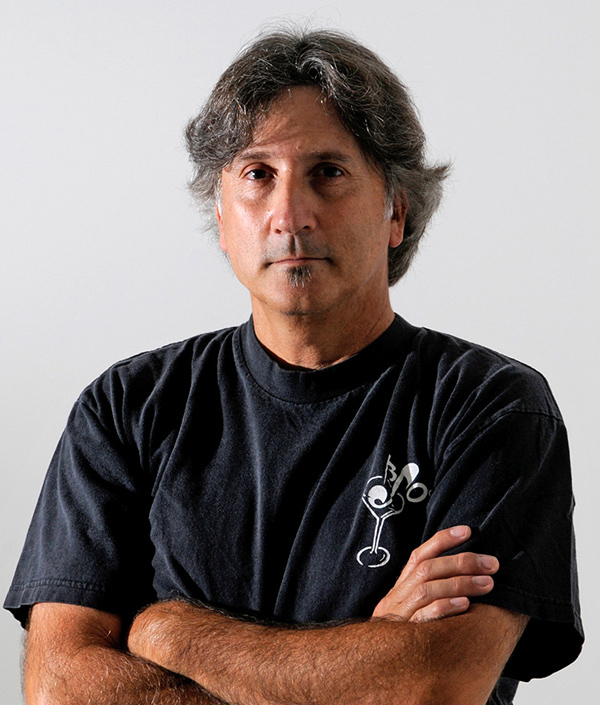
 BY NICK LICATA
ere we are, right in the middle of Summer and the show season is firing on all cylinders. For us in SoCal, a stretch of unseasonably warm weather back in March and April ensured all the local coffee cruises went on as scheduled without a hitch.
One standout was the Hotrods N’ Heroes outdoor car show March 29th in Huntington Beach, just steps from the sand. This event was put on by the QruisinPCH crew—the same gang behind the Quarantine Cruise that rolls out every third Sunday of the month in Costa Mesa, so expectations were already high.
But Hotrods N’ Heroes was more than just a car show. The event shined a spotlight on the 42 Foundation, an organization dedicated to supporting law enforcement officers, their families, and the Southern California community through financial assistance, youth programs, and outreach initiatives. By partnering with local advocates and organizations, the foundation continues to raise awareness and provide meaningful support for those who serve and protect.
 PARTS BIN





 CHEVY CONCEPTS

 Text & Rendering by Tavis Highlander
ot only was 1958 the debut year of the Impala, it was also a single-year run for the body design. Three taillights, a shorter greenhouse, and longer wheelbase separated it from the other Chevrolet models. The styling advances didn’t go unnoticed by pop culture. Buddy Holly owned a ’58 and, of course, there’s the one in American Graffiti.
For this specific Impala, Ironworks will nail the stance with a full chassis swap. Raceline Classico wheels offer up clearance for modern brakes and tires while retaining a vintage look. Most of the exterior bits will stay stock or stock looking since the styling is fantastic on these as-is. A rich, gold metallic paint is in the works for the main body while a slightly creamy white roof will be added as an accent.
 FEATURE
 IMAGES BY JASON MATTHEW
hen acquiring a new project car, some start the journey with a rusted hulk knowing the road ahead includes the daunting task of stitching in new sheet metal from bumper to bumper, while others are fortunate to start off with a fully restored classic that whispers, “drive me now and change me later.” For most, that solid base is a great starting point to move forward building the car they’ve always wanted. Next comes finding the time, the funds, and having the stars align just right to make it all happen.
Joe Benedetto found this 1966 Nova back in 1999 in a humble newspaper listing introducing him to an original restoration in excellent condition. The ad didn’t lie. The Nova was clean, straight, and honest. The sheet metal hadn’t been chewed up by time and poor decisions. Joe didn’t hesitate, and just like that, the Nova became less of a purchase and more of a passport.

 TECH
TECH
 IMAGES BY THE AUTHOR
aving an old Chevy requires a level of commitment that often crosses the boundaries of practicality before the project even begins. Let’s be real: It’s not practical to spend $1,000 on a $2,000 beater, because it doesn’t automatically make it worth $3,000. So, you might be wondering why we’d want to wake up a tired 305 that rests under the hood of a ratty 1977 Nova four-door. It’s not the most beautiful project, but it’s the absolute cheapest entry point into this hobby we know and love. In this case, we’re ditching a smog-era two-barrel setup in favor of a perfectly simple top-end package from our friends at Summit Racing.
The old 305 was operational but certainly lacked in the efficiency and performance departments. The Rochester two-barrel carburetor needed work, and we minimized the car’s extensive vacuum line arrangement in hopes of better idle quality and performance. Basic tune-up and ignition timing adjustments helped but still didn’t accomplish the goal of a true daily driver. Of course, we could’ve scrounged at swap meets, or rebuilt the existing components to save some bucks, but at the end of the day we were looking for a weekend makeover with no drama. We got exactly that with the Summit Racing Carburetor and Intake Manifold Combo Kit—a simple install, affordable parts, and a one-stop solution to handle the entire project.
We ordered the Summit Racing 03-0193 kit, which includes an aluminum dual-plane intake manifold, 600-cfm four-barrel carburetor, and all the associated parts needed to complete the install. We’re talking gaskets, hardware, and even a tube of RTV to seal up the front and rear of the intake. We picked up a few other pieces from the Summit Racing catalog along the way, including a ready-to-run HEI distributor, and our bill came out right at $1,000 for the entirety of our weekend makeover.



 Feature
 IMAGES BY NOTSTOCK PHOTOGRAPHY
ennis Terning has been a self-described motorhead since he can remember. At just 5 years old, he was bending the rules of normal, riding his Montgomery Ward minibike to school every day he could get away with it. His racing career started at age 10 when he purchased a 1975 Yamaha YZ 80. With the help of his brother, Eugene, they upgraded the bike with aftermarket parts to make it go faster and went flat track racing. They even got it up to 85 mph with an 80cc engine. Quite a feat for the young ambitious brothers who had yet to learn the meaning of restraint.
By the time he was 15, Dennis made his move into the car world, picking up a 1967 Nova that most would have passed by without a second look. The 400ci engine underhood was destroyed, but the price was right. Not deterred, Dennis was already forming a vision and within a year had a rebuilt 406ci small-block between the ’rails. That engine was accompanied by a fresh plush velvet interior, new coat of Brandywine paint, and a set of Keystone classic wheels wrapped in Firestone Super Sport rubber. It was 1980, and the car was making a statement. Loud, proud, and more than willing to haze the tires at a moment’s notice.
 TECH
TECH
Properly Installing Poorly Installed Steering Linkage In A 1967 Chevelle
IMAGES BY THE AUTHORhen our buddy Adan Resendez relayed the steering plight that his newly built Chevelle had suffered, we were initially relieved that he was able to safely limp the car to the shoulder of a residential road near his home. After initial inspection, however, our relief turned to terror as we began to unravel the heinous acts of mechanical ineptitude. What should have been a fairly simple, straightforward installation for any reasonably handy car guy turned into a nearly fatal mistake in Resendez’s ’67 Chevelle steering linkage.
While it’s not uncommon to uncover shoddy work from time to time, this instance was one for the record books.
With our shock subsided, we shifted gears and began to develop a plan to get the old Chevy back on the road and safely, starting with quality U-joints and shafting and a proper method to secure the steering column that wasn’t. From there, we also addressed another issue we found, an incredibly noisy power steering system caused by an incorrect reservoir and exacerbated by its location.
 FEATURE
 IMAGES BY THE AUTHOR
here’s an old saying that goes, “If you’ve got the fangs, just sink ’em in.” Well, if Joe Canon’s 1967 Chevelle was an animal, it certainly would possess a hefty set of choppers just waiting to gnaw its way through the competition. This big-block, big-tire, behemoth has the teeth where it counts and responds to the competition with a hearty “chomp,” never biting off more than it can chew.
Joe’s run up to owning this incredible muscle car was not achieved out on the macadam, but rather more or less by playing in the dirt. “My early experiences weren’t with cars, but dirt bikes and ATVs. Those were my main interests while growing up. It wasn’t until I was 35 years old that I was introduced to the muscle car scene by my friend, Mike. He had a 1972 split-bumper Camaro and I was instantly hooked the moment I laid eyes on it. We started going to a lot of car shows together, and I quickly fell in love with the hobby,” Joe states.
IMAGES BY THE AUTHORhere’s an old saying that goes, “If you’ve got the fangs, just sink ’em in.” Well, if Joe Canon’s 1967 Chevelle was an animal, it certainly would possess a hefty set of choppers just waiting to gnaw its way through the competition. This big-block, big-tire, behemoth has the teeth where it counts and responds to the competition with a hearty “chomp,” never biting off more than it can chew.
Joe’s run up to owning this incredible muscle car was not achieved out on the macadam, but rather more or less by playing in the dirt. “My early experiences weren’t with cars, but dirt bikes and ATVs. Those were my main interests while growing up. It wasn’t until I was 35 years old that I was introduced to the muscle car scene by my friend, Mike. He had a 1972 split-bumper Camaro and I was instantly hooked the moment I laid eyes on it. We started going to a lot of car shows together, and I quickly fell in love with the hobby,” Joe states.
 TECH
TECH IMAGES BY THE AUTHOR & JEFF HUNEYCUTT
he classic hot rodder approach is most often to concentrate first on making horsepower followed by enhancing the appearance of our ride and then perhaps down the road we’ll pay attention to other systems like suspension or brakes, but usually only if there is a problem. However, quickly approaching a busy intersection is not the time to discover the brake pedal sinks to the floor.
With the weather getting better by the day, this is a great time to sneak a peek at the brakes on our ride and perform a little preventative maintenance. We’ll assume for the purpose of this story we’re working with a typical 1970’s disc and drum combination. In our case, two of our rides are equipped with the classic GM single-piston floating caliper front-disc brake system combined with drum brakes in the rear.
Among the items that need attention are the condition of the brake pads and rotors, along with those flexible brake hoses on each front wheel and the rear hose over the rearend that is completely overlooked. To illustrate how that hose can fool you, we were suffering from dragging rear brakes that fooled us for a time until we realized the rear brake hydraulic hose had internally delaminated and was retaining pressure to the rear brakes just enough to drag and overheat the brakes. Externally, the hose appeared fine, but internally the rubber line had collapsed and would capture fluid, not allowing it to return to the master cylinder. If any of the rubber hydraulic lines appear cracked or damaged, this is the perfect time to replace them.

 FEATURE
 IMAGES BY THE AUTHOR
he Grand National Roadster Show is full of cars that scream for attention. Andrew Topolski’s 1968 Camaro isn’t one of them. It didn’t need to be. Sitting in Blazing Blue under the lights, the car projects a kind of quiet authority—stance locked in, proportions dead-on, details sharpened rather than exaggerated. It’s the kind of Camaro that makes people stop, tilt their heads, and come back for another look. That’s exactly what Andrew and builder Jimmy Shine set out to create: a modern street fighter with old-school instincts.
Andrew, a 43-year-old electrical engineer from the Bay Area now living in Orange County, didn’t begin his automotive life in the muscle car world. He grew up in the import era, wrenching on small-displacement machines with friends and chasing backroads outside Hollister. But the real imprint came earlier, riding shotgun in his dad’s 1982 Z28. “He did burnouts and donuts,” Andrew recalls. “I was a little scared but excited at the same time.” That cocktail of fear and thrill never left him.
By 2019, he was ready for a first-gen Camaro—specifically a ’68. Where the ’69 is all squared-off aggression, the ’68 carries a sleeker, more elemental line. He found one that checked the right boxes: manual transmission, the right year, the right vibe. But the car had been cosmetically “rescued” in a way that hid more than it fixed. Rust had been skim-coated instead of repaired, and the bodywork was a patchwork of good intentions and bad technique. “He put a fine line of Bondo through the whole thing… right over really bad rust,” Andrew says. It wasn’t pretty, but it was a foundation.
 TECH
TECH
 IMAGES BY THE AUTHOR, PENNY KUSER, MIKE MORGAN & ANDY STARR
long, long time ago the traveling circus used to come to town, and part of that experience was the barker whose sole goal was to separate you from your money. One version of the ploy was the guy would guess your weight and then ask you to step on his scale. If he was right, it cost you, if he was wrong, you won a token prize. His scale was likely far from accurate.
That traveling circus has evolved into fast cars blasting down the quarter-mile but you can become that all-knowing predictor (with a little help from your smartphone calculator) to amaze your friends with your knowledge of quarter-mile potential. Right away you’re probably thinking, “Yeah, this will be some complex, long-haired formula that only geeky math majors will know how to use!” While we do have a few formulas to satisfy the math geeks, the most important one could not be easier to remember and use.
The goal of this simple exercise is to use the car’s quarter-mile trap speed to estimate an ideal elapsed time (e.t.). The formula is deceivingly simple yet holds up under intense scrutiny.


 FEATURE
Spiro Nikolopolous’ 1969 Camaro Z/28
Images by THE AUTHORn June of 1957 all the major American car companies signed onto the Automobile Manufacturers Association (AMA) factory racing ban. In the ensuing years management at Chevrolet, Oldsmobile, and Pontiac devised clever ways to get around the agreement, including through high-performance option packages that made cars nearly race-ready right off the showroom floor and covert “heavy-duty parts testing and developing” support for privateer racers. Initially, Ford and Chrysler were slightly more faithful to the AMA ban but by the early ’60s they too effectively ignored the agreement’s prohibitions, pouring huge amounts of money and technical resources into many different forms of racing.
The de facto abandonment of the 1957 AMA racing prohibition set the stage for one of the most competitive and entertaining racing series of all time. When created in 1966 it was called the Trans-American Sedan Championship, but the following year “sedan” was dropped and it was thereafter known as the Trans-American Championship, or simply the Trans-Am Championship.
Trans-Am was open to any FIA Group 1 and Group 2 cars, which in 1966 included Ford Mustangs, Dodge Darts, and Plymouth Barracudas. Ford won the 1966 Over 2 Liter class championship on the strength of four wins in the seven-race series. The schedule expanded to 12 races in 1967 and Ford again won the large-displacement championship, but there was a new competitor that put Dearborn on notice that its dominance was in jeopardy moving forward. That new entrant was a Chevrolet Camaro, but it was no ordinary Camaro—it was a Z/28 and it was fielded by Roger Penske and driven by Mark Donohue.
 EVENT
EVENT
Center At The Spring 2026
Pigeon Forge Rod Run
 IMAGES BY THE AUTHOR
igeon Forge, Tennessee, is a tourist town, so even on a regular weekend it fills with excited families who spend their time and money at amusement parks, special attractions, and great restaurants. But on Rod Run weekend, it’s all about the cars, as nearly every parking lot throughout town will be packed with cool cars. Even though lots of people enjoy the streetside display of cars, and of course, the night life that comes with it, there is an entirely different atmosphere at the actual car show, which takes place at the LeConte Center, one street over from the main drag.
The official car show takes place Thursday through Saturday and features hundreds of cars, hundreds of parts vendors, and amazing celebrity appearances. Another attraction within the show is the ScottieDTV Dirty Dozen, a hand-selected group of cars and trucks that park front and center at the LeConte Center. Among the group this year was Stephen Braden’s incredible 1968 Camaro, which is a cross between show car, Pro Street monster, and drag car with its nitrous-fed big-block Chevy engine. Other highlights from the show included the debut of a slick 1962 Impala from Big Oak Garage, a bright red ’67 Camaro Motion tribute with tons of great Day Two components, and a collection of killer street/strip Chevys in the outdoor portion of the show.
Rod Run weekend hits its max density on Friday and Saturday, but the entire week is enjoyable from a car enthusiast’s perspective. Earlier in the week, you can skip the traffic issues, but the crowd is part of the experience you must see to believe. It’s an excellent event that brings out thousands of people every spring and fall. Your next chance to check out the Pigeon Forge Rod Run is the fall event, which takes place September 17-19.


Advertiser
- American Autowire11
- Art Morrison Enterprises27
- Auto Metal Direct31
- AutoMeter Products9
- Automotive Racing Products33
- Borgeson Universal Co.29
- Classic Industries41
- Classic Performance Products4-5, 89, 92
- Dakota Digital91
- FiTech EFI75
- Forgeline Motorsports85
- Golden Star Classic Auto Parts7
- Goodguys Rod & Custom Association55
- JEGS High Performance23
- Lokar2
- National Street Rod Association61
- Powermaster Performance75
- Scott’s Hotrods69
- Speedtech Performance USA85
- Trick Flow Specialties69
- Triple Crown Of Rodding, LLC47
- Tuff Stuff Performance Accessories (Hurst Auto)89
- Vintage Air6
- Wilwood Engineering13