

ACP department heading TECH
InTheGarageMedia.com
A classic white station wagon with a teal roof and an exposed engine featuring tall velocity stacks, parked outside a garage building labeled "TWO DOORS TOO MANY."
1. Dennis Overholser’s 1966 Chevy II gasser has the period-perfect look; no one would ever suspect it was once a four-door.
Building A Barn Find Nova Gasser
BY RON CERIDONO IMAGES BY DENNIS OVERHOLSER
T

he name Dennis Overholser is familiar to many automotive enthusiasts. He’s one of the founders of Painless Performance Products, which introduced wiring harnesses in 1991. Overholser is also an avid hands-on builder, and his latest project is typical of the unique hot rods he creates. This time around it’s a 1966 Chevy II Nova Wagon gasser build for the street.

Back in October 2019, Andrew Erichsen and Overholser went to Manhattan, Kansas, to get a Nova wagon that had been in a barn for around 30 years. The engine, transmission, fenders, and many other parts were missing. What it did have was four doors, two more than Overholser wanted.

Back in the heart of Texas, the wagon’s transformation began with help from Tom Denny. The stock front suspension was removed and replaced by a straight-axle gasser assembly from Speedway Motors. The new subframe came complete with axle, springs, steering gear, shocks, and brakes.

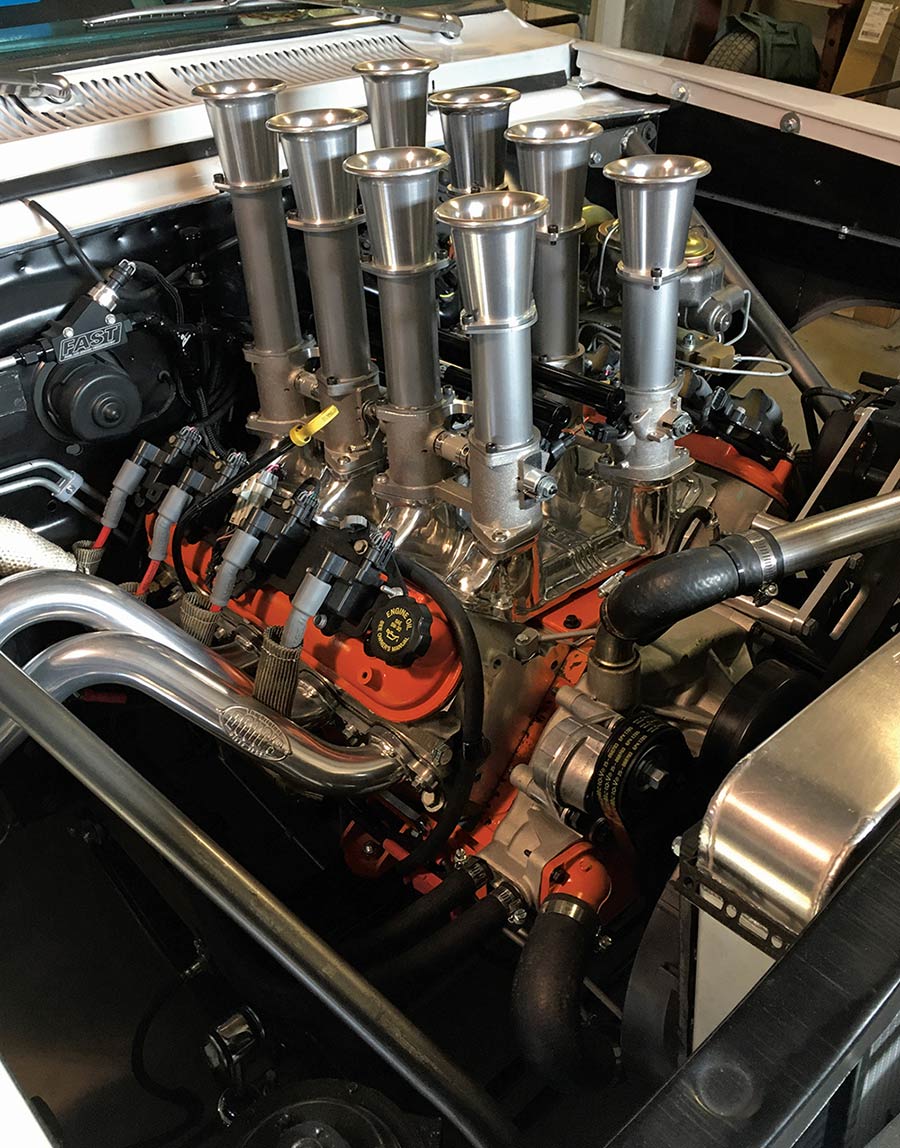
To power the wagon, Overholser chose a GM 6.0L LQ9 from an Escalade. While the bottom-end remains stock, the engine was treated to head work, a complete Comp Cams valvetrain and was topped with an electronic stack injection system from Inglese. Backing the engine is a GM 4L80E transmission that connects to a Lincoln Versailles rear axle with disc brakes.

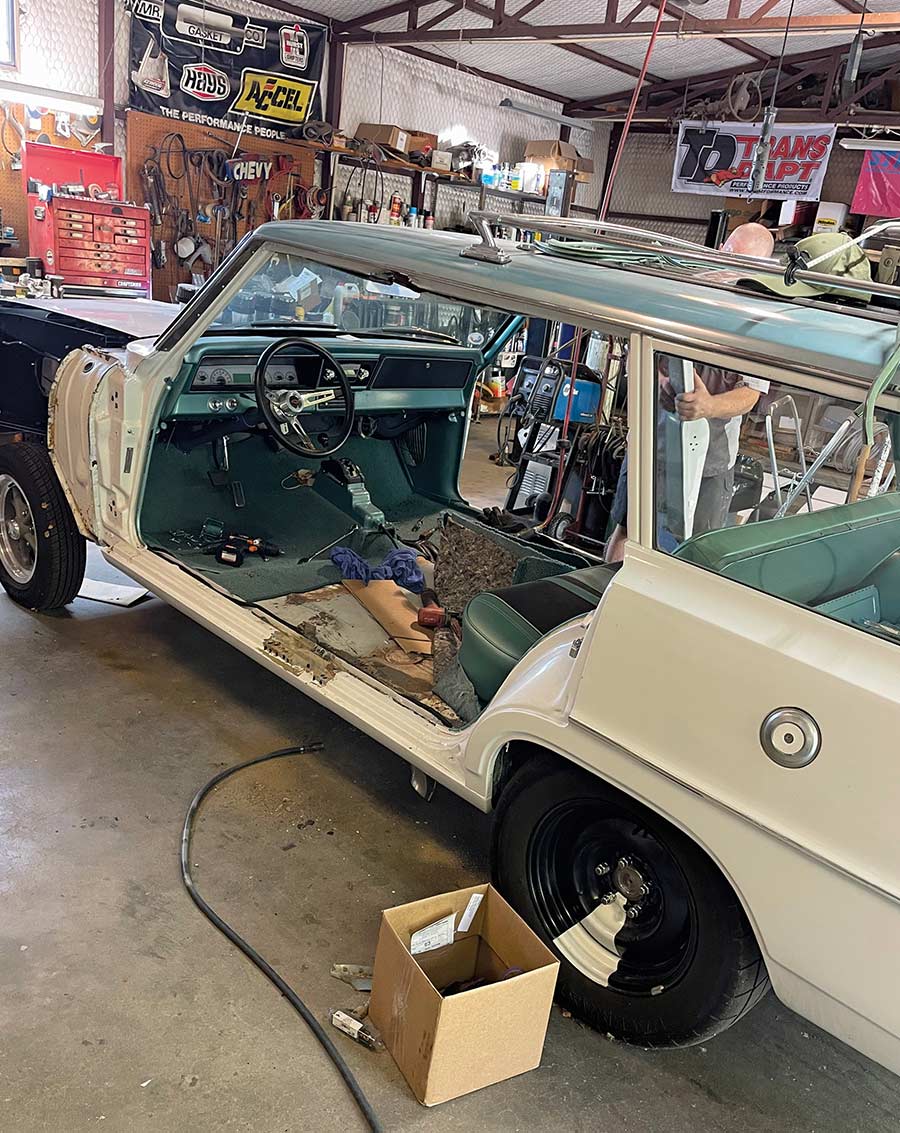
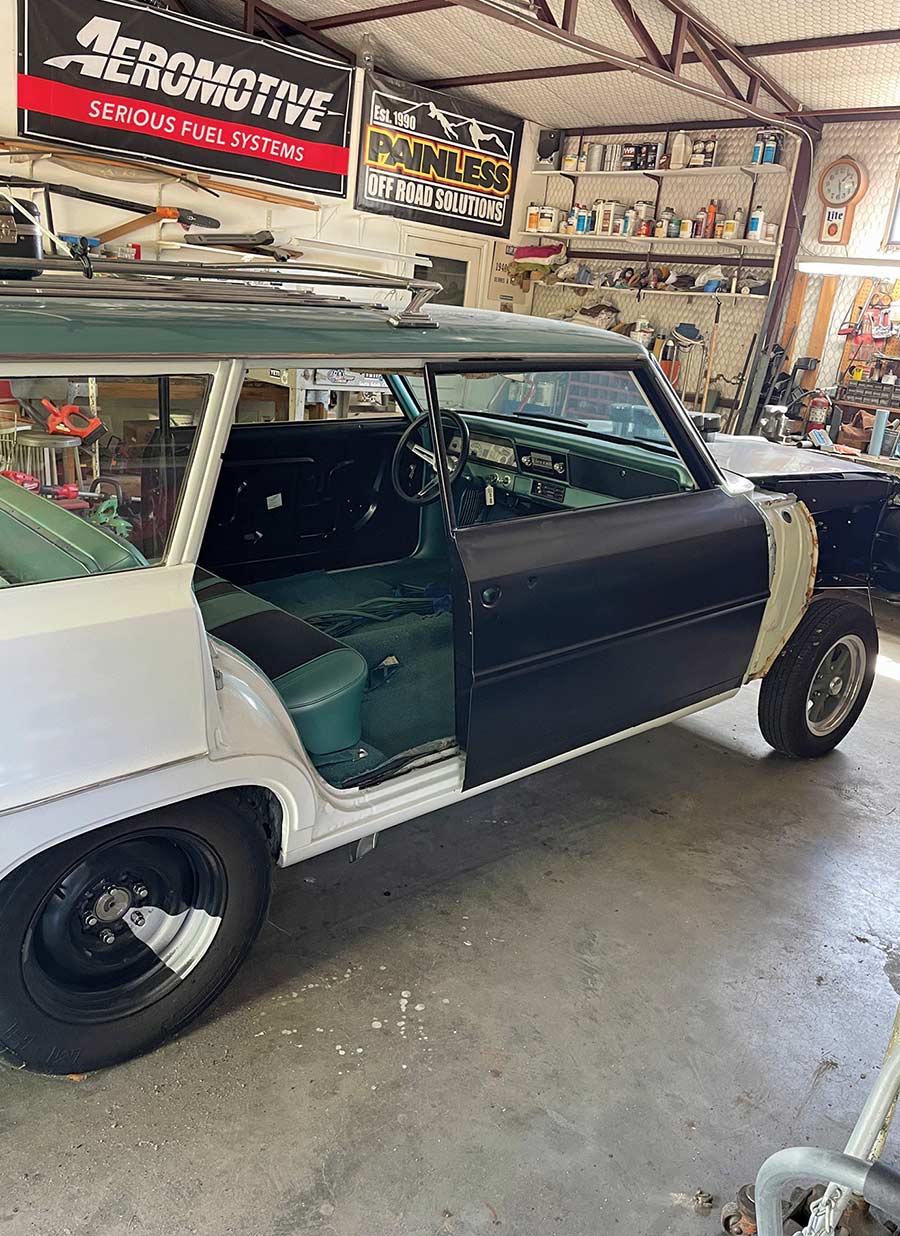
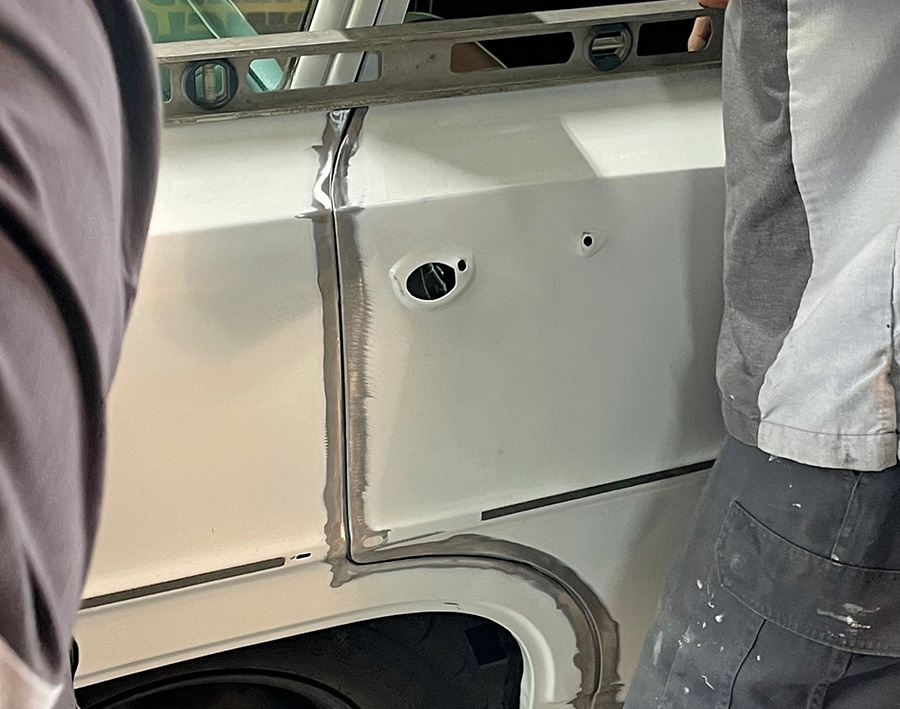
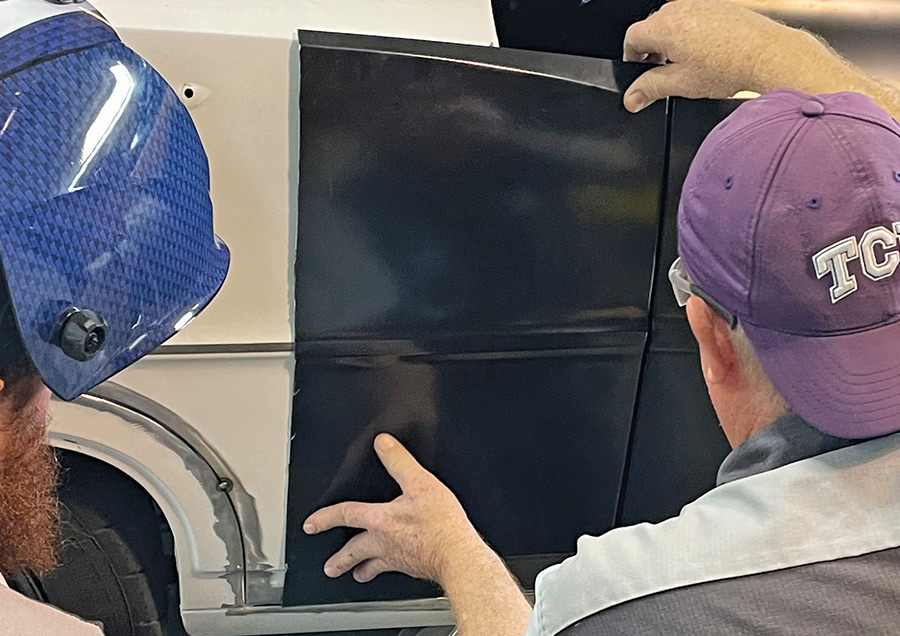
With the chassis work taken care of, Overholser turned his attention to making a major modification, changing the four-door wagon into a two-door. Larry Sparks and his son, Cameron, took care of the metalwork by removing the original doors, the B-pillar, and patching the roof section where the original B-pillar attached. New two-door sedan doors from Classic 2 Current Fabrication were installed with replacement two-door–style B-pillars from AMD (they also supplied the glass). What remained of the rear door openings were filled with a combination of the cut-down original doors and AMD patch panels that matched the contour of the new front doors. The final body modification was the installation of new right side rocker panel.

To be a proper straight-axle, nose-high gasser, fenderwell headers are practically mandatory. As none were readily available for this application, Doug’s Headers was called on to build a custom, one-off set. To complete the gasser look, the wagon rolls on Rocket 15×6 10-spoke wheels with Americus 165/80R15 tires up front. In the rear 15×8 U.S. wheels wear M&H Racemaster 245/55R15 “cheater slicks” that are DOT certified and street legal. Overholser added the “pie stripes” to the wheels—the old-school way to watch for tire spin when launching from a standing start.

With patience, persistence, and considerable effort, what was once a forlorn, four-door station wagon sitting in a Kansas barn has been transformed into a tribute to gassers of a bygone era.

It now has everything a proper gasser should have: a big engine poking out of the hood, fenderwell headers, ladder bars, and the right stance—and fewer doors.

Man pressure washing a white station wagon on a trailer.
2. A real barn find, this four-door Nova wagon had been sitting for three decades. The first step in its transformation was a thorough cleaning.
Car front clip being lifted by an engine hoist.
3. The chassis update began by removing the entire stock front suspension assembly. It attached to the firewall with seven bolts on each side.
Bare car firewall supported by orange jack stands.
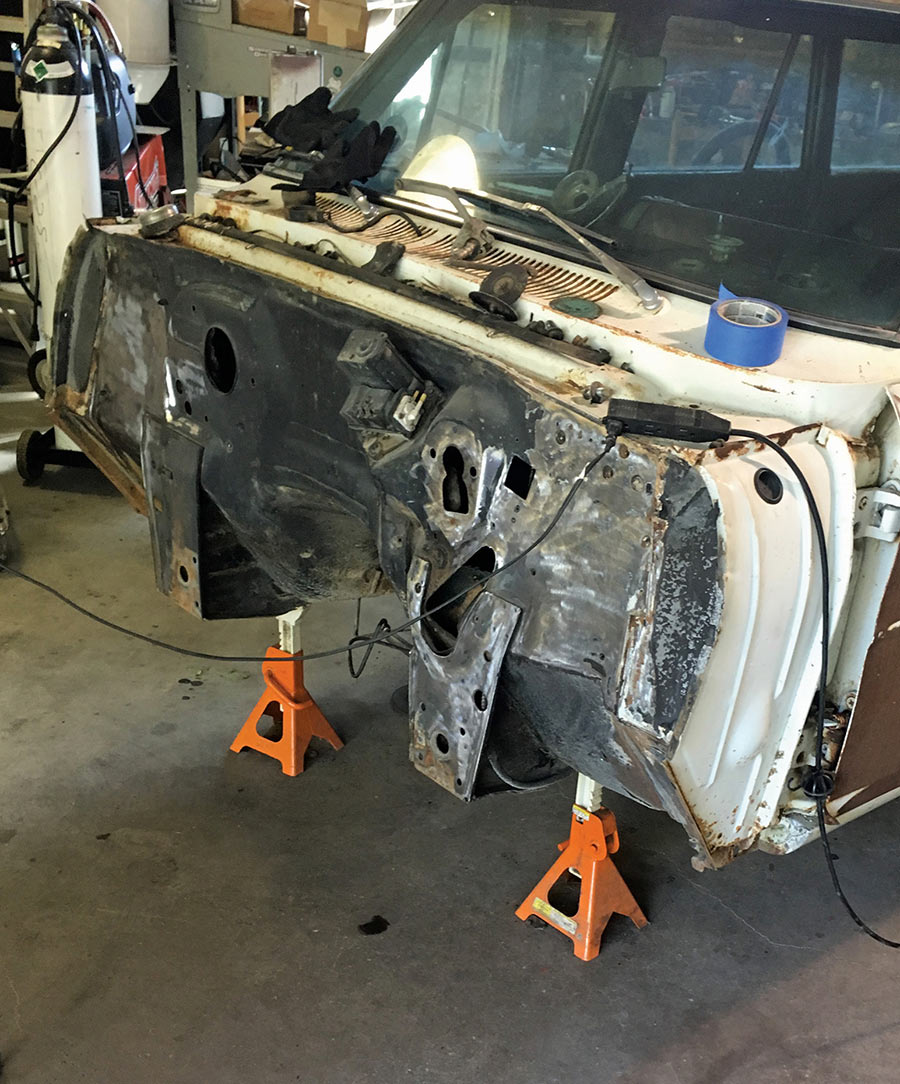
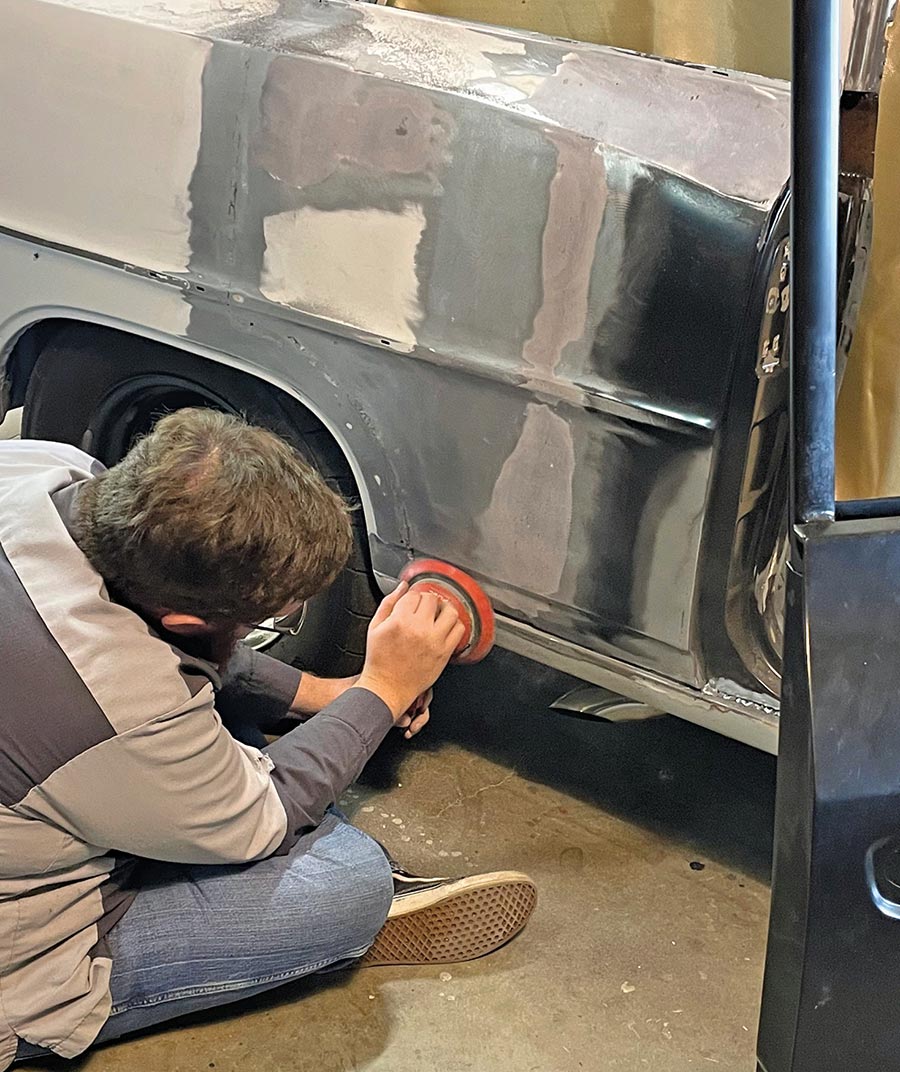
4. With the front suspension and sheet metal out of the way, the firewall was cleaned and prepped for paint.
Orange engine block mounted on a black subframe.
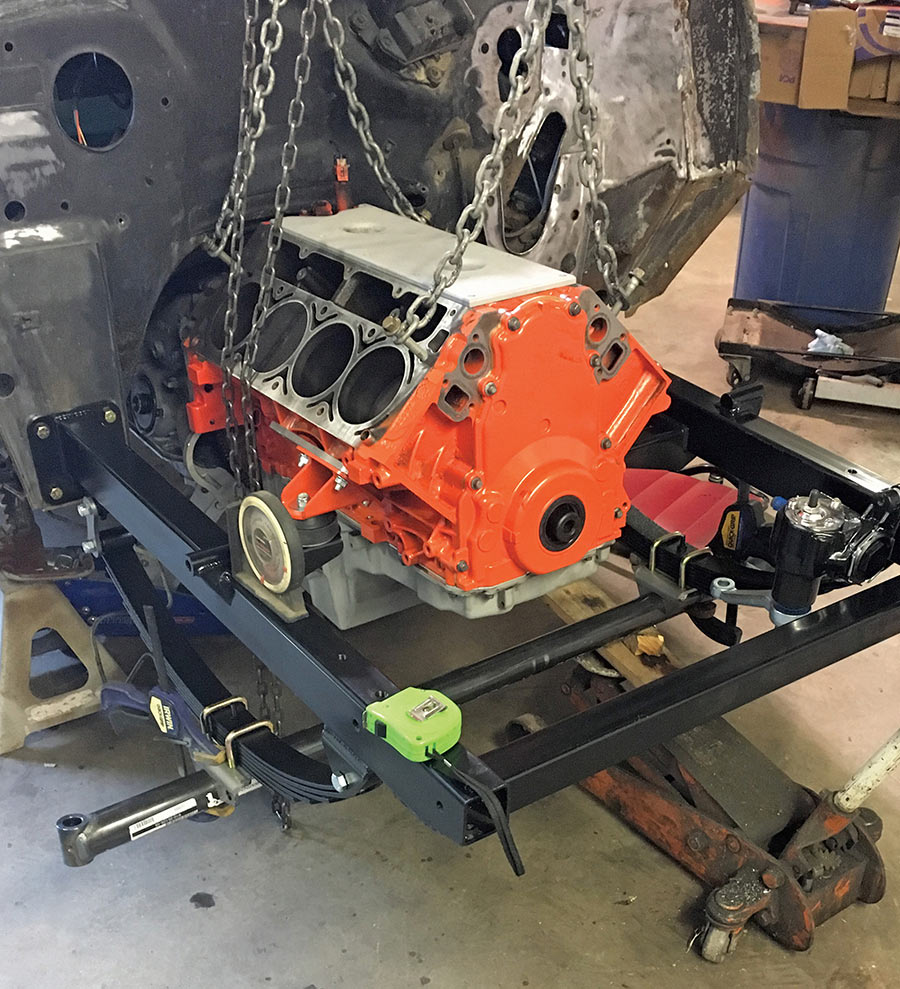
5. The Speedway Motors front subframe was bolted in place, then the engine and trans assembly was mocked up to check clearances at the firewall.
Front suspension leaf spring and shock absorber assembly.
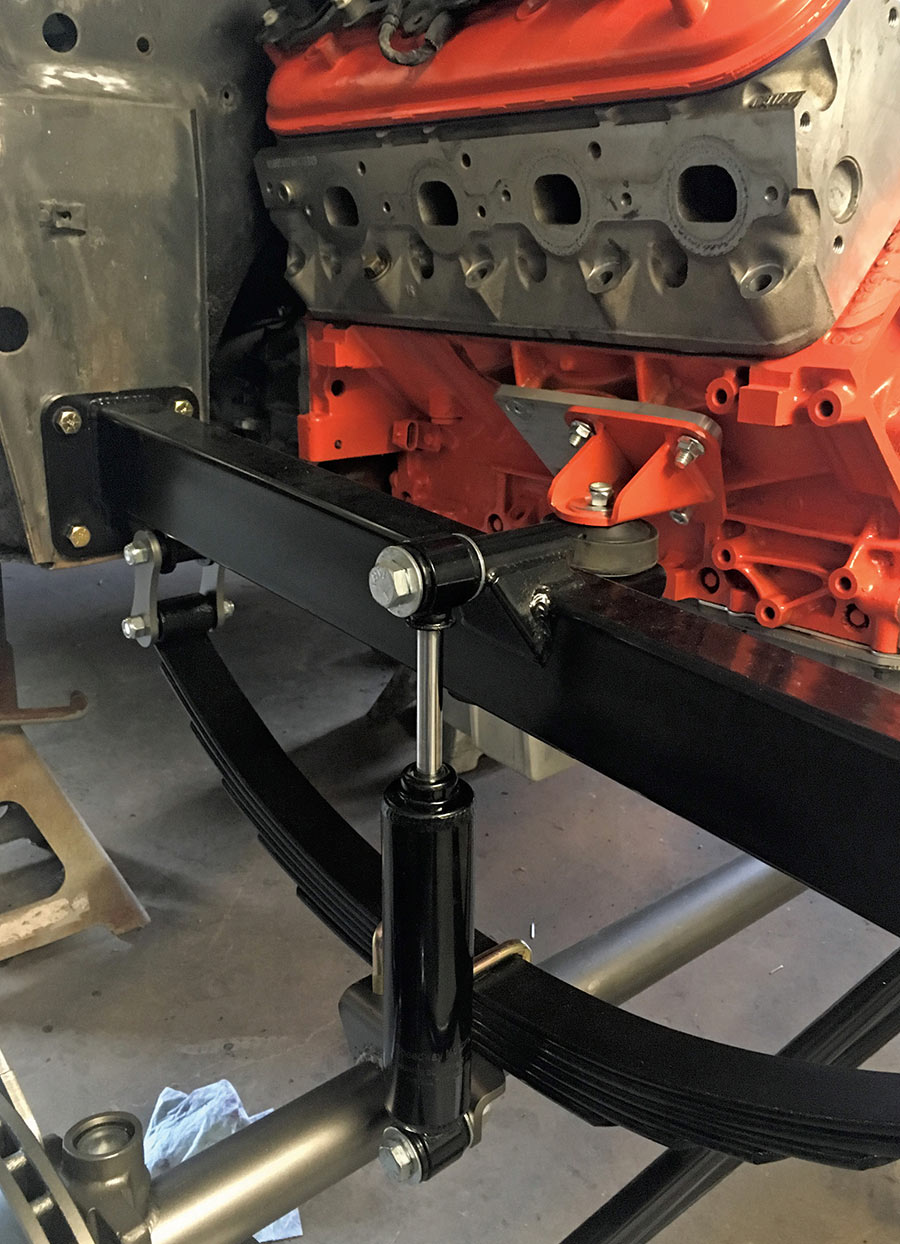
6. As the engine mounts were adjustable front to back, it was easy to get the firewall clearance needed. The original transmission mount was modified to accept the overdrive automatic.
Front chassis view with straight axle and tires installed.
7. With the location of the engine mounts verified, the subframe-to-firewall supports were added.
Custom exhaust headers on a metal fabrication bench.
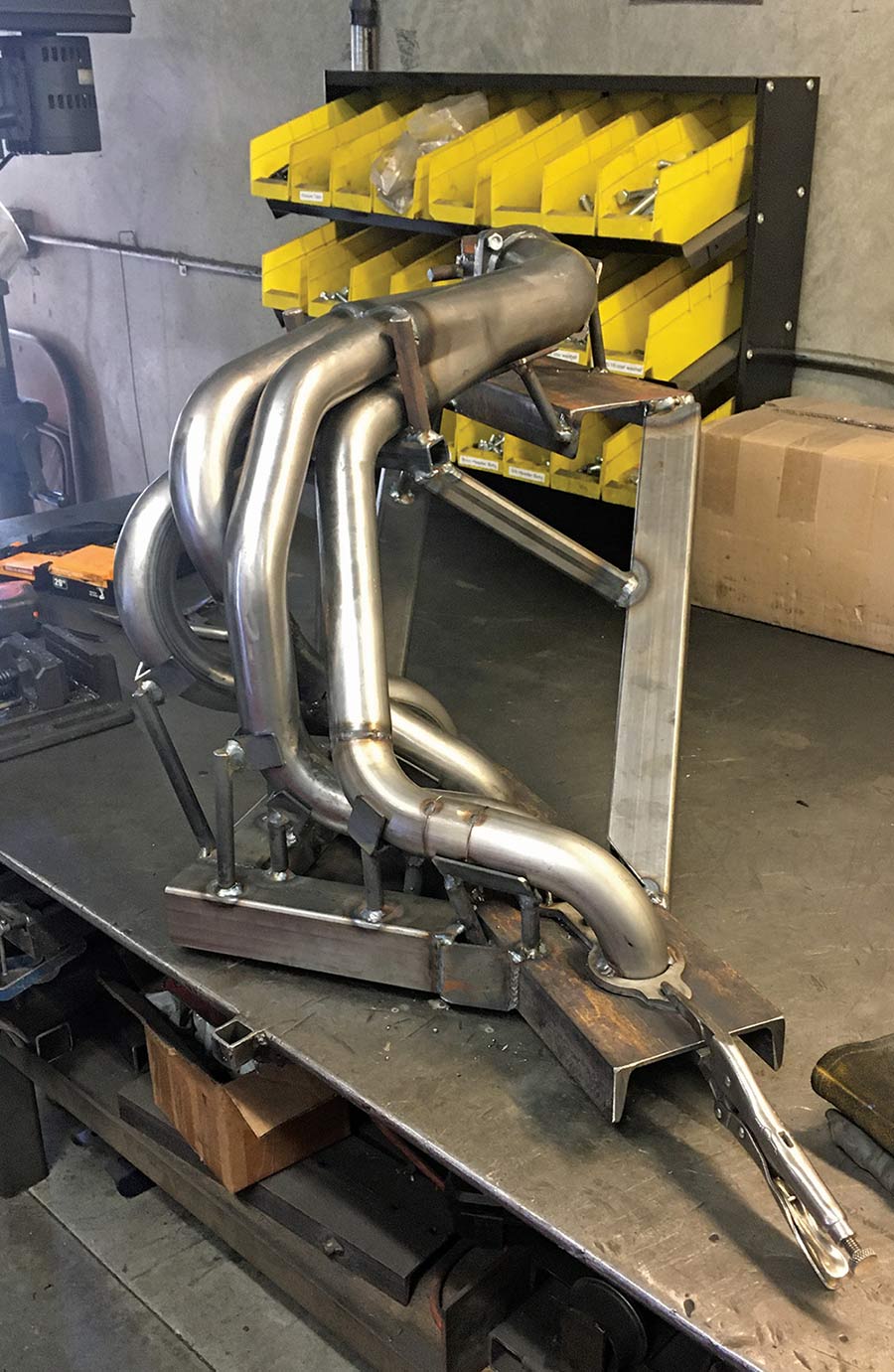
8. Doug’s Headers made a pair of jigs to fabricate custom one-off fenderwell headers for the Nova. This header is for the driver side.
Polished headers installed on the engine in the bay.
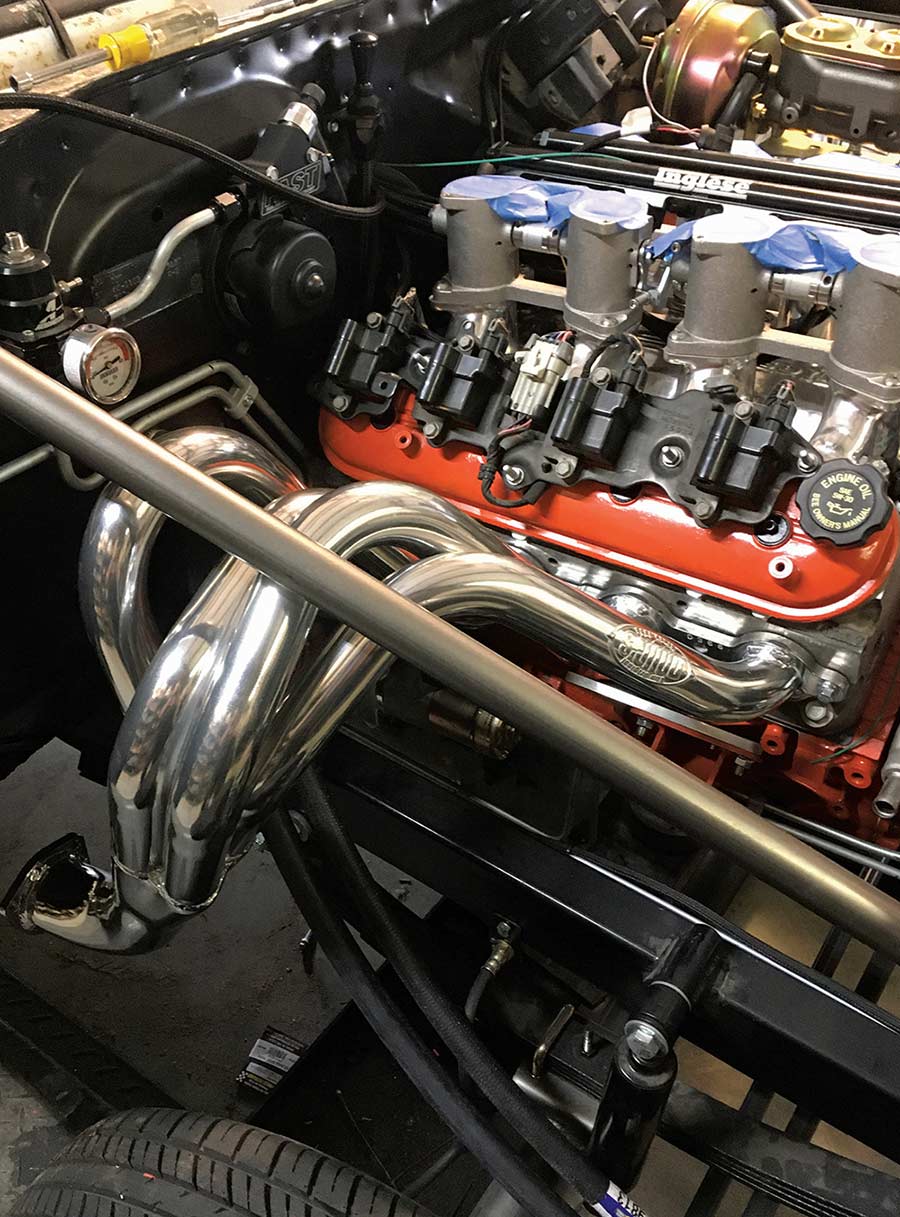
9. Nothing says old-school gasser like fenderwell headers. The exhaust system will run outside the frame stiffeners and exit in front of the rear wheels.
Eight individual intake stacks on top of the engine.
10. Sticking through a hole in the hood will be the individual stacks of an Inglese electronic fuel-injection system.
Metal jacks supporting the chassis for subframe stiffening.
11. To stiffen the chassis, a weld-in kit from Chassis Engineering was added to tie front and rear subframes together.
Rear axle with blue shocks and ladder bar suspension.
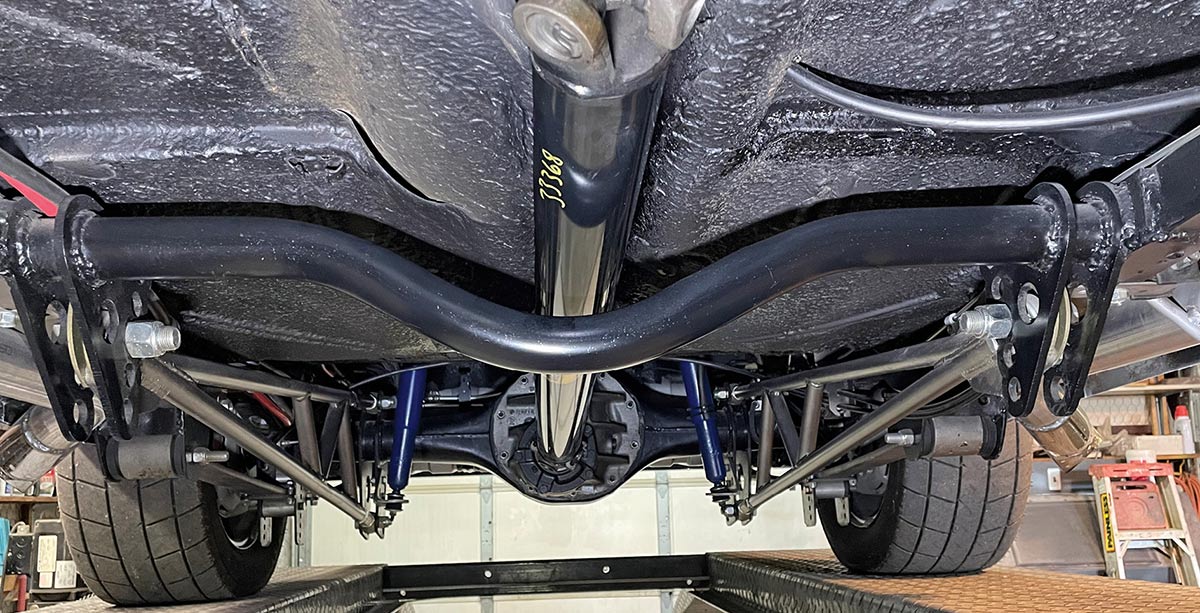
12. The rear suspension uses the original leaf springs with a Chassis Engineering installation kit and ladder bars to hold the Lincoln rear axle in place.
White B-pillar piece removed from the car body.
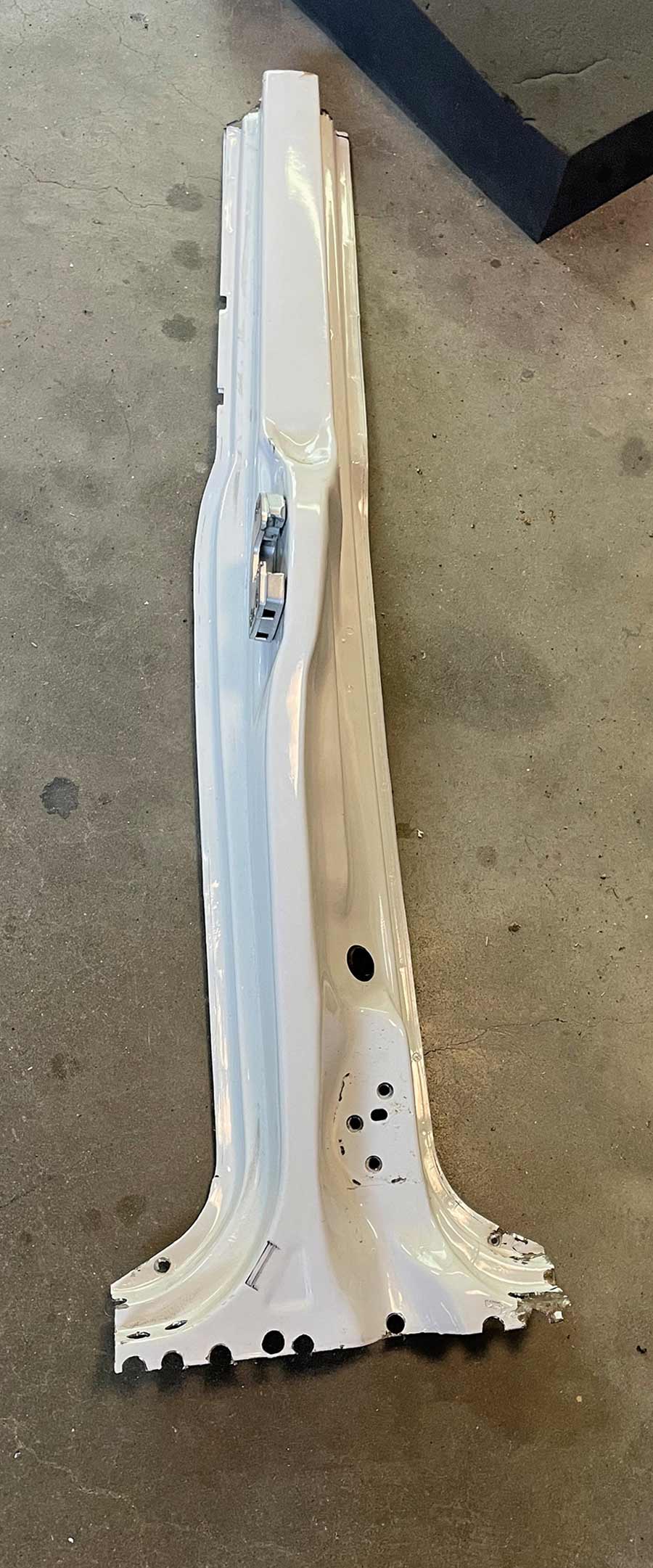
13. With all four doors out of the way, the factory B-pillars were removed. Note the gap in the roof where the B-pillar attached—this would have to be patched.
Interior of the car with the original B-pillar removed.
14. New two-door sedan doors from AMD replaced the originals. The factory hinges and hardware was reused.
Man checking the fitment of a black front door.
15. With the new doors hung, the next step was to install the new B-pillars and fill the gap left by removing the rear doors.
Passenger side view of the two-door conversion progress.
16. As the new front doors are longer than the originals, the rear doors were shortened to fill the openings.
Cut and shortened rear door frame on a stand.
17. The rear doors and window frames were cut, shortened, and welded back together.
Aligning the shortened rear door with the car body.
18. Here the edges of the passenger side rear door and quarter-panel are aligned and prepped for welding.
Welding a patch panel to the rear quarter panel.
19. Portions of two-door patch panels were used to blend the body lines in the now-extended quarter-panels with the doors. Note the section at the top that would have to be filled.
Technician using a circular sander on the rear quarter.
20. The modified rear doors and patch panels were welded in place and ground smooth.
View of the new door sill and pillar structure.
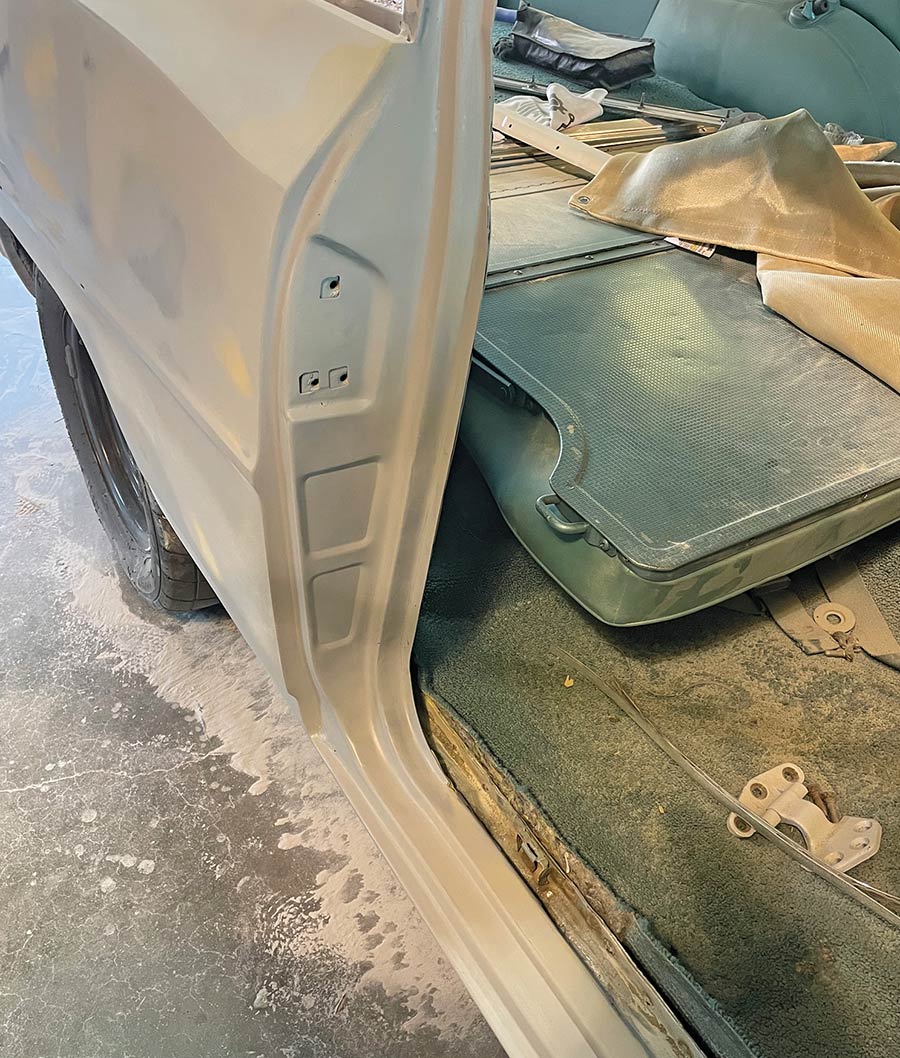
21. After the new Auto Metal Direct B-pillars were welded in place and blended into the sills and quarter-panels, the modifications are impossible to detect.
Side of the car in grey primer showing panel gaps.
22. The perfect alignment of the body lines and the uniform door gaps are testaments to Larry and Cameron Sparks’ metalworking abilities.
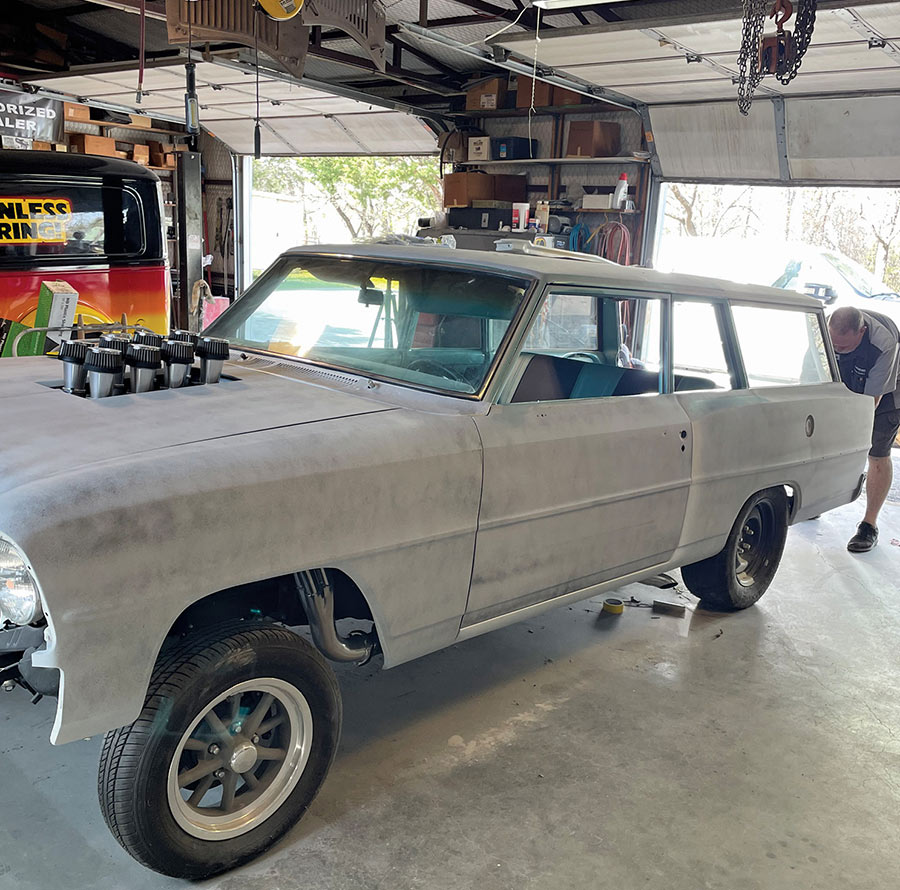
Front view of the Nova gasser in grey primer.
23. With the bodywork completed, the Nova was primed, covered in guidecoat, and ready for a final block sanding.
Finished two-door Nova wagon in green and white.
24. Along with making the body straight as an arrow, team Sparks was responsible for covering the body in the original colors, Sea Foam Green over Ermine White.
In The Garage Media
AMD logo

(888) 255-3895
autometaldirect.com