


ACP department heading TECH
InTheGarageMedia.com
Brockmeyer rendering of a black 1956 Chevy.
1. The project began with a striking rendering by Eric Brockmeyer that established the car’s overall look and the major body modifications.
Refined Intentions
Behind The Scenes Of ZRodz’s Reimagined 1956 Chevy Build
BY RON COVELL
T

he technology behind modern street machines continues to evolve, and this stunning custom-built 1956 Chevrolet, recently completed by ZRodz and Customs of Knox, Indiana, is a showcase of what’s possible at the cutting edge of the craft.

Zach Ingram, founder of ZRodz, has made sustained investments in 3-D scanning and printing, CAD design, CNC machining, and advanced carbon-fiber fabrication. In this first installment, we’ll explore the engine, chassis, drivetrain, and underhood panels of this award-winning build. Future articles will go deeper into the details.

The guiding philosophy from the start was to preserve the classic proportions of the 1956 Chevy, while refining its details for a more elegant presentation. The most dramatic changes were reserved for the engine compartment, the interior, and the undercarriage. Eric Brockmeyer produced a series of renderings early in the process that set the visual direction for the build.

The foundation is an Art Morrison Enterprises chassis, heavily modified for this application. ZRodz fabricated a unique rearend housing incorporating an Eaton 4.10 Truetrac differential, suspended by QA1 adjustable coilovers. The rear axle is located by a custom Panhard bar, bespoke control arms, and an elegantly trussed torque arm that pivots directly below the front driveshaft universal joint.

The engine is a 502ci Chevrolet big-block producing 630 hp, backed by a Bowler T-56 Magnum transmission. The ZRodz team fabricated a 3-inch all-stainless exhaust system that tucks neatly against the chassis rails to preserve ground clearance. Wilwood disc brakes are used on all four corners, along with the master cylinder.

Considerable effort went into the engine compartment. The entire space was 3-D scanned to enable CAD design of a suite of carbon-fiber components: sculpted inner fender panels, a front fascia panel, and a full inner hood panel with an integrated duct that channels cool air from the hood’s leading edge to the induction system. The engine was also relocated rearward from its stock position to improve weight distribution.

The centerlock wheels are a one-off design that gives the car a distinctive, performance-oriented presence. Numerous iterations were explored before the final design was settled.

Billet Specialties and ZRodz worked together on machining these wheels with Billet Specialties supplying the barrels and ZRodz machining the wheel center and components.

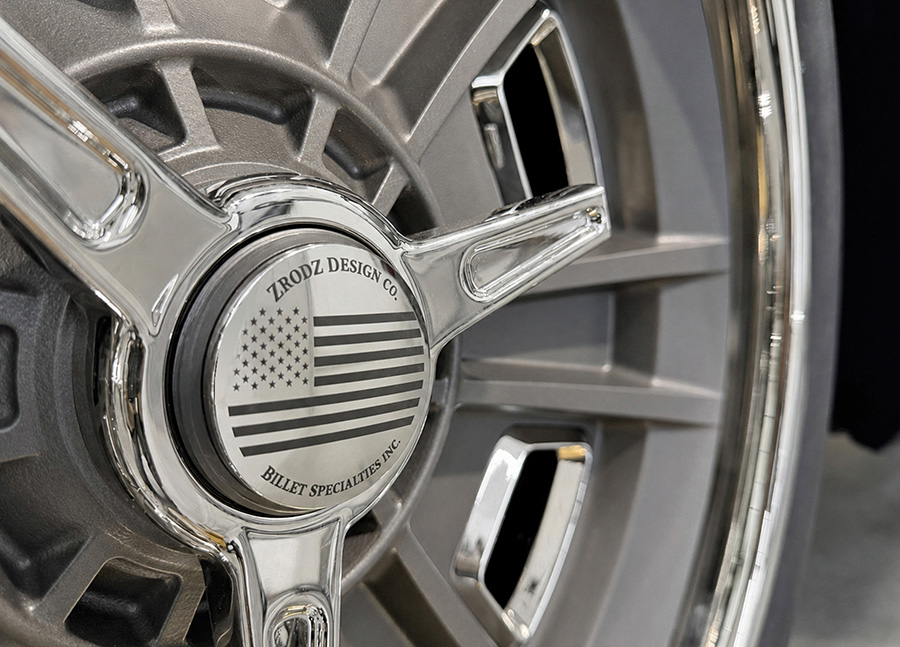
They wear a matte gray finish with polished highlights, with subtle graphics etched into the hubs.

The photos reveal a remarkable depth of craft and ingenuity throughout this build.

Next time, we’ll go even further into the details.

1956 Chevy body receiving custom metal work.
2. Early bodywork included molding in the driprails and integrating a fresh-air duct into the hood.
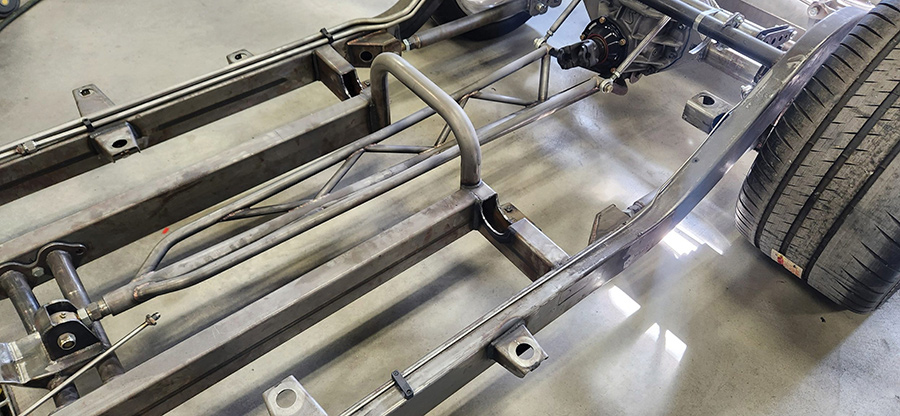
Bare Art Morrison chassis with front suspension.
3. An Art Morrison chassis was extensively modified to suit this build.
Fabricated rearend housing and trussed torque arm.
4. ZRodz fabricated the rearend housing, along with a robust trussed torque arm, custom control arms, and a bespoke Panhard bar.
Chassis rear section with fuel tank mounted.
5. An Eaton 4.10 Truetrac differential was paired with QA1 adjustable coilovers.
Custom stainless exhaust tucked high in chassis.
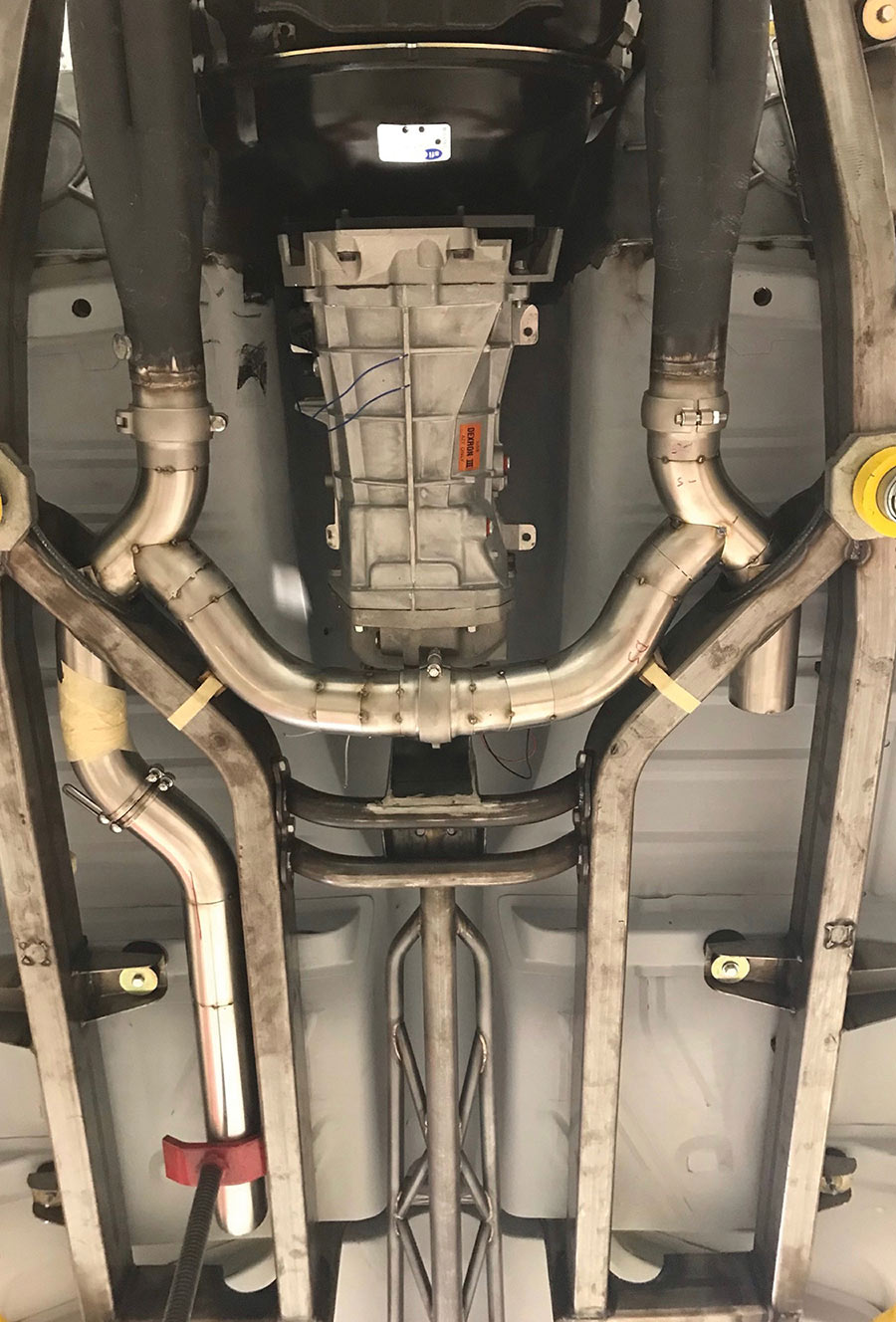
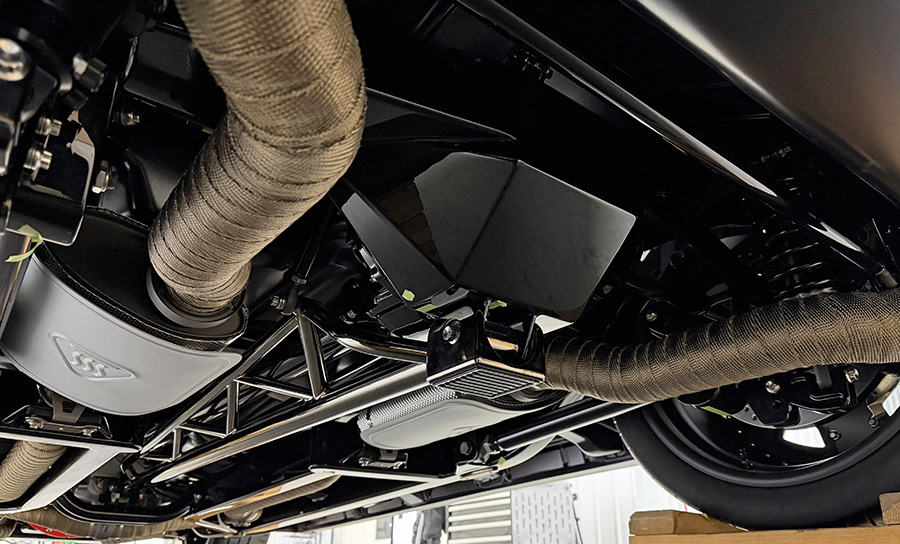
6. A full-custom 3-inch stainless exhaust system was constructed and tucked high in the chassis to maximize ground clearance.
Underside view of exhaust runners and frame.
7. The exhaust runners follow closely along the chassis members for a clean, integrated look.
Assembled chassis with big-block engine and wheels.
8. Power comes from a 630hp 502ci Chevrolet big-block, coupled to a Bowler T-56 Magnum transmission.
3D scan visualization of the engine compartment.
9. CAD design and computer modeling played a central role throughout the project. The entire engine compartment was 3-D scanned to inform the design of the carbon-fiber underhood panels.
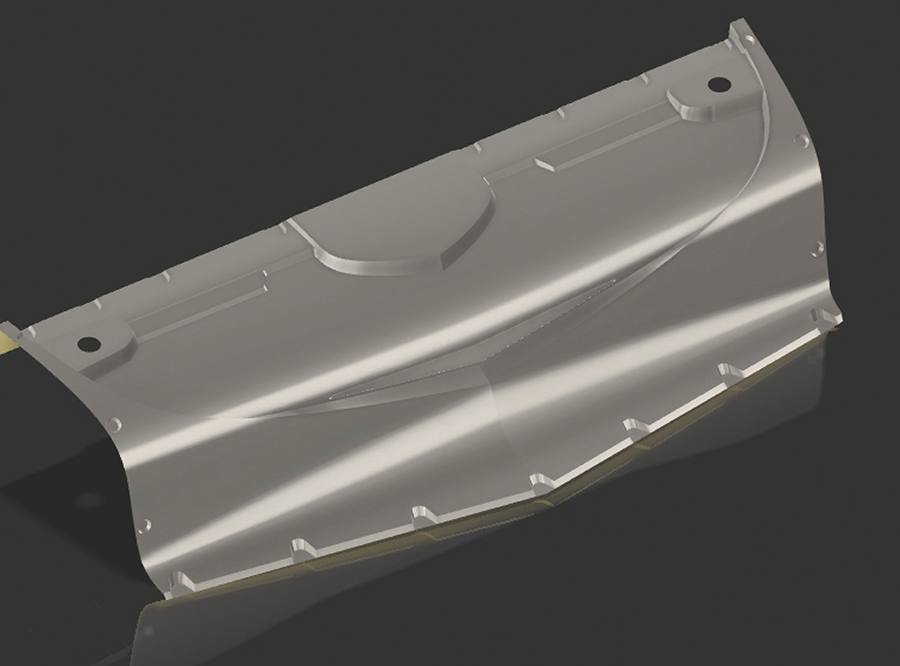
CAD model for a custom front panel.
10. The full front portion of the inner panels was engineered as a single-piece lamination.
3D digital model of an inner fender.
11. The complex inner fender panels feature elegant sculpting, thoughtful venting, and flowing curved surfaces.
Test fitting carbon fiber panels in engine bay.
12. The original firewall was recessed to move the engine weight farther rearward in the chassis. The carbon-fiber panels are shown here in a test-fit.
Raw carbon fiber weave on inner fenders.
13. CAD modeling ensured precise, snug fitment across all panels.
Carbon fiber panel installation mockup with tape.
14. The refined panel sculpting gives the assembly a factory-quality appearance.
Big-block Chevy engine seated in engine compartment.
15. Everything fits with precision, while still allowing adequate clearance for routine maintenance.
Custom fabricated carbon fiber inner hood panel.
16. A complete carbon-fiber inner hood panel was fabricated, incorporating a duct that channels cool air from the hood’s leading edge directly to the induction system.
Finished inner hood panel showing integrated duct.
17. With the hood in place, the superb fit and finish of the inner panels is immediately apparent.
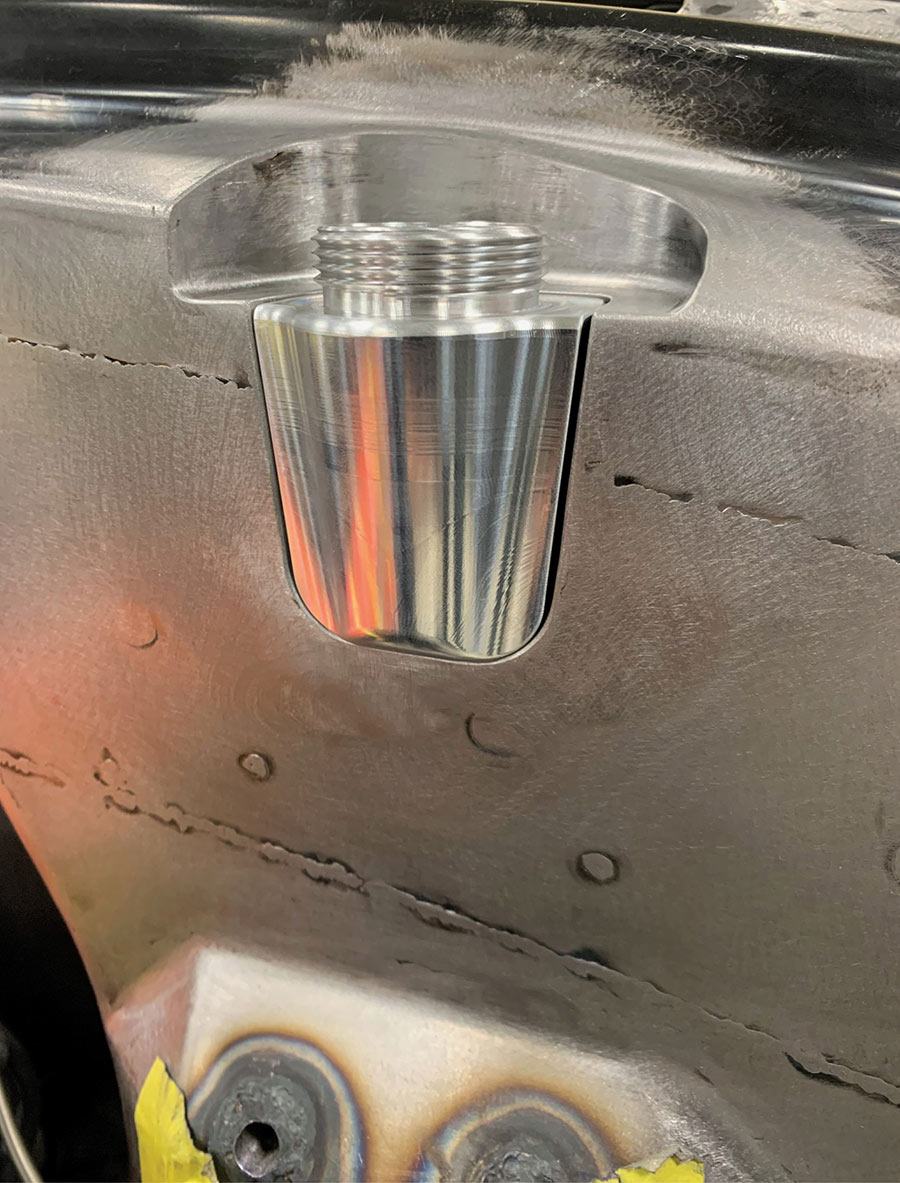
CNC machined billet aluminum master cylinder reservoir.
18. A dedicated reservoir for the brake master cylinder was CNC-machined from billet aluminum and recessed neatly into the firewall.
Digital design for a custom engine badge.
19. A custom badge was CAD-designed and CNC-machined to highlight the engine.
Polished custom badge mounted on valve cover.
20. After machining, the badge was carefully polished and painted, becoming a distinctive detail that adds a point of interest to the engine compartment.
Finished engine compartment with carbon fiber panels.
21. With final finishes applied, the engine compartment presents an exceptionally clean and refined appearance.
Wilwood disc brakes behind centerlock wheel hub.
22. The inner surfaces of the carbon-fiber fender panels were brought to a high level of finish. Braking is handled by Wilwood discs and Forged Narrow Superlite 6R calipers.
Digital CAD model of custom wheel spokes.
23. The custom wheels, featuring centerlock hubs, were designed exclusively for this car. They went through numerous revisions before reaching this near-final iteration.
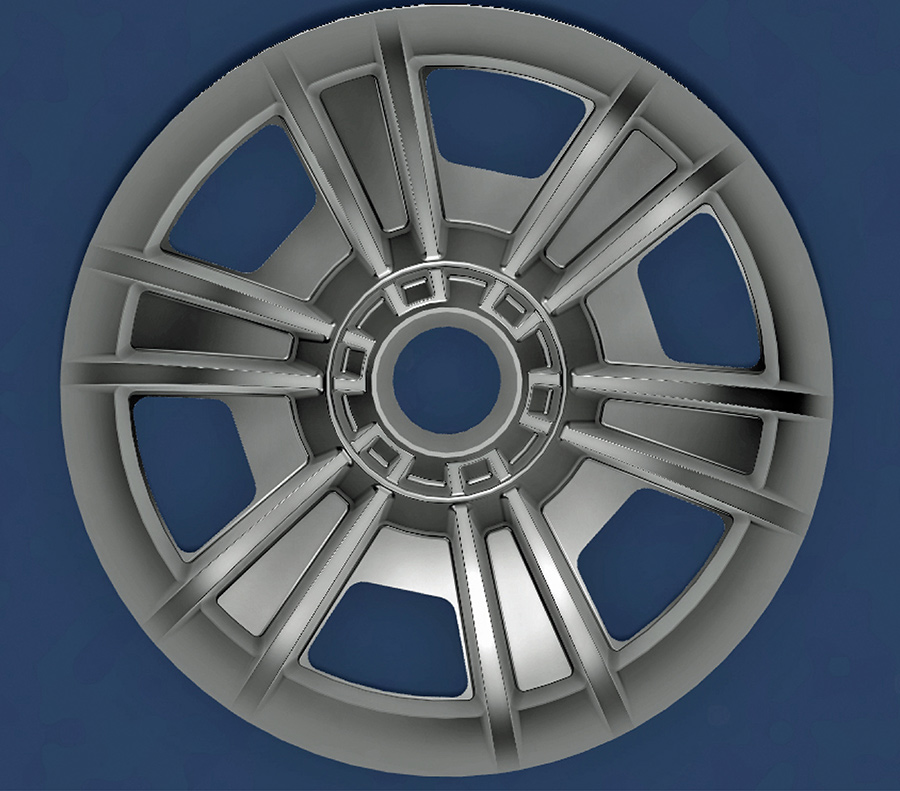
High resolution rendering of the centerlock wheel.
24. The finished design is beautifully resolved, and the wheels are certain to be a defining visual element of the car.
Billet aluminum wheel being machined on lathe.
25. ZRodz machined the wheels from billet aluminum: 19×10 up front and 20×12 at the rear.
Milled aluminum wheel center in machining fixture.
26. The multiple curved edges converging at the wheel center create a bold, cohesive design statement.
 Finished centerlock wheel mounted on the car.
27. A smooth matte-gray finish across the wheel face is offset by polished accents, creating a striking contrast.
Intricate detailing on the centerlock wheel knockoff.
28. A close-up of the knockoff reveals the intricate detailing etched into the hub.
Underbody surfaces finished with heat wrapped exhaust.
29. A satin finish was applied to all underbody surfaces, while the exhaust system was neatly covered with titanium-colored heat tape.
Detailed view of engine and induction system.
30. The satin carbon-fiber panels provide a sophisticated backdrop for the beautifully detailed engine.
In The Garage Media
Art Morrison Performance logo

(800) 929-7188
artmorrison.com
Billet Specialties logo

(866) 240-4182
billetspecialties.com
Bowler Performance Transmissions logo

(618) 943-4856
bowlertransmissions.com
Wilwood Disc Brakes logo

(805) 388-1188
wilwood.com
ZRodz And Customs