

 FEATURE
 IMAGES BY PATRICK LAUDER
ome cars are built to win trophies. Others are built to run numbers. A few become family heirlooms made of steel, gasoline, and shared memories. Steve Jackson’s 1955 Chevy 210 falls squarely into that last category.
The story, however, didn’t begin with the ’55. It started years earlier in a detached garage behind Steve’s childhood home. His father was drag racing before Steve was born, and some of his earliest memories are of watching his dad wrench on a 1957 Chevy race car while preparing for another weekend at Fremont Raceway. Those trips to the dragstrip and long hours spent around hot rods ignited a passion that never faded. By the time Steve was old enough to drive, cars were woven into the fabric of family life.
To understand why this bright red Tri-Five means so much to Steve, you have to go back nearly four decades to a field somewhere in the Bay Area.
The late-’80s represented the golden age of Pro Street, and the philosophy was simple: stuff the biggest rear tires as possible under a car, add enough engine to make them useful, and then make sure everybody noticed. Sonny and Jeff wanted a car that embodied that era.
With assistance from Chris Alston, the Chevy was backhalved and fitted with a narrowed rear chassis. Alston also helped fabricate the 12-point rollcage that remains in the car today. To make room for massive rubber, the quarter-panels were widened and raised 4 inches. The result was Pro Street perfection, with enormous Mickey Thompson meats tucked under the dramatically reshaped rear quarters.


Power originally came from a 454ci big-block Chevy nestled between the framerails. By 1990, the Chevy was finished and turning heads everywhere it went. During the height of the Pro Street movement, it stood among the finest examples of the breed and even earned coverage in a few enthusiast magazines.
Meanwhile, the younger Jackson was paying attention. “Years later Uncle Sonny let me drive the car and take it to shows,” Steve recalls. “I could only dream of having a car like this back then; owning it never crossed my mind.”
Like many enthusiasts, Steve eventually tried to create a dream car of his own and purchased a Pro Street 1948 Angia that he tinkered with for a few years. While the Anglia was undeniably cool, it never quite captured the magic of his Uncle Sonny’s ’55.
Knowing how much it meant to him, Steve occasionally told his uncle if the car ever came up for sale, he would be interested. Uncle Sonny’s response: “Steven, I’ve had the car for over 30 years. It’s not for sale.” That answer seemed pretty definitive.
Years had passed when Sonny unexpectedly called and asked Steve a question he never thought he’d hear: Was he still interested in buying the Chevy? Steve did his best to remain calm, but inside he already knew the answer.
The deal came together with one important promise. If Steve bought the car, it would never leave the family. A promise that remains intact today.
With Steve’s tremendous respect for the Chevy, he’s also not afraid to improve it. Over the years, the car has received suspension upgrades designed to make it more enjoyable to drive while retaining its unmistakable Pro Street character.
The most significant changes came after the original big-block spun a bearing. Rather than simply repairing the engine, Steve viewed the setback as an opportunity.
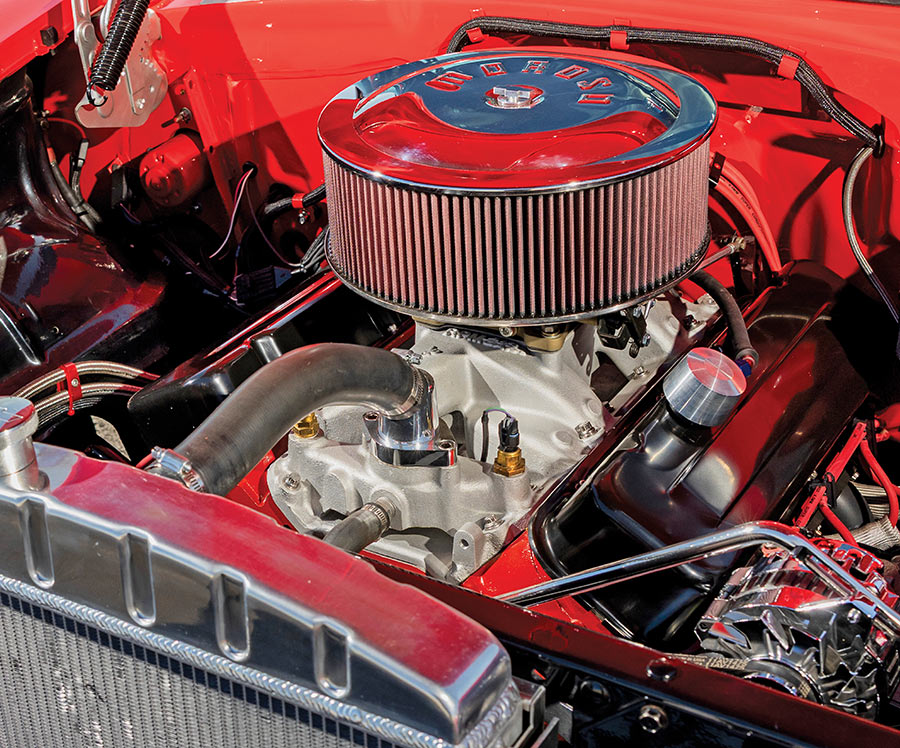
The wounded Rat was shipped to Mark Jones at VortecPro in Georgetown, Texas. Jones transformed the combination into a serious street bruiser, expanding the displacement to 496 ci with compression set at a pump-gas-friendly 10:1.
The result is an impressive 635 hp and 634 lb-ft of torque. Enough to make those giant rear tires earn their keep.
Custom headers built by Mark Weiss feed a 3-inch exhaust system topped with Flowmaster 50-series mufflers, giving the 496 a voice that rolls across the pavement like distant thunder.
While the engine was out, Steve took the opportunity to freshen the engine room. Steve Lininger recessed and refinished the firewall, carefully upgrading the area while preserving Sonny’s work created decades earlier.
Backing the engine is a TH400 prepared by Clean’s Racing Transmissions (the go-to back in the day) backed by a Coan torque converter and B&M Pro Stick shifter. Out back the original Chris Alston’s Chassisworks narrowed 9-inch remains in service, equipped with 4.56 gears and strange 31-spline axles.
Global West control arms, Viking coilovers, upgraded springs, and a Gene Smith sway bar improve front end behavior. The rear suspension utilizes custom torque arm bars, a Panhard bar, QA1 coilovers, and 500-pound springs.
The Weld Racing Rodlite wheels measure a skinny 15×4 up front and a massive 15×15 in the rear. Wrapped around those rear wheels are Mickey Thompson Sportsman tires measuring 33×21.5 inches.
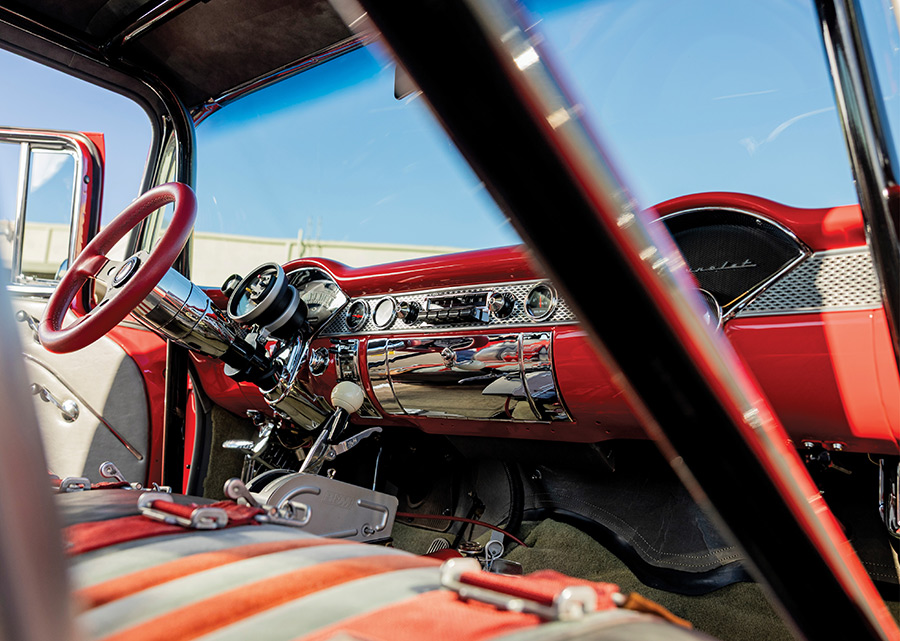
Inside, the custom interior remains largely unchanged from its original design. The stock dash, Auto Meter gauges, Grant GT steering wheel, and custom upholstery continue to transport occupants back to the heyday of Pro Street.
The beauty of Steve’s ownership is keeping the car grounded in its well-kept history. He doesn’t hunt trophies or insane horsepower as to him the car is all about how it drives conversation.
“The only thing that beats working on the car with my son, Jake, and my friends, is taking it to shows with my wife and daughter,” Steve says. “In fact, having my daughter, Abby, drive the car to a show last year was an absolute life highlight.”
That statement says everything you need to know about this Chevy.
What began as a field rescue in 1987 became a magazine-featured Pro Street icon in 1990. Today it serves a much more important role. It brings generations together.
“My cousin Jeff [died] in March 2023 after battling cancer for a year and a half. He wasn’t just my cousin, he was one of my best friends and he was always there to help me. I learned a tremendous amount from him over the years working on our cars. Jeff was the inspiration behind the build of the ’55,” Steve says. “In Jeff’s honor, we love sharing this car with family and friends. That’s what it’s all about.”
In a hobby often obsessed with what’s next, Steve’s ’55 Chevy is a reminder that sometimes the greatest builds aren’t measured by elapsed times or dyno sheets, they’re measured by the memories they create and the people who get to enjoy them together.
That said, Steve admits a supercharger may eventually find its way underhood. After all, it’s hard to argue with the visual impact of a giant blower breaking through the sheetmetal.


VEHICLE: 1955 Chevy 210
TYPE: 1987 LS6
DISPLACEMENT: 496 ci
COMPRESSION RATIO: 10:1
BORE: 4.310 inches
STROKE: 4.25 inches
BUILDER: Mark Jones at VortecPro (Georgetown, TX)
MACHINE WORK: Mark Jones
TUNER: Andrew at Dr. EFI
ROTATING ASSEMBLY: RPM crankshaft, Scat I-beam rods, Mahle pistons
CAMSHAFT: Isky 0.632 lift, 286 degrees duration at 0.050
CYLINDER HEADS: GM HP rectangular port cast-iron
INDUCTION: Edelbrock RPM Air Gap dual-plane intake
FUEL INJECTION: Holley Sniper
IGNITION: MSD 6AL
EXHAUST: Custom headers by Mark Weiss, 3-inch X-pipe, Flowmaster 50-series mufflers
VALVE COVERS: Moroso
AIR CLEANER: K&K filter, Moroso chrome cover
ACCESSORY DRIVE: V-belt
ANCILLARIES: Moroso aluminum water pump, Spal 16-inch electric fan, Cold Case aluminum radiator, Powermaster 140-amp alternator, MSD 8.5mm Superconductor wires, Custom 16-gallon tank by Leonard Lopez at Dominator Fab Inc. (Brentwood, CA)
OUTPUT: 635 hp at 6,200 rpm, 634 lb-ft at 4,500 rpm
TRANSMISSION: Turbo 400 by Clean’s Racing Transmissions
TORQUE CONVERTER: Coan Max Performance
SHIFTER: B&M Pro Stick
REAR AXLE: Chris Alston’s narrowed Ford 9-inch, Richmond Gears 4.56:1 gears, Strange 31-spline axles
FRONT SUSPENSION: Global West coilover suspension, GM spindles, Global West upper and lower control arms, Global West big-block springs, Viking coilover shocks, Gene Smith 1-inch sway bar, CPP steering linkage kit, stock steering box rebuilt by Mullins
BRAKES: GM 11-inch rotors, single-piston calipers front and rear, Baer Remaster master cylinder, Baer proportioning valve
SUSPENSION MODS: Back-halved by Chris Alston’s, custom wheeltubs, and sheetmetal trunk
WHEELS: Weld Racing Rodlite, 15×4 front, 15×15 rear
TIRES: Mickey Thompson Sportsman, 26×7.50 front, 33×21.50 rear
UPHOLSTERY: Red and gray vinyl and cloth
CARPET: Plush cut pile gray
DOOR PANELS: Custom vinyl
INSTALLATION: Ron Woodward (San Pablo, CA)
SEATS: Stock GM
ROLLBAR: 12-point mild steel by Chris Alston’s Chassisworks
HARNESS: Simpson
STEERING: Stock column, Grant GT steering wheel
DASH: Stock
INSTRUMENTATION: Auto Meter
WIRING: Custom harness by Sonny and Jeff Jackson
HVAC: Nope
ENTERTAINMENT SYSTEM: Antique Automobile Radio 1955 Chevy push-button AM/FM/Bluetooth, Focal ACX 6.5-inch speakers
INSTALLATION: Steve Jackson and Dennis Respicio
BODYWORK AND PAINT: Lowell Biagi (San Pablo, CA)
PAINT: Deltron Acrylic Urethane Porsche Guards Red
HOOD: Stock
GRILLE: Stock-style stainless steel
BUMPERS: Stock
HEADLIGHTS: Holley RetroBright
TAILLIGHTS: Stock
DOOR HANDLES: Danchuk
PLATING: Walker’s Custom Chrome
BODY MODS: Quarter-panels widened and raised 4 inches by Chris Alston’s, fabricated battery boxes by Dave Gonzalez (Winters, CA)