

 FEATURE

 IMAGES BY THE AUTHOR
ost car enthusiasts can tell you about their first car, but very few can say they still own it. How many folks can point back to the early 1960s and make that claim? Allen Haire can. In 1963 he walked into a dealership and bought his first brand-new car. “I was always a Chevy guy, and I loved that new 1963 Chevy Impala with a 409,” he states. A lifelong Bowtie loyalist, he chose it not just for its looks but for its performance potential: a four-speed transmission and the torque-heavy-equipped W-series engine that had already developed a reputation among street racers. As part of his thought-out purchase, he bypassed the SS option, which was primarily an appearance option that included bucket seats, a center console, and special badging so that he could get the much-desired bench seat. RPO Z11 was very much on his mind but way out of his budget and accessibility level. Those lightweight cars were not something that the average person could simply find on a showroom floor or order without significant “insider” help.
IMAGES BY THE AUTHORost car enthusiasts can tell you about their first car, but very few can say they still own it. How many folks can point back to the early 1960s and make that claim? Allen Haire can. In 1963 he walked into a dealership and bought his first brand-new car. “I was always a Chevy guy, and I loved that new 1963 Chevy Impala with a 409,” he states. A lifelong Bowtie loyalist, he chose it not just for its looks but for its performance potential: a four-speed transmission and the torque-heavy-equipped W-series engine that had already developed a reputation among street racers. As part of his thought-out purchase, he bypassed the SS option, which was primarily an appearance option that included bucket seats, a center console, and special badging so that he could get the much-desired bench seat. RPO Z11 was very much on his mind but way out of his budget and accessibility level. Those lightweight cars were not something that the average person could simply find on a showroom floor or order without significant “insider” help.
As the 1960s wound down, so did Allen’s race activities with the Impala. In 1969 he parked the car, however, a few years later, around 1972, Allen’s son, Jeff, decided to take on the task of freshening the car and making sure it was once again mechanically sound. The goal was not to convert it back into a mild road car but to rebuild and maintain it in its race-ready configuration. The project’s initial goal was a full disassembly, with Jeff taking the car apart. As with many long-term automotive projects, within a matter of months the process stalled before it could be completed. Allen states, “I think life got in the way with family and a career.”
The hands of time moved forward a few decades, and Allen was finally ready to get the Impala back on the road. The search for a builder set off a series of shop moves. The first shop managed to set the body on a new Roadster Shop SPEC chassis and mock in a 409 engine, but before the project could progress further, the shop closed. The car was then moved to a second shop, where some bodywork issues were addressed, only for that shop to close as well after the owner died, leaving the Impala in limbo once again. Yet in 2017, Allen took a major step toward realizing his Z11 dream. “I went to the Mecum Auction in Kissimmee to bid on a set of Z11 aluminum fenders, hood, and front bumper from the Don Fezell collection,” he recalls. “I didn’t initially realize they also had a Z11 engine there and I managed to bid on it, but I missed a call and it was sold to somebody else. When the parts were delivered to my shop, I mentioned that I still wanted the engine. I was told, ‘You still can. The guy never picked it up.’”




Once the Impala was dropped off and work began, Allen and Oberlander discussed exactly what he wanted and how he planned to use the car. Returning it to its race car roots was completely off the table; Allen was looking for a fully streetable car he could genuinely enjoy. Within that goal there was room for creativity and modernization, but one thing was non-negotiable. Oberlander recalls, “I tried to talk him into an LS engine dressed to look like a Z11, but he was adamant about using the original Z11 engine he had purchased. He did, however, allow me to modernize it with things like fuel injection.”
The prior purchase of the RS chassis significantly advanced the project by resolving many of the inefficiencies inherent in the original chassis and suspension. The car’s limited use after being designated race-only, combined with decades of hibernation, also helped preserve the sheet metal, which required only minor bodywork. While this was true of the original steel, the aluminum Z11 components were not as fortunate. As Oberlander explains, “The aluminum parts were pretty banged up. The passenger side had been corroded by battery acid years ago, so I had to reconstruct some of the mounting tabs, but most of the work involved addressing dings and dents. I also reshaped the rear of the aluminum hood to better match the contour of the wiper grille for an improved fit.” The auction did not include an aluminum rear bumper or the Z11 air cleaner assembly; both were later sourced from Jim Sullivan, who produces faithful reproductions of these rare components.
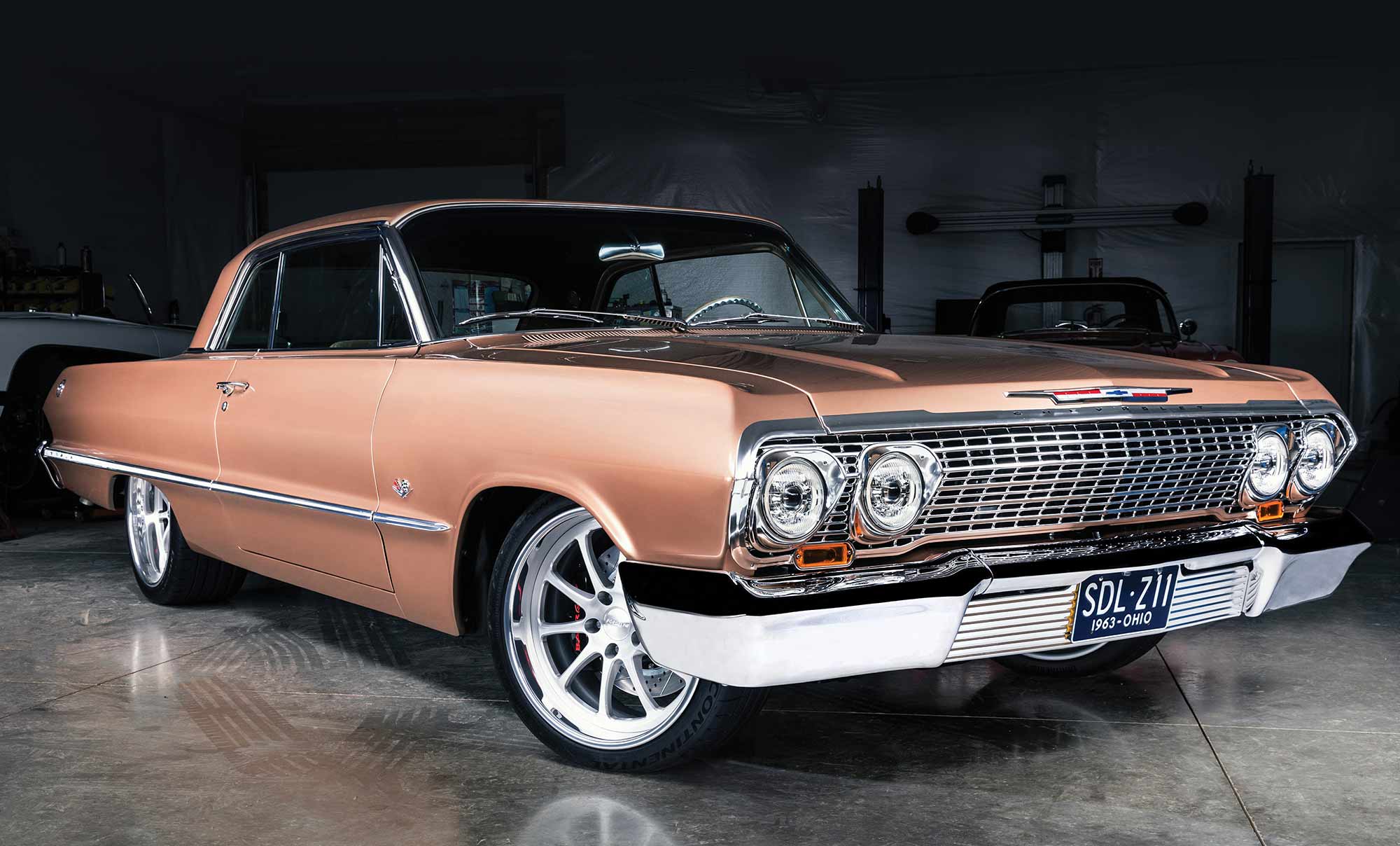
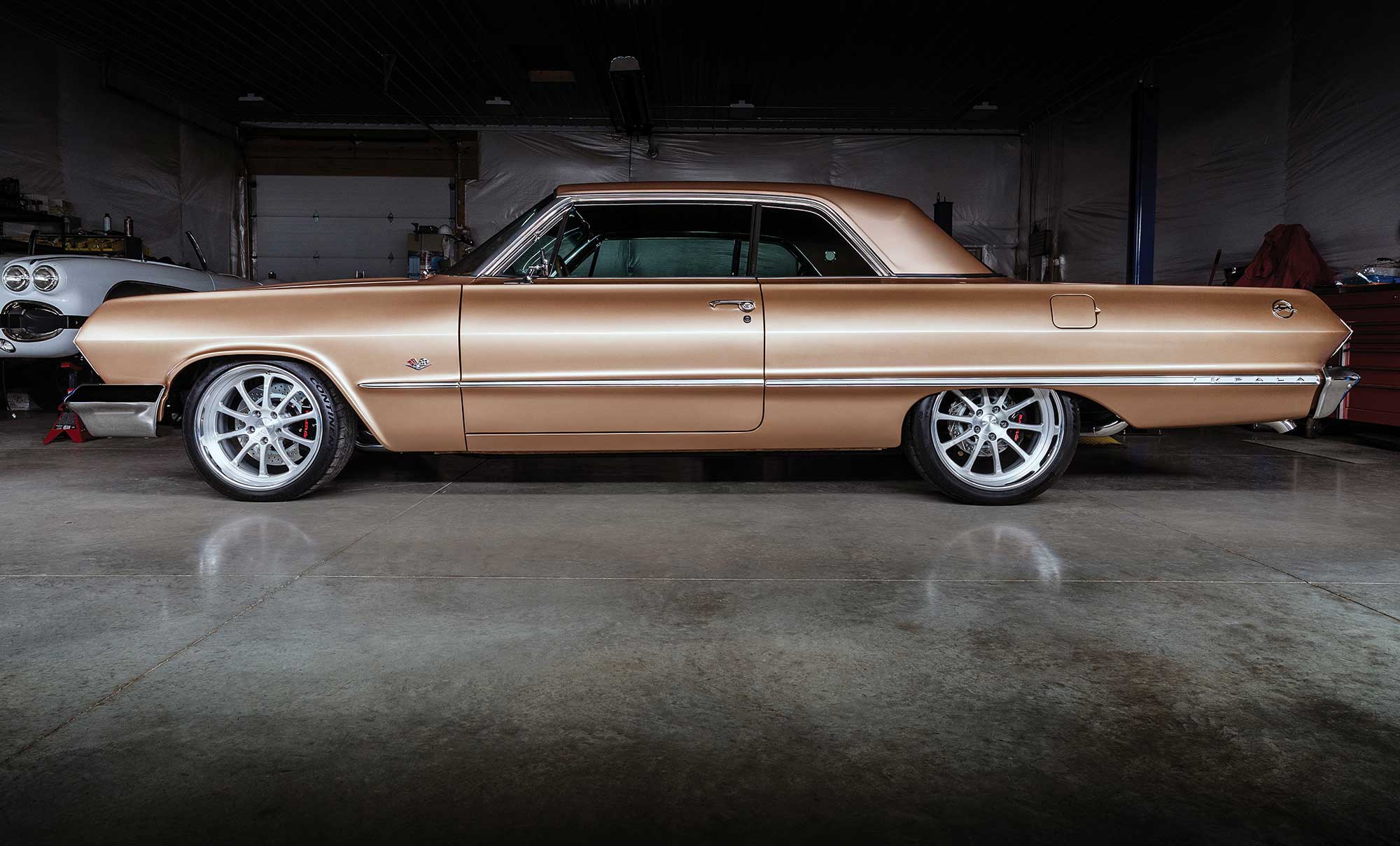
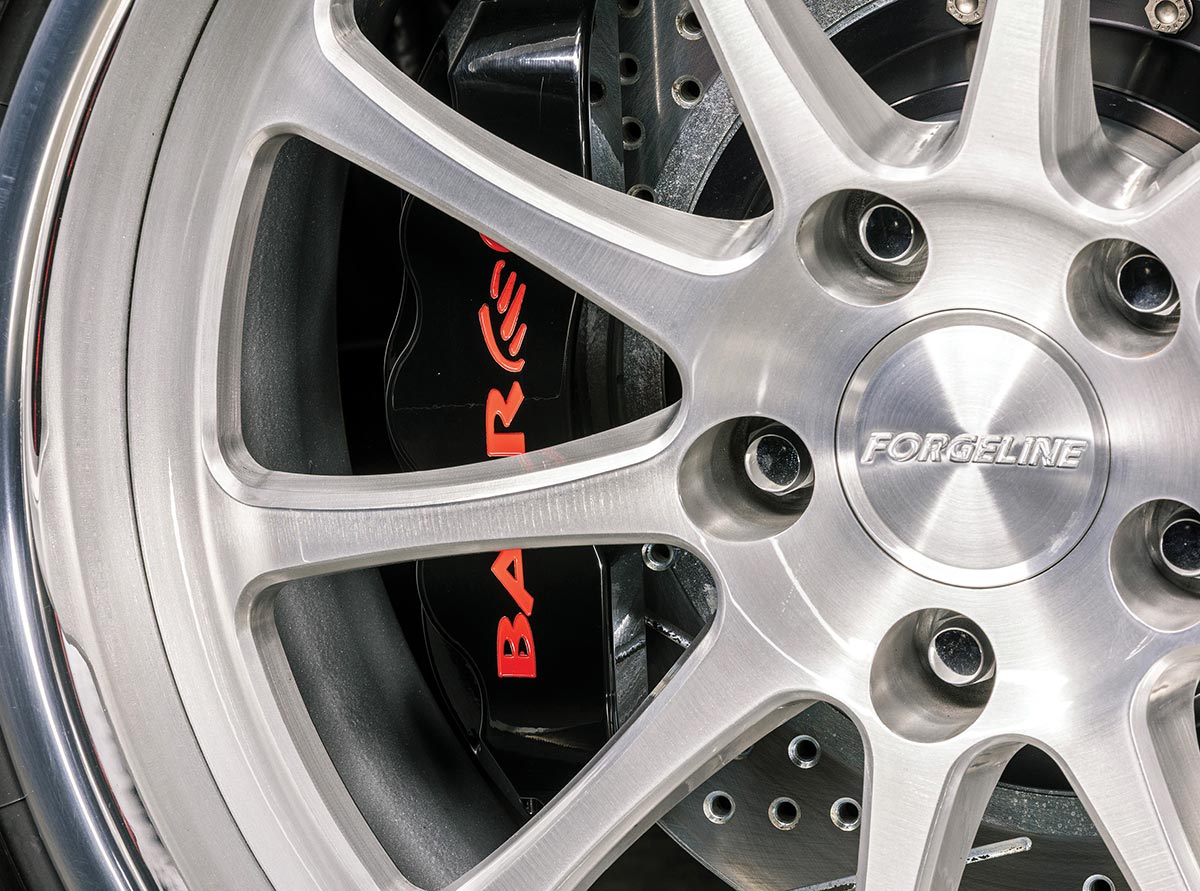
As the body came together, the drivetrain was simultaneously mocked up in place. Oberlander fabricated custom headers and an exhaust system, and during this phase the wheel selection was finalized, with Allen choosing Forgeline ZX3P wheels wrapped in Continental rubber. Once the car reached the metal-finish stage, it was disassembled and handed off to Charlie Minerovic, who, working from his home shop, carried the Impala through final bodywork and paint. Staying true to the car’s original character, Allen opted to retain the factory Saddle Tan Metallic, refinished using a PPG basecoat/clearcoat system.

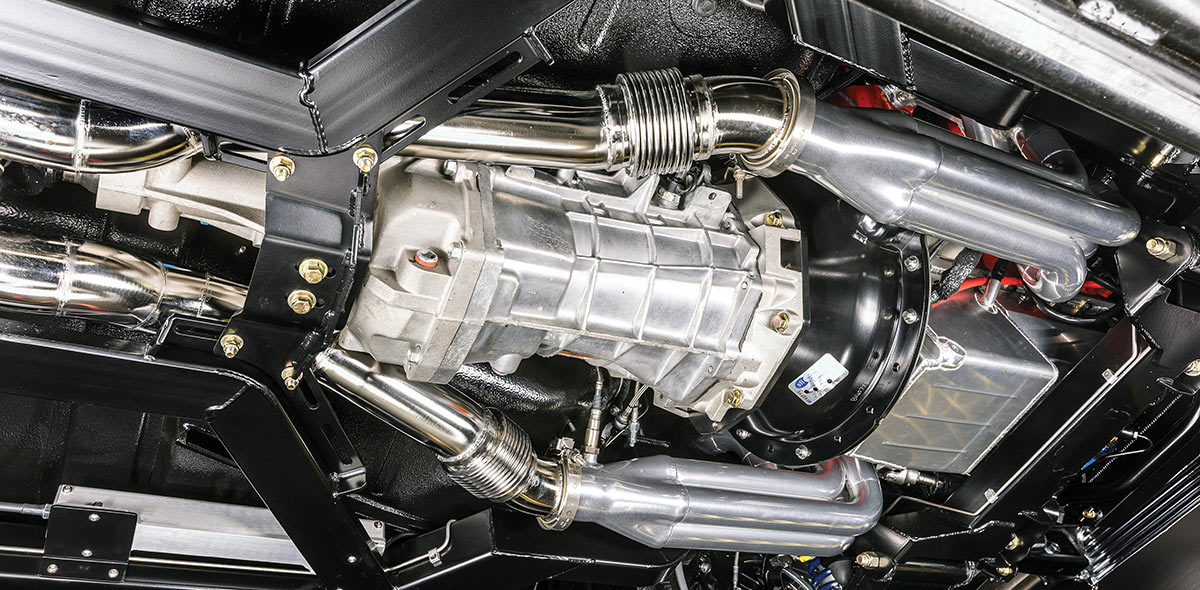
The full propulsion overhaul took roughly a year to complete and successfully balanced the owner’s goal of incorporating authentic Z11 components with modern performance enhancements. Oberlander also handled the wiring integration and resolved several technical challenges, including reconfiguring the fuel-injection system to eliminate interference issues. Another notable modification was the custom-machined hardware he fabricated to mount the iBooster and hydraulic clutch system.
With the drivetrain mated to the body, reassembly began, ushering in the final major phase of the build. Attention then turned to the interior, which was refreshed to match the overall vision by blending classic style with modern refinement. The original dash and seats were retained but thoughtfully upgraded. The seats and door panels were upholstered in Buckskin leather, while the dash was fitted with a Dakota Digital RTX system complete with a tach pod. Additional components, including an Ididit steering column, a Billet Specialties steering wheel, a custom Hurst shifter, and a Vintage Air A/C system, further enhanced the cabin with subtle modern touches.
From the moment the Impala rolled into Oberlander’s shop to the day Allen drove it out, the build spanned roughly three years. Reflecting on the result, Allen says, “I’m totally satisfied with the way it came out. The only thing we’re going to do this spring is change the differential. I originally ordered a 3.55:1 final drive and it was incorrect. We will be installing a 3.90:1 unit.”

VEHICLE: 1963 Chevrolet Impala
TYPE: 1963 cast-iron block
DISPLACEMENT: 482 ci
COMPRESSION RATIO: 10.5:1
BORE: 4.350 inches
STROKE: 4.00 inches
CYLINDER HEADS: Chevrolet Z11 cast iron
ROTATING ASSEMBLY: Lamar Walden Automotive (LWA)–spec 4340 steel stroker crankshaft, LWA-spec steel H-beam connecting rods, LWA-spec forged-aluminum pistons
VALVETRAIN: 2.19/1.72 valves, LWA-spec stainless valvesprings, LWA-spec 1.72:1 ratio roller rockers
CAMSHAFT: LWA222 custom grind
INDUCTION: GM Z11 two-piece dual-quad/dual-plane aluminum intake, (two) Holley Terminator X Max 4150 four-barrel EFI
ASSEMBLY: LWA (Doraville, GA)
INSTALLATION: Oberlander Performance (Medina, OH)
EXHAUST: Oberlander Performance custom TIG-welded 2-inch stainless steel headers, 3-inch TIG welded 304 stainless steel pipes, Corsa Pro mufflers
ANCILLARIES: Z11 cowl induction air cleaner, Edelbrock aluminum water pump, SPAL fan, Wizard Cooling aluminum radiator, MSD wires, Oberlander Performance beltdrive, GM alternator, Rick’s Tanks fuel tank
OUTPUT: 590 hp at 6,100 rpm, 625 lb-ft at 4,700 rpm
GEARBOX: TREMEC T56 Magnum, McLeod clutch, McLeod steel flywheel, RST twin disc
REAR AXLE: Ford 9-inch, Eaton Truetrac differential, 3.70:1 gears, Roadster Shop 31-spline axles
CHASSIS: Roadster Shop SPEC Series
FRONT SUSPENSION: Roadster Shop independent coil spring suspension (with upper and lower control arms), Hyperco 650-pound springs, Ridetech coilover shocks, Roadster Shop 1.25-inch antisway bar
STEERING BOX: Roadster Shop rack-and-pinion
BRAKES: Baer 14-inch rotors with six-piston calipers front, Baer 13-inch rotors with Baer four-piston calipers rear
WHEELS: Forgeline ZX3P; 19×9 front, 20×10.5 rear
TIRES: Continental ExtremeContact Sport02 255/35R19 front, 295/35R20 rear
UPHOLSTERY: Buckskin leather
CARPET: Custom cut and leather bound
DOOR PANELS: Custom leather
SEATS: GM stock original seats
INTERIOR INSTALLATION: HD Custom Upholstery (North Ridgeville, OH)
DASH: GM steel original
WIRING: American Autowire
STEERING: Ididit steering column, Billet Specialties steering wheel
SHIFTER: Custom Hurst Shifter Stick
INSTRUMENTATION: Dakota Digital RTX with tach pod
SOUND SYSTEM: RetroSound Motor 4HD head unit, Pioneer speakers
HVAC: Vintage Air Gen IV
FENDERS: Original Z11 aluminum
HOOD: Original Z11 aluminum, Z11 light spring hood hinges
PAINT: PPG Saddle Tan Metallic basecoat/clearcoat
BODY AND PAINT: Charlie Minerovic (Streetsboro, OH)
GRILLE: GM restored original
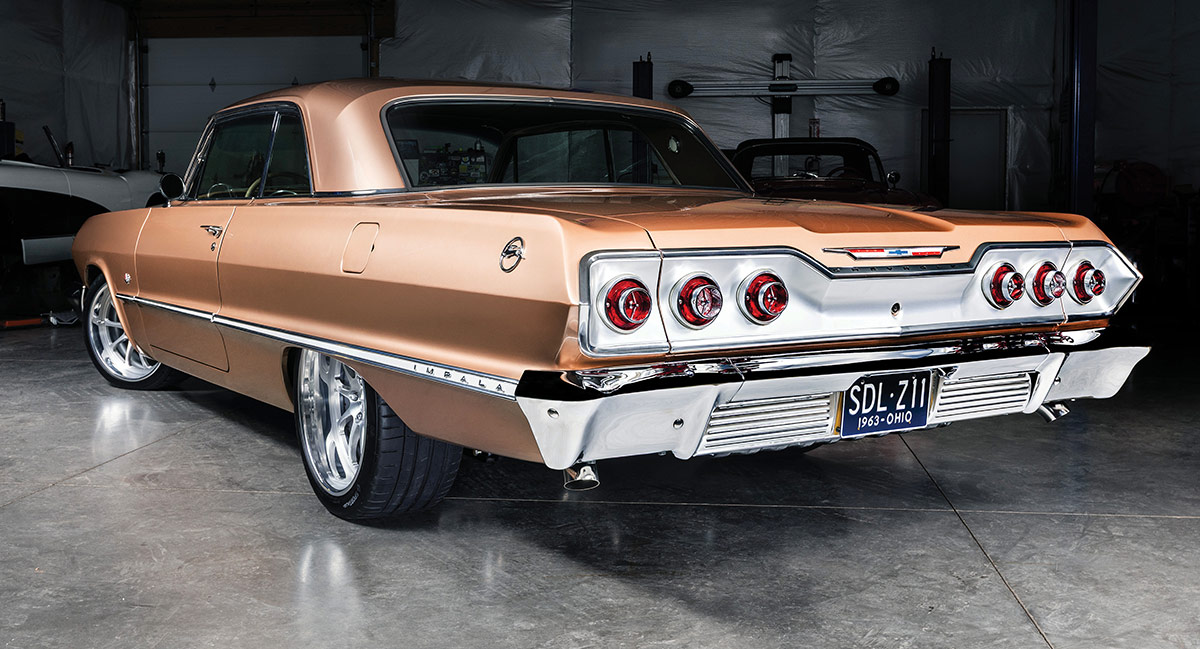
BUMPERS: GM original aluminum Z11 front bumper, reproduction aluminum Z11 rear bumper by Jim Sullivan, polished and rechromed by Grafton Metal Finishing (Grafton, OH)
TAILLIGHTS: GM original with LED bulbs
Headlights: Dapper LED
CHROME TRIM: Reconditioned original