

 TECH
TECH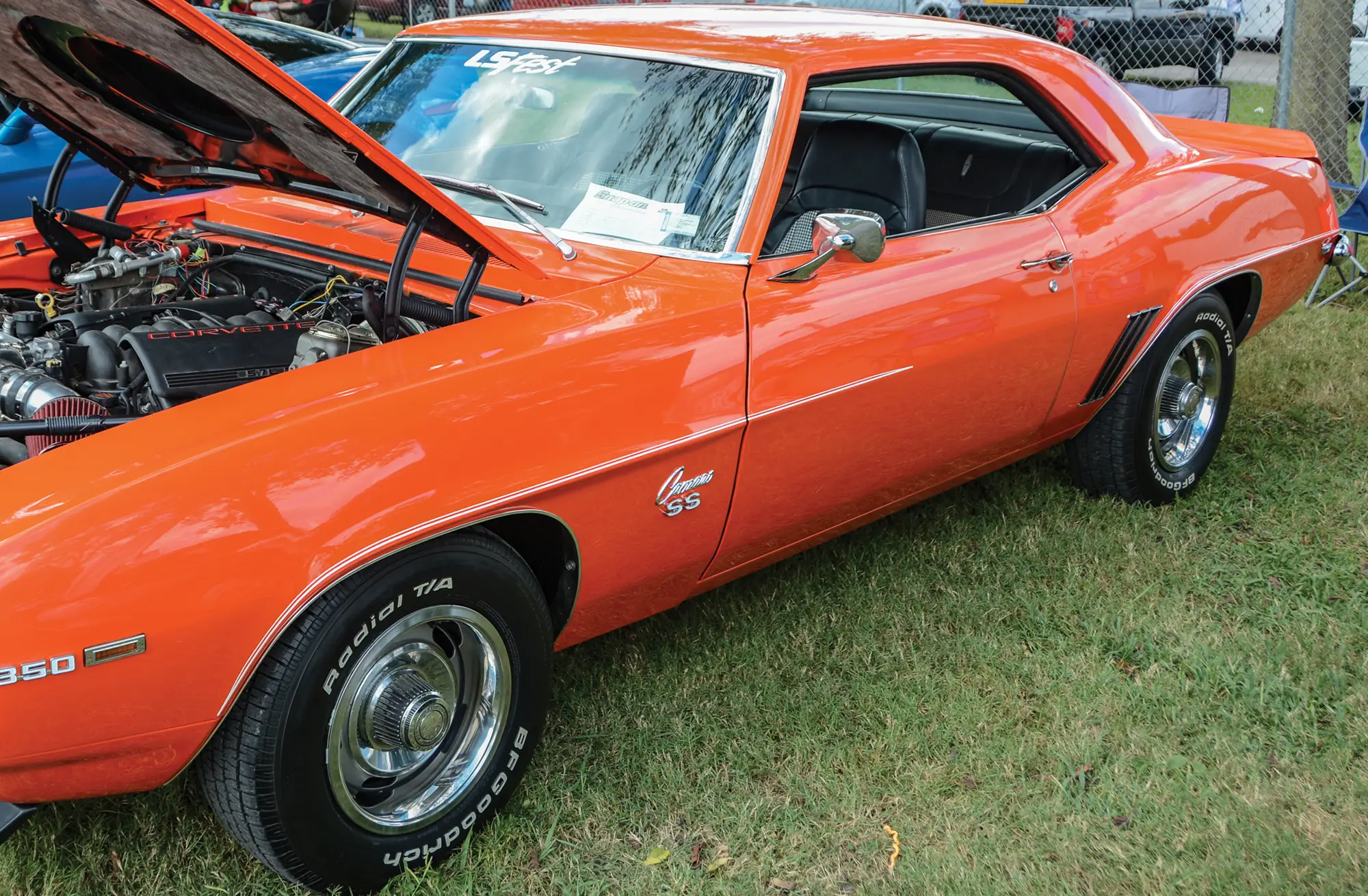
 The obscure D96 striping from 1968 changed from a straight horizontal pinstripe into these stylish stripes that followed the new wheel opening design for 1969. Much like the Z21 pinstripes from 1967, these wheel opening stripes could be added by the dealer or the individual who bought the car.
 Photography BY THE AUTHOR
 e all feel a connection with cars. Every one of them has a story. It’s why we write about them, and it’s why you buy this fine publication. Some are tedious to write, especially ones that were bought and just sit in a garage like a piece of jewelry. They are wiped down every now and then and maybe make it to the local cruise-in or ice cream shop, racking up a whopping 50 miles a year. No matter how much they cost, those cars have no soul. Those are the hard ones to write.
When Chevrolet rolled the Camaro out to the public, it was an opportunity to deliver a car with numerous appearance packages and option groups. New car buyers could opt for Rally Sport, Super Sport, or Z/28, and sometimes combine groups to create a truly unique Camaro. Even a base-model Camaro could be optioned up to appear a little fancier, thanks to option groups like Z21, which included wheel opening moldings, driprail moldings, and special painted pinstripes along the body line. Painted stripes quickly became a trademark of the first-generation Camaro, and several designs came into play during the three-year run.
The thing with Camaros is that most people didn’t leave them as the factory intended. Many hot rodders swapped engines, improved the suspension, and added custom paint details of their choosing. Sometimes those paint modifications included removing the stripes all together. The old lacquer and enamel paints simply didn’t last as long as today’s materials, and even garage-kept cars would need to be freshened after a few years of service. Back when Camaros were just daily transportation, a cheap paintjob would be applied to bring the shine back, but the history of the car’s original look would be gone. These paintjobs also offered some creative license, as there was no rulebook as to how you could dress your Camaro during that time. Z/28 stripes on a Rally Sport? Sure. Super Sport emblems on a base model? Why not.
Now that it’s been more than 50 years in the rearview mirror since those first-gen Camaros were sold, the details of each car can be hard to track down, unless you’re lucky enough to have a build sheet or other legitimate documentation that proves the car’s pedigree. And while stripes were once used to quickly identify a car’s option package, you can’t always trust that after so many years have passed. That’s why we wanted to compile some examples of striped first-gen Camaros and list the factory stripe options. We gathered photos from our past 20 years of car show experience and feature photo shoots to put together the best group to illustrate proper striping.
Keep in mind that official assembly manuals are available for these cars, which provide the exact measurements for each stripe. We’re not going into that level of detail here—this is merely an education on stripe styles and how they were optioned. Exact measurements are important on concours restorations—you’d be surprised how much ⅛ inch stands out on a stripe miscue. Some builders or painters freehand the stripes and get it pretty close, but it’s almost always noticeable that something isn’t quite right.
Luckily, companies like Auto Metal Direct, Year One, Classic Industries, and Summit Racing have many options to help lay out the stripes on your early Camaro. Some kits are a mixture of stencils and decals, while some are strictly stencils to give you the correct shapes and dimensions. It still requires patience and skill to pull off a proper stripe job, but the stencils certainly help speed things along. Take a look at our gallery of first-gen Camaro stripes and see what’s right for your car. We also added a few custom ideas at the end if you want to step outside the box a little.
Any of these three ’67 RPO groups called for a Front Accent Band, otherwise known as the nose stripe or bumblebee stripe, although the Camaro assembly manual only lists the stripe under the L48 RPO. The stripe itself was RPO D91.
D88 Multicolored Nose Stripe (canceled)
In our research, we found that Chevrolet originally proposed an alternative nose stripe that featured multiple colors in 1968. Had this gone through, it would’ve certainly been a period-perfect touch.
D90 Sport Striping
The D90 code was used in 1968 and 1969 for Sport Striping to be used on all Super Sport models. However, there are two styles of stripes and both years could be ordered as a standalone stripe option on any Camaro aside from Z/28. For 1969, the D90 stripe was the famous “hockey stick.”
D91 Front Accent Band
One of the most popular stripes is the D91 nose stripe, sometimes called the bumblebee stripe. This stripe wraps around the nose of the car and was available for two years. In 1967, it was included in the Super Sport package, but for 1968 it could be added to any non-SS or non-Z/28 car.
 Typically, the D90 Sport Striping had a small break in the stripe near the side marker light, which is where the cubic inch emblem would reside. In the case of six-cylinder cars optioned with the D90 stripe (a rare combination), the stripe would be solid, like the one seen on this Pro Street Camaro.
The ’68 Camaro D96 stripe seems a bit mythical because you may never see a set of these stripes in person. It was a simple dual pinstripe that went from nose to tail along the middle body line. Nearly 20,000 cars were ordered with them, but it was not as stylish as the other stripes, so Camaro owners typically do not replicate them on modern builds. The following year, the D96 RPO remained but called for fender accent stripes to call attention to the new sculpted body lines on the ’69 body.
Z21-Style Trim Group
RPO Z21 is a ’67-only option, which includes dual pinstripes approximately ¾ inch below the upper body line. These stripes were combinable with the Super Sport package or standalone D91 Front Accent Band stripe. The Z21 package also includes wheel opening moldings and driprail moldings. Rally Sport cars (RPO Z22) had the same pinstripes as a standard item in the option group.
Z/28 Special Performance Package
The famous Z/28 package ran for all three years of the first-gen Camaro and was the only way to get hood and deck stripes. There was not a separate RPO code for the stripes, as it was part of the performance package.
 In 1967, RPO code Z21 called for a dual pinstripe just below the upper body lines. This was a painted stripe but very similar to the dual-stripe decal kits you can get at the local parts store. The Rally Sport package (RPO Z22) also came with these stripes.
 When customers selected the Super Sport option group in 1967, the package came with a stripe that wrapped around the header panel and front fenders. Notice this ’67 Camaro also has the Z21 pinstripes in place.
 The nose stripe was available in 1967 and 1968 as RPO code D91. You’ll typically see this stripe with a break near the middle body line, with either SS badges (1967) or the car’s cubic-inch emblem (1968) in place. In the case of this base-model six-cylinder car, the stripe is solid with no break.
 The Z/28 package was the only way you could get the famous hood and deck stripes on a Camaro, although they have been added to countless cars. An interesting note is that ’67 and ’68 Camaro Z/28 stripes have a relief area around the decklid emblem.
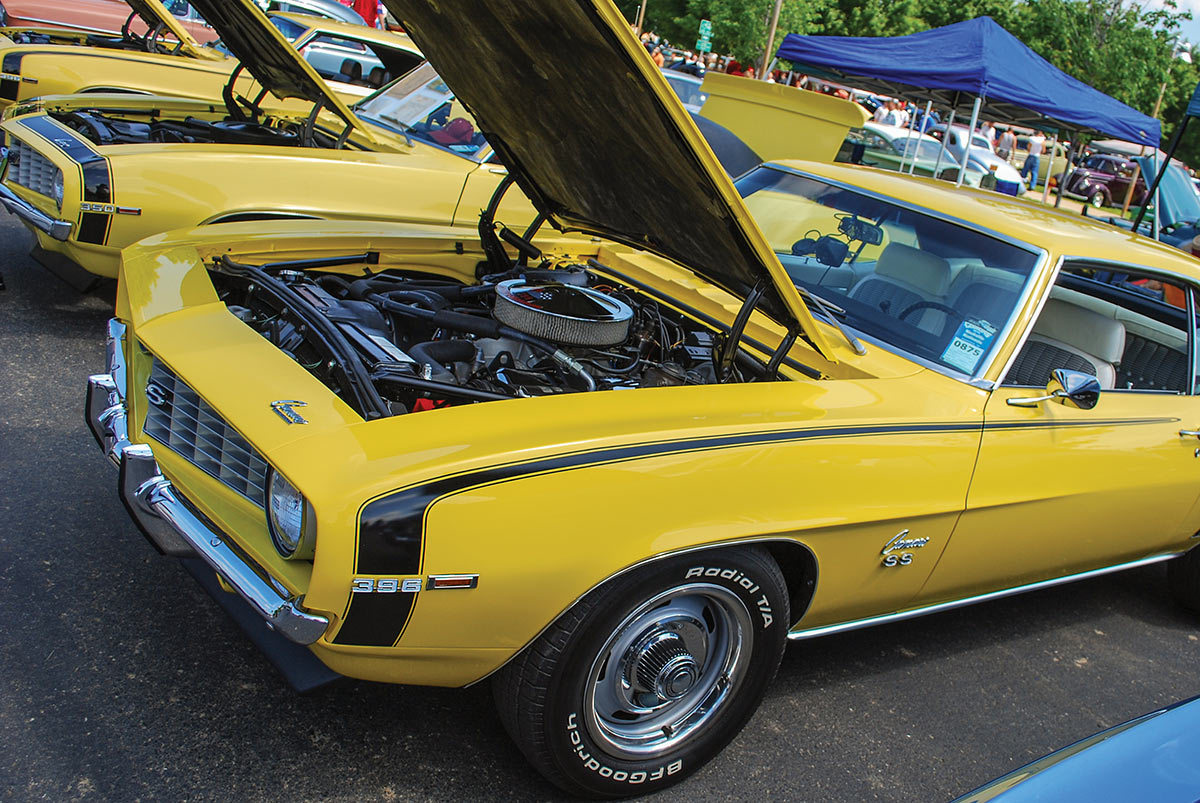 First-generation Camaro stripes come in many flavors and add a little extra spice to stock and modified cars.
 Moving into 1968, the D91 nose stripe remained a popular option, although it was no longer part of the Super Sport package after a new Super Sport stripe hit the market partway through the 1968 production run.
 The Super Sport stripe in 1968 gives the car a sense of motion, as the nose stripe makes a hard turn and extends down the side of the car. This stripe is painted on the header panel and front portion of the fender, and decals are typically used on the rear portion of the fender and door.
 RPO code D96 in 1968 called for horizontal pinstripes along the middle body line. Although we could not source a high-quality image of this stripe design, we did find a ’68 Camaro with dealer-installed body side moldings in the same area the D96 stripes would be located.
 The DX1 stripe proves to be one of the more seldom-seen designs on ’69 Camaros. Our research shows the DX1 stripe could not be ordered with the Super Sport package, so this combination is not authentic, but it looks great!
 One of the most recognizable Camaro stripes was a rare combination from the factory. These hood and deck stripes were only available with the Z/28 package during the first-generation production run, but they proved to be the most popular design to replicate on lesser-equipped cars.
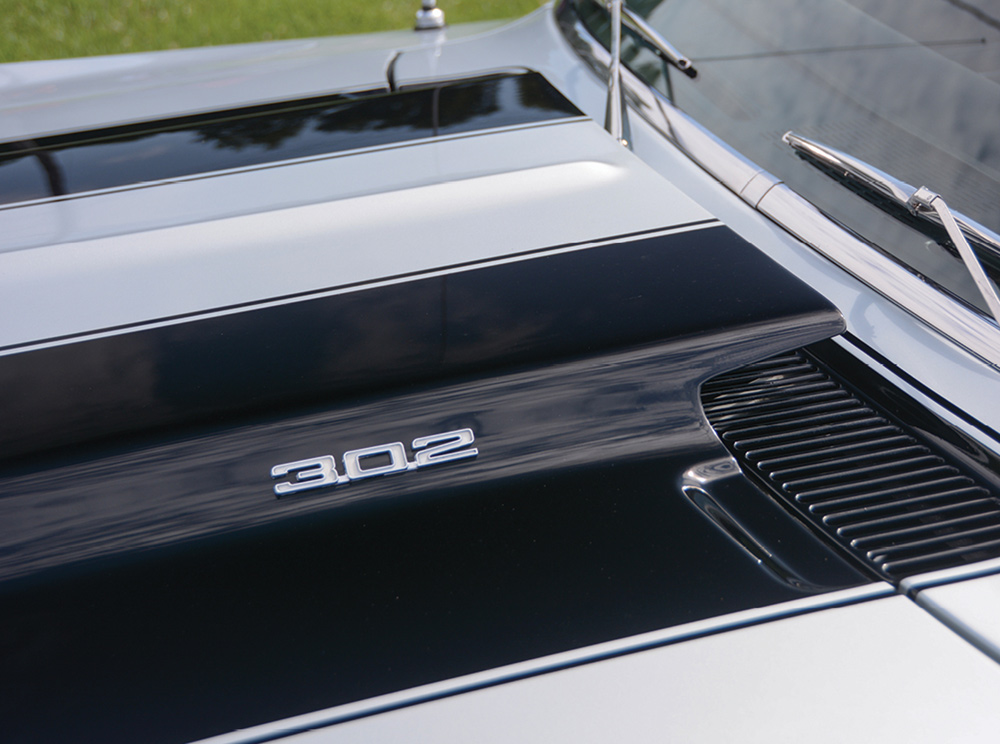 A closer look at the rear section of the hood stripe shows how it curves around the cowl louvers and features a thin pinstripe border. The inboard edge of the stripe goes straight off the back of the cowl induction hood.
 The deck stripes on a ’69 Camaro Z/28 came in two configurations based on whether the car came from the factory with a rear spoiler. When a car was ordered with a spoiler, the stripes ended at the bottom edge of the spoiler, leaving a small section of the decklid without stripes. This example shows the stripes extending onto the decklid, which typically indicates a dealer-installed spoiler.
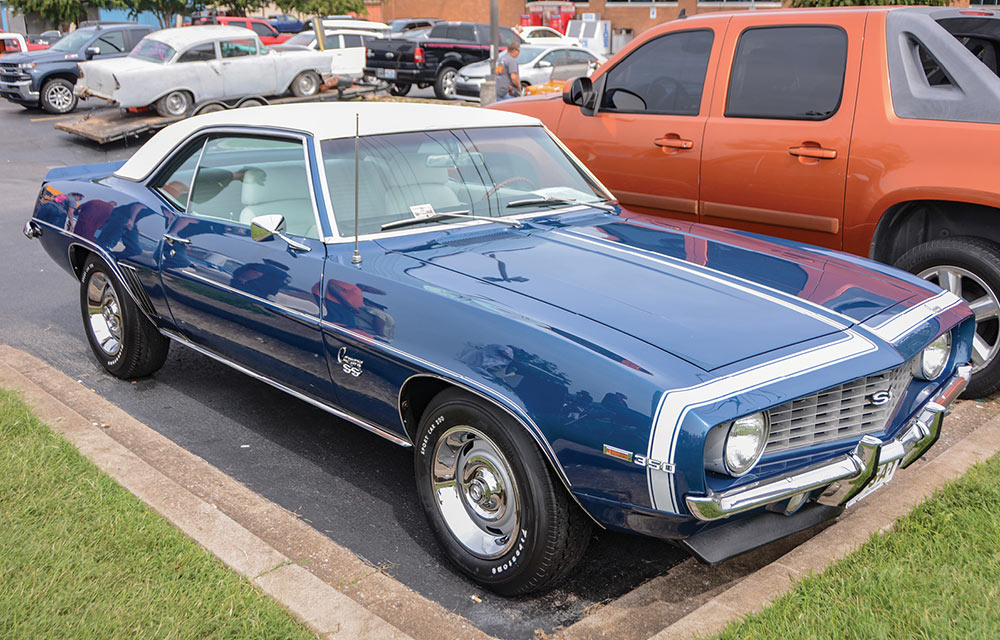 This is a more common application of the DX1 stripe. This ’69 Camaro does have Super Sport badges on the grille and fenders, but the flat hood suggests that it is a base model car. This car also has the D96 pinstripes, a tasteful touch that complements the white vinyl top and interior.
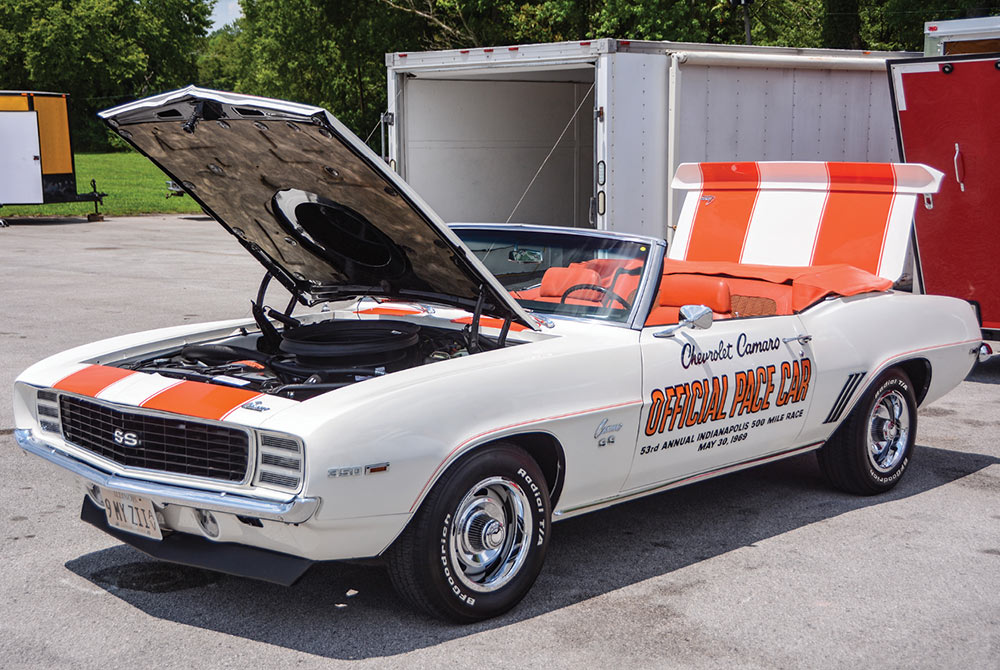 The most popular usage of the D96 pinstripes is on the Indy 500 pace car from 1969. Although only 3,675 of these cars were built, many replicas have been built to pay tribute to this cool factory-built creation.
 Another popular option for ’69 Camaros is the “hockey stick” stripe, officially known as Sport Striping, RPO code D90. This was a carryover code from the previous year, and it was also standard on Super Sport models.
 Although not painted or applied at the factory, Yenko stripes are a popular addition to a ’69 Camaro. Many companies, like the ones sourced in this article, offer Yenko stripe kits that quickly transform a standard Camaro into an attention getter.
 First, we have a very subtle design change on the popular Z/28 hood stripes. This time, instead of the stripes “falling off” the leading edge of the header panel, the stripes are finished with the same rounded edges that you’ll find on the cowl panel.
 This ’69 Camaro features a custom nose stripe and tail stripe for a unique look that plays off the D91 stripes from 1967 and 1968. You’ll also notice a blacked-out taillight panel and other black trim details that tie it all together.
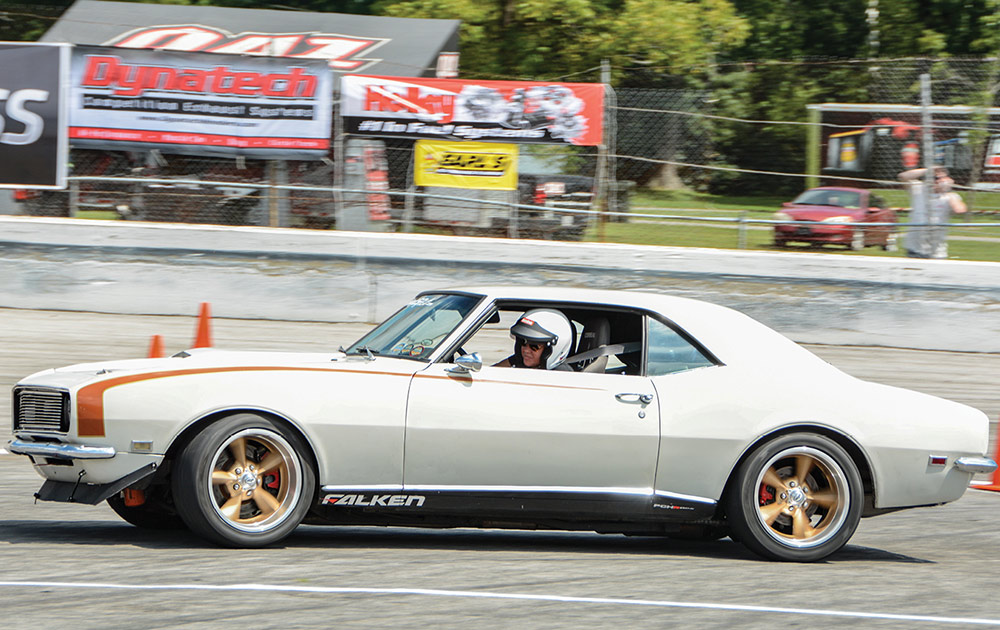 Next, we have a ’68 Camaro sporting a ’69-inspired hockey stick stripe. This stripe design requires a little bit of imagination to get the lines just right, but it’s a great example of a popular stripe design transposed onto a slightly different body shape.
 Taking the hockey stick shape and moving it around on the ’69 Camaro body looks cool in the case of this highly customized example. The bright red hockey stick-style stripe is moved down to accentuate the sculpted fender and body lines. SOURCES