

 FEATURE
 IMAGES BY NOTSTOCK PHOTOGRAPHY
t’s a fact, at least in this scenario, that the classic car hobby seamlessly travels from generation to generation. Marty Amoroso’s grandfather, the OG Marty, who the younger Marty was named after, understood that a good car isn’t just transportation, it’s an identity with a heartbeat—a heartbeat that got the young Marty into cars, creating a lifelong passion and appreciation for vintage cars. Although Marty’s grandpa lit the fire, after his death, it was Marty’s grandpa’s best friend, Bill, who took Marty under his hot rodding wing and taught the then 14-year-old the finer aspects of hot rodding—how to drive a stick and how to do proper burnouts—all in this 1955 Chevy Bel Air. The burnout lessons backfired one time when Marty was caught by local law enforcement doing that very exercise on the streets near his home. “I didn’t have a driver’s license yet, so when the cops pulled me over, they gave me a good tongue-lashing and wouldn’t allow me to drive the car back home, which meant Bill had to come pick me up,” Marty laughingly says. “On the way home Bill told me if I don’t stop doing burnouts in his car, he’d get a bad reputation around town. That’s when we decided to name the car Bad Reputation.”
 IMAGES BY NOTSTOCK PHOTOGRAPHY
t’s a fact, at least in this scenario, that the classic car hobby seamlessly travels from generation to generation. Marty Amoroso’s grandfather, the OG Marty, who the younger Marty was named after, understood that a good car isn’t just transportation, it’s an identity with a heartbeat—a heartbeat that got the young Marty into cars, creating a lifelong passion and appreciation for vintage cars. Although Marty’s grandpa lit the fire, after his death, it was Marty’s grandpa’s best friend, Bill, who took Marty under his hot rodding wing and taught the then 14-year-old the finer aspects of hot rodding—how to drive a stick and how to do proper burnouts—all in this 1955 Chevy Bel Air. The burnout lessons backfired one time when Marty was caught by local law enforcement doing that very exercise on the streets near his home. “I didn’t have a driver’s license yet, so when the cops pulled me over, they gave me a good tongue-lashing and wouldn’t allow me to drive the car back home, which meant Bill had to come pick me up,” Marty laughingly says. “On the way home Bill told me if I don’t stop doing burnouts in his car, he’d get a bad reputation around town. That’s when we decided to name the car Bad Reputation.”
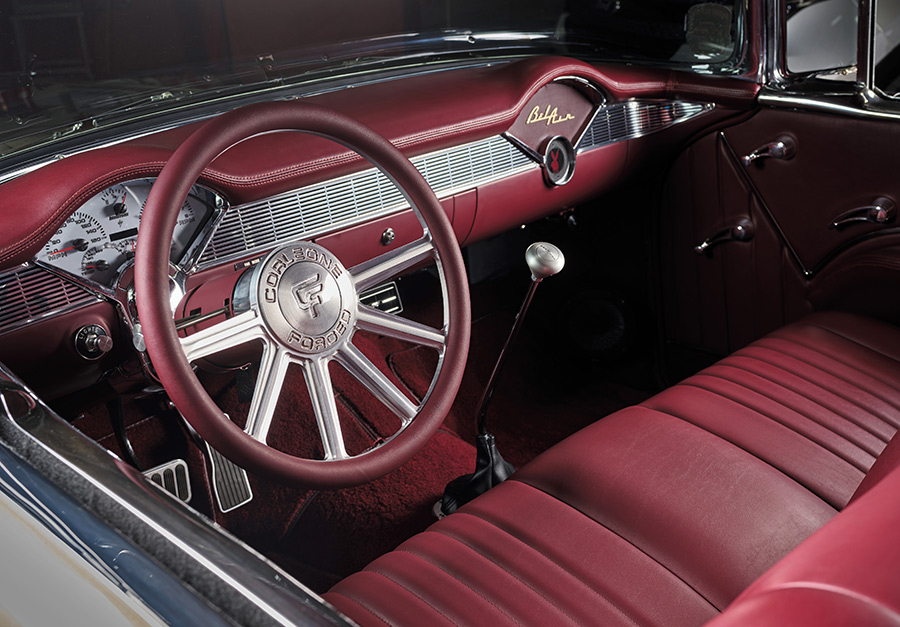

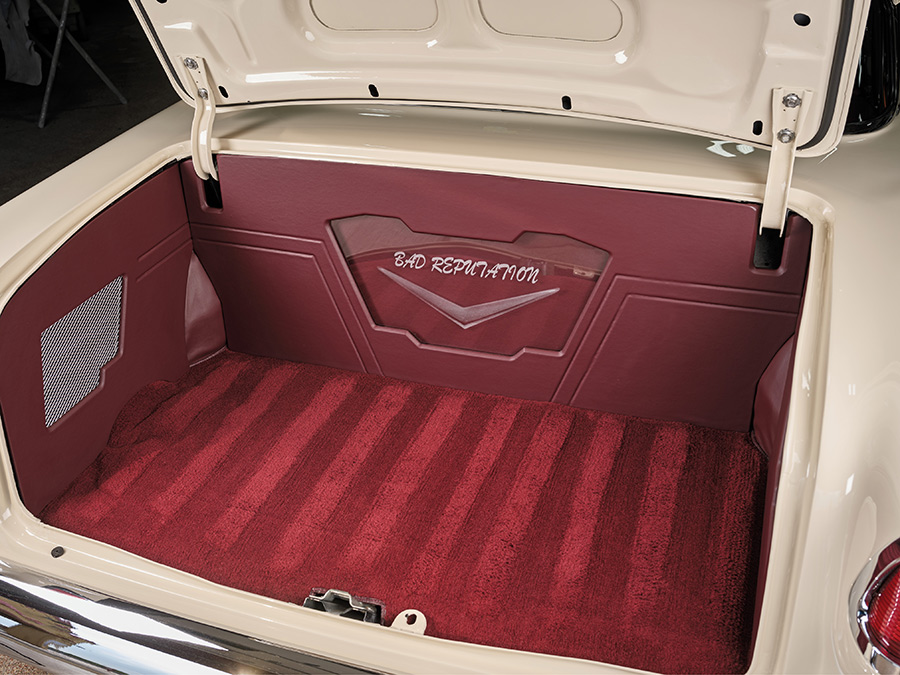
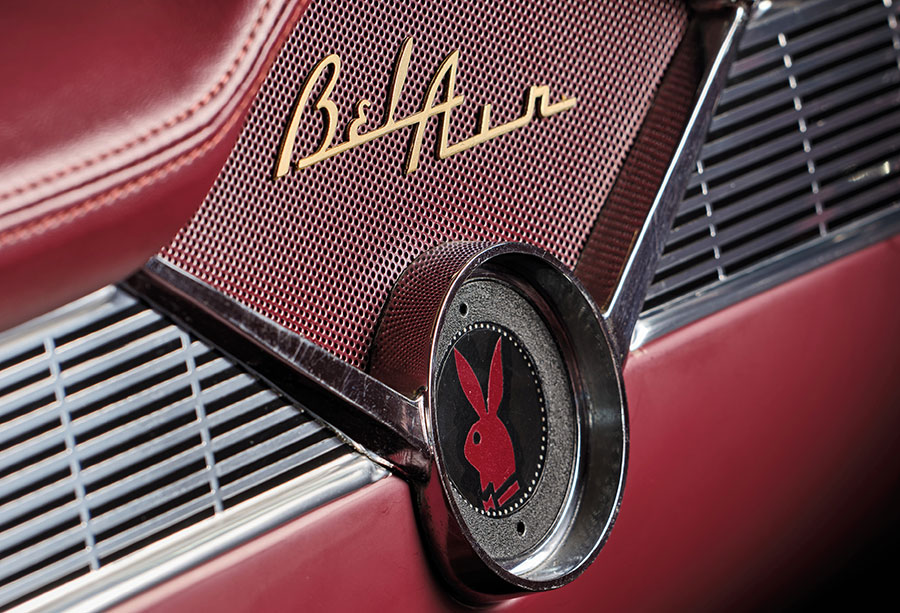
“I had the utmost respect for the car,” Marty says. “The fact that it was bought new off the showroom floor by Bill’s dad, who then handed it down to Bill, then onto me after Bill’s [death], makes this car very special. With that in mind, I redid the car in honor of both of them. Although the Bel Air went through some fairly big changes, I was careful not to upset the history of it and even kept the Playboy Bunny in the clock on the passenger side dash.”
The small detail says everything. You can rewrite the horsepower, suspension geometry, and paint codes, but certain fingerprints stay—anchor points that keep the car’s history intact.
The Bel Air was already in remarkable shape, thanks to years under careful watch. For a car pushing seven decades, that’s no small feat. It meant Marty wasn’t chasing rust or unraveling past sins. Instead, he had the rare opportunity to focus forward. The transformation took just seven months, a blink in restoration time, made possible because the bones were solid.
With the heavy lifting minimized, the attention shifted to refinement. Marty leaned on friends and trusted craftsmen, including the crew at Bump & Grind Auto Body in Homer Glen, Illinois. Their job wasn’t to rescue the car, but to elevate it. They smoothed the body, tightened the lines, and created a surface worthy of something special.
That something came in the form of Spies Hecker Custom Champagne mix, laid down by Marty himself alongside William Arnold. The color walks a fine line. Without being obnoxious, it glows under the light yet still commands attention in the shade.
Underneath that refined exterior sits a chassis that has been cleaned, smoothed, and painted to match, a detail that signals intent. This isn’t a throw-together cruiser. It’s a cohesive build where every piece talks to the next.
Gone is any notion of vintage power limitations. In its place sits a Patton Motor Services–built, LS3-based 408ci engine, packing 11.2:1 compression and a rotating assembly stout enough to handle whatever Marty asks of it. A Liberty 4330 crankshaft swings alongside H-beam rods and JE flat-top pistons, while a custom Comp Cams camshaft dictates the rhythm.
Air and fuel are delivered through a custom sheetmetal intake and Holley Sniper throttle body setup, giving the engine both visual punch and modern driveability. Chevrolet 243 aluminum heads cap things off, while MSD ignition components keep the spark sharp and consistent. It’s a combination that blends reliability with attitude.
Cooling and support systems follow suit, with a Mattson aluminum radiator and fan, a Powermaster alternator, and carefully selected accessories ensuring the car runs as clean as it looks. Exhaust exits through Sanderson headers into a custom 3-inch system, finishing with Flowmaster mufflers that announce the car’s presence before it’s seen.
Backing the engine is a Chevrolet 700-R4 transmission, assembled by TRS Automotive, paired with a PTC, 3,000-stall converter. It’s a smart choice, balancing highway manners with punch off the line. Power travels through a 3-inch chromoly driveshaft to a Strange Fab9 rearend loaded with 3.73 Richmond gears and 35-spline axles. Translation: it’s built to be driven, not just admired.
Suspension upgrades bring the Bel Air firmly into modern territory. Up front, CPP tubular control arms, 2-inch drop spindles, and Viking coilovers work together to sharpen handling without sacrificing ride quality. A CPP sway bar keeps things planted, while the rear benefits from lowering springs and Viking shocks that complete the stance.
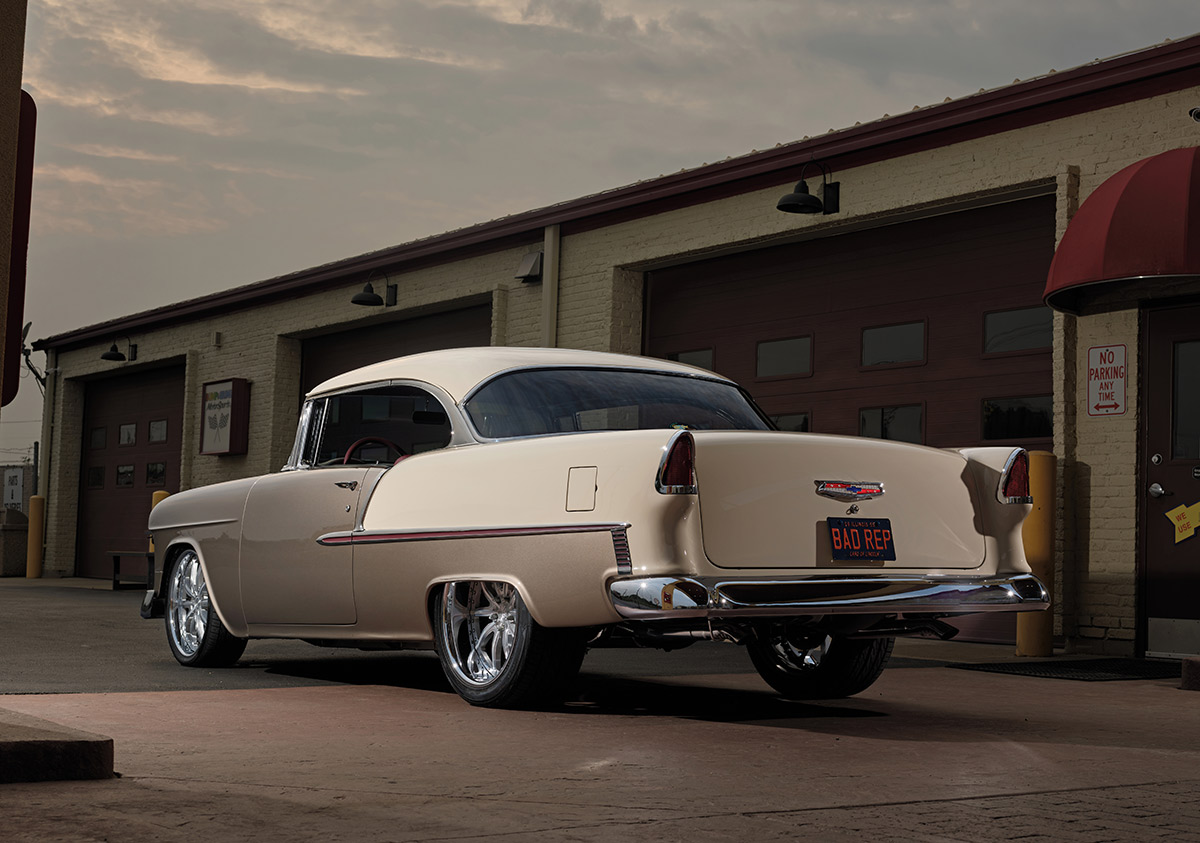
The stance is sealed with Corleone Forged wheels, 20 inches in diameter front and rear, wrapped in Nitto Motivo rubber. The sizing gives the car a modern footprint without losing its classic proportions, a delicate balance acquired by experience.
Inside, the transformation continues with a mix of respect and reinvention. The factory bench seat remains, now wrapped in maroon leather by Duno Upholstery, tying the past and present together in one sweep. TD Custom Interior handled the rest, crafting matching door panels and integrating ACC carpet in the same rich tone.
The dash stays largely true to its roots but gains a custom insert and Intellitronix gauges, blending classic layout with modern readability. An Ididit steering column connects to a Corleone Forged steering wheel, giving Marty a direct line to the driving experience.
Comfort and technology weren’t ignored. Vintage Air handles climate control, while JVC Bluetooth head unit feeds Focal amplifiers, speakers, and 12-inch sub. The wiring, by American Autowire, with the help of Martin Motorsports and Bump & Grind, ensure everything works seamlessly, creating a cabin for both cruising and conversation.
Marty’s approach to the build is refreshingly grounded. “This car was built with champagne taste on a beer budget,” he says. It’s a line that captures the spirit of the car perfectly without trying to outdo everything on the show field. It simply does everything well with intention.
That intention has already paid off. The Bel Air earned a Top 25 at the 2024 Lokar Tri-Five Nationals, a Top 20 at the 2025 Chicago World of Wheels, and even an invite to the 2024 SEMA Show. Not bad for a car rooted in family history and built in less than a year.
But the real win isn’t measured in trophies for invitations. It’s in the way the car connects three chapters of life into one continuous story. Steel, paint, and memory, all rolling forward together.
Marty didn’t just restore a 1955 Chevy. He translated it. And somewhere along the way, he made sure the past didn’t get left in the rearview mirror.



VEHICLE: 1955 Chevy Bel Air
TYPE: LS3
DISPLACEMENT: 408 ci
COMPRESSION RATIO: 11.2:1
BORE: 4.21 inches
STROKE: 4.00 inches
BUILDER: Patton Motor Services (Chicago, IL)
MACHINE WORK: Patton Motor Services
ROTATING ASSEMBLY: Liberty 4330 Crankshaft, Liberty H-beam rods, JE flat-top pistons
CAMSHAFT: Comp Cams custom
CYLINDER HEADS: Chevrolet 243 aluminum
INDUCTION: Custom sheetmetal
FUEL INJECTION: Holley Sniper throttle body
IGNITION: MSD
VALVE COVERS: Custom sheetmetal
AIR CLEANER: K&N
ACCESSORY DRIVE: RAB Performance
EXHAUST: Sanderson headers, custom 3-inch exhaust, Flowmaster mufflers
ANCILLARIES: Aluminum Mattson radiator, Mattson radiator fan, Powermaster alternator, MSD wires, CVF Racing hood hinges
TRANSMISSION: Chevrolet 700-R4 assembled by TRS Automotive (Orland Park, IL)
TORQUE CONVERTER: PTC 3,000 stall
SHIFTER: Lokar
DRIVESHAFT: Chromoly
REAR AXLE: Strange Fab9, Richmond Gear 3.73 gears, Strange 35-spline axles
FRONT SUSPENSION: CPP tubular upper and lower control arms, CPP 2-inch drop spindles, Viking coilover shocks, Viking springs, CPP sway bar
REAR SUSPENSION: CPP 4-inch lowering springs, Viking shocks
CHASSIS MODS: Smoothed and painted body color
WHEELS: Corleone Forged 8×20 front, 10×20 rear
TIRES: Nitto Motivo 245/35R20 front, 275/45R20 rear
UPHOLSTERY: Leather
COLOR: Maroon
CARPET: ACC Maroon
INSTALLATION: TD Custom Interior
DOOR PANELS: Custom by TD Custom Interior
SEATS: Factory bench in leather by Dunow Upholstery
STEERING: Ididit steering column, Corleone Forged custom
SHIFTER: Lokar
DASH: Stock with custom insert
INSTRUMENTATION: Intellitronix
WIRING: American Autowire by Martin Motorsports (New Lenox, IL) and Bump & Grind Autobody (Homer Glen, IL)
INSULATION: Be Quiet
HVAC: Vintage Air
CONTROL PANEL: Vintage Air
ENTERTAINMENT SYSTEM: JVC Bluetooth head unit; Focal amplifiers, speakers, and 12-inch sub by Martin Motor Sports
BODYWORK AND PAINT: Bump & Grind Auto Body
PAINTER: Marto Amoroso/William Arnold
PAINT: Spies Hecker Custom Champagne Mix
HOOD: Stock
GRILLE: Stock, custom painted
FRONT BUMPER: Smoothies
REAR BUMPER: Smoothies
GLASS: Auto City Classics tinted
HEADLIGHTS: Factory
TAILLIGHTS: United Pacific LED
BODY MODS: Smoothed panels