

 TECH
TECH

 Images BY Taylor Kempkes
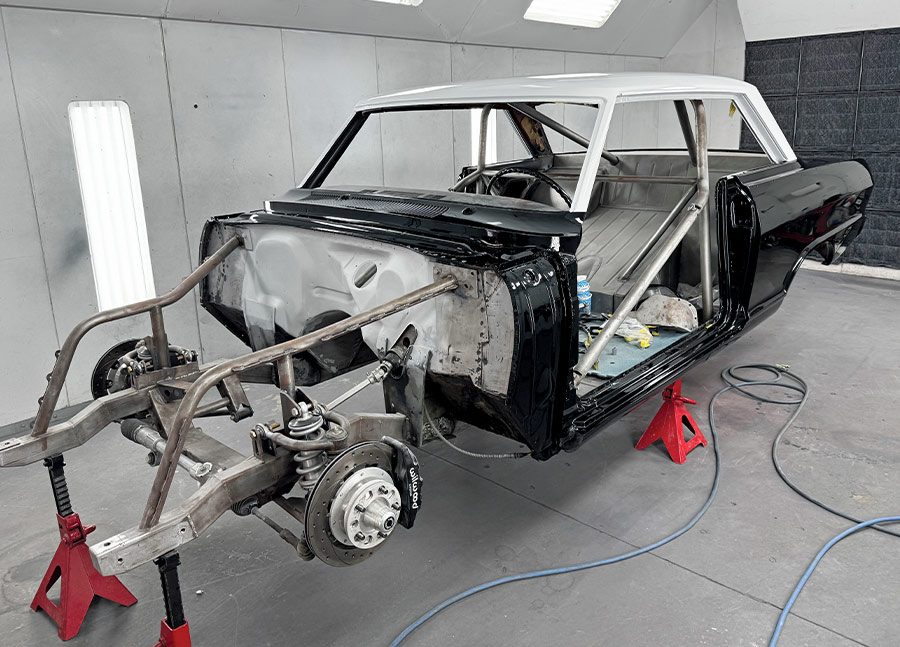
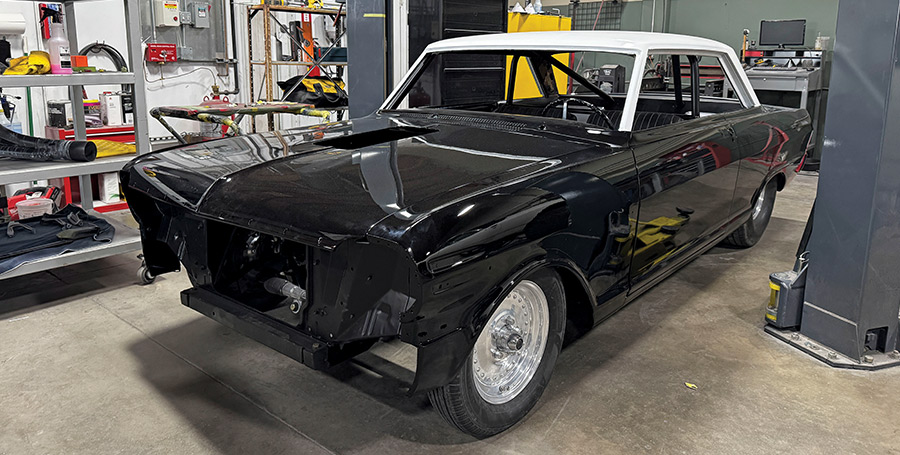
here is a lot involved in painting a car if you want to achieve exceptional quality. In this article, we’ll follow the steps taken at Old Anvil Speed Shop in Orange, California, as they apply their considerable talent and experience to a 1963 Nova.
When it comes to painting, preparation is key. If you apply glossy paint to a surface that is wavy, scratched, or dirty, the outcome will be compromised. There are no shortcuts with this, and you need to perform each step with care and precision to achieve a good result.
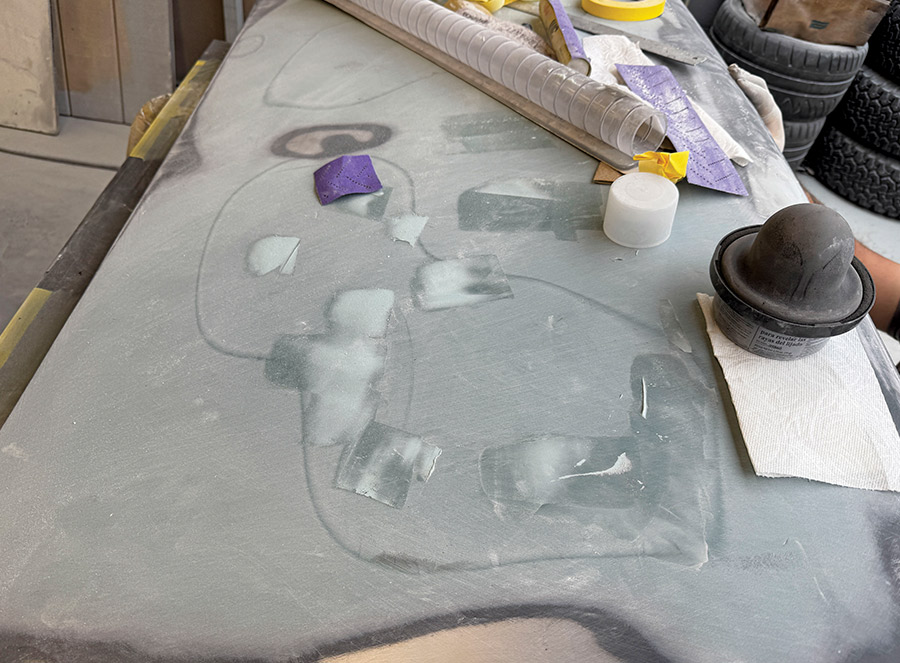
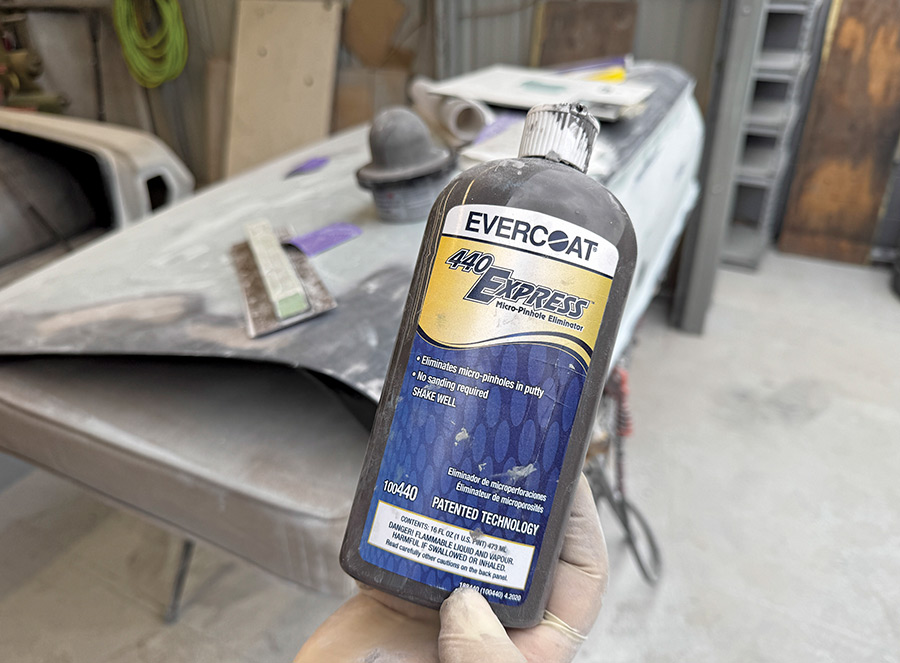
We’re looking at this Nova project after all the modifications and basic bodywork have been completed. Any last remaining imperfections are corrected with top-quality, fiberglass-reinforced plastic filler. This is carefully block-sanded and inspected for any pinholes, which are filled with a special paste designed just for this purpose.
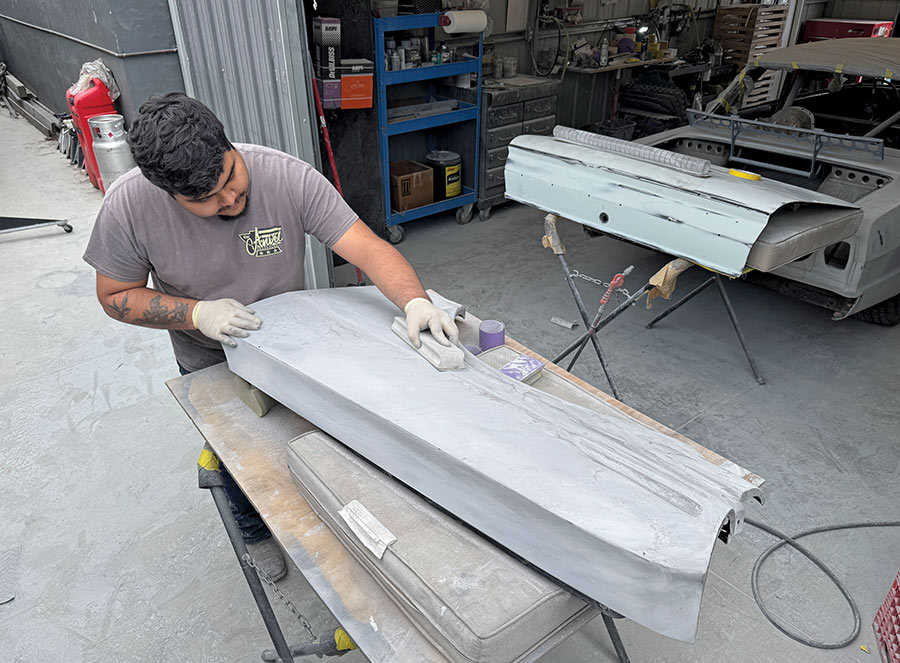
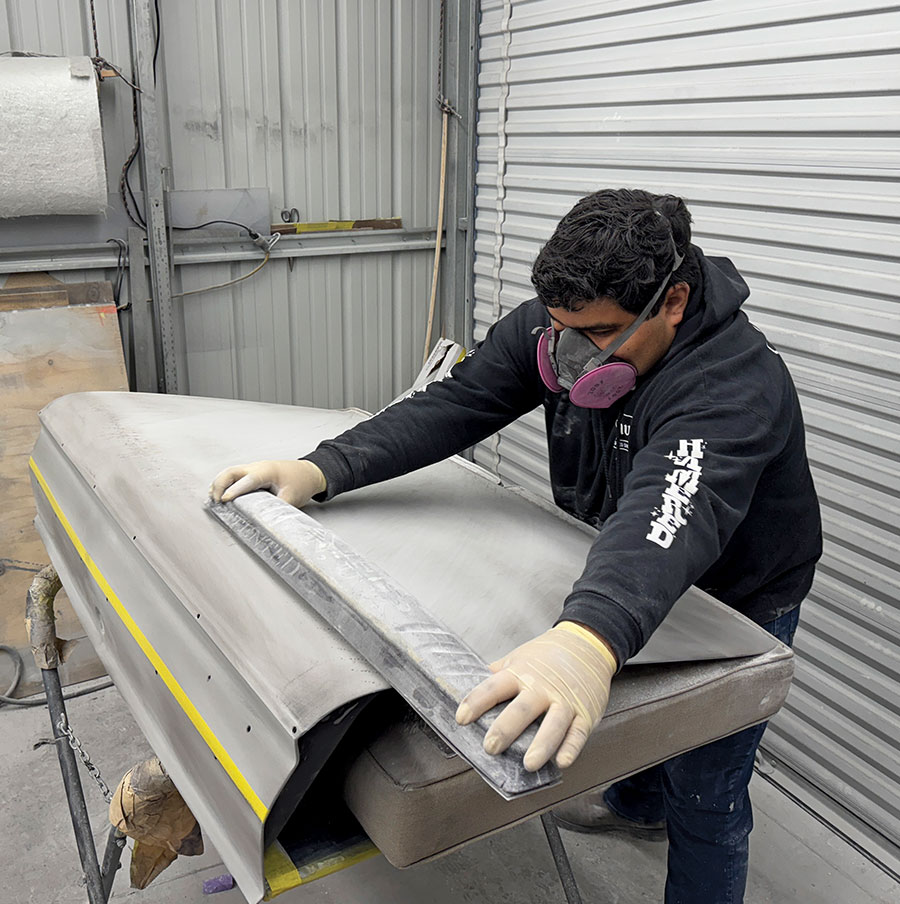
There is an art to block sanding, but for best results, a long-block is ideal for large, low-crown surfaces. It’s best to orient the sanding block in the direction with the least curvature and make several passes that cross. For example, your first pattern might start at the top right corner and move diagonally toward the bottom left corner while keeping the block aligned with the edge of the panel. After a few strokes in this direction, the pattern is reversed, starting at the top left corner and moving down to the bottom right corner.
This is done dry, with progressively finer paper, working up to 320-grit. It helps to use a powdered guidecoat to indicate which areas have not been sufficiently sanded to remove the scratches from the previous stage.
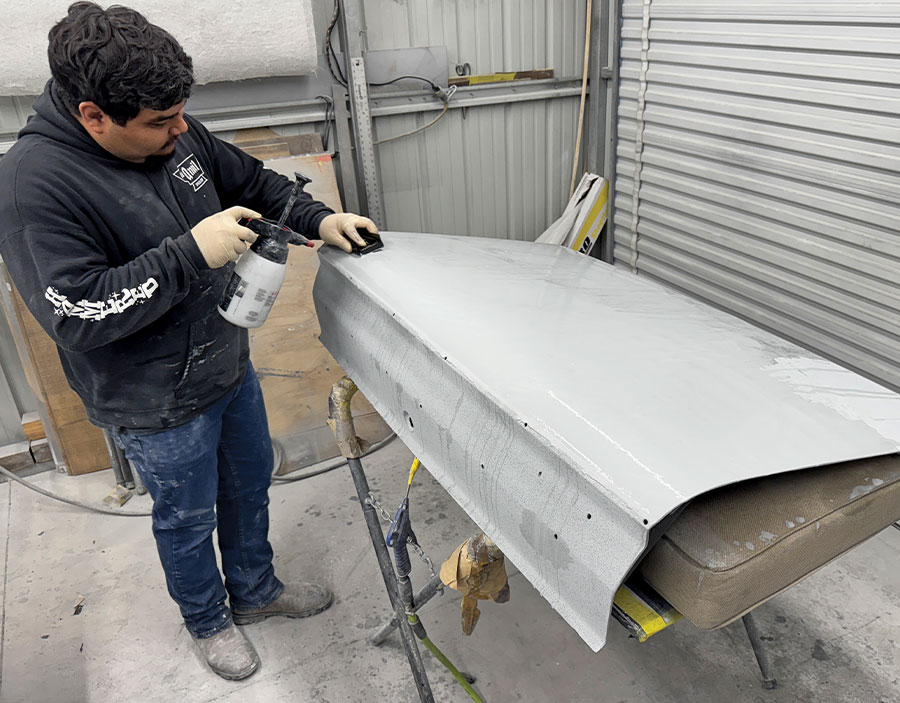
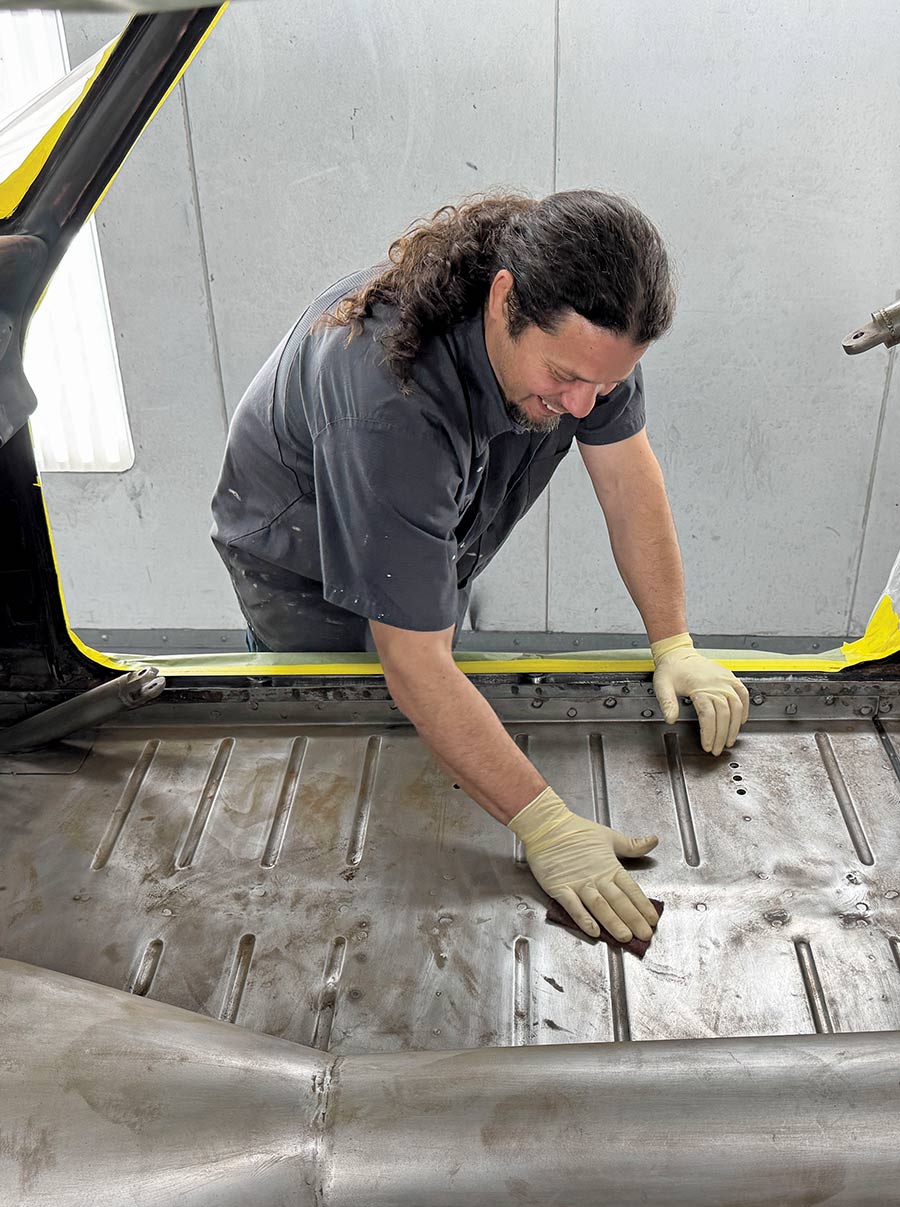
The last step is wet-sanding with 400-grit paper. It is helpful to use a spray bottle to keep the sandpaper from loading up.
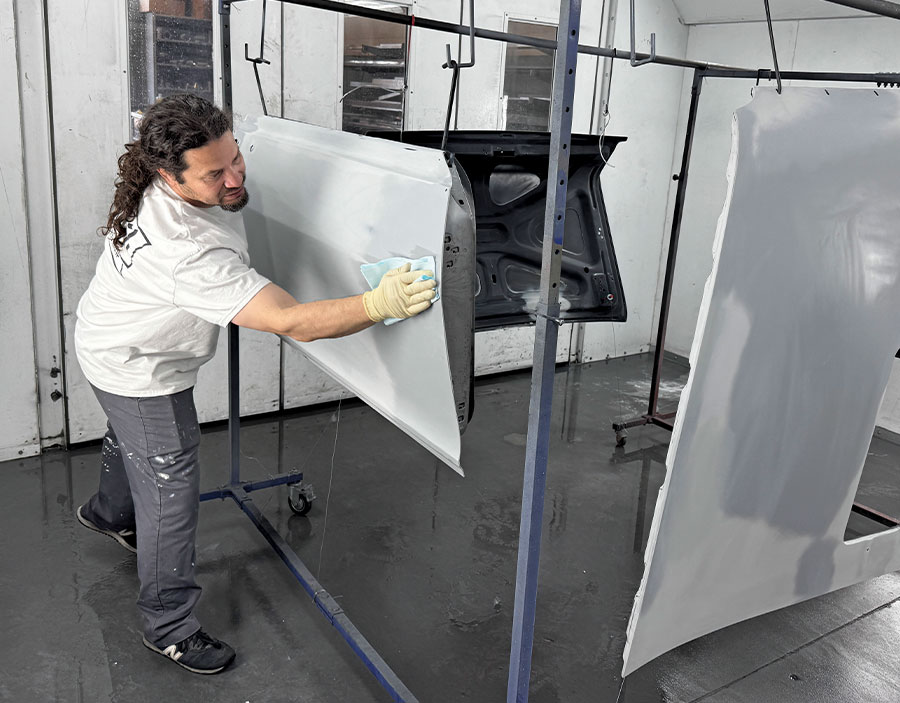
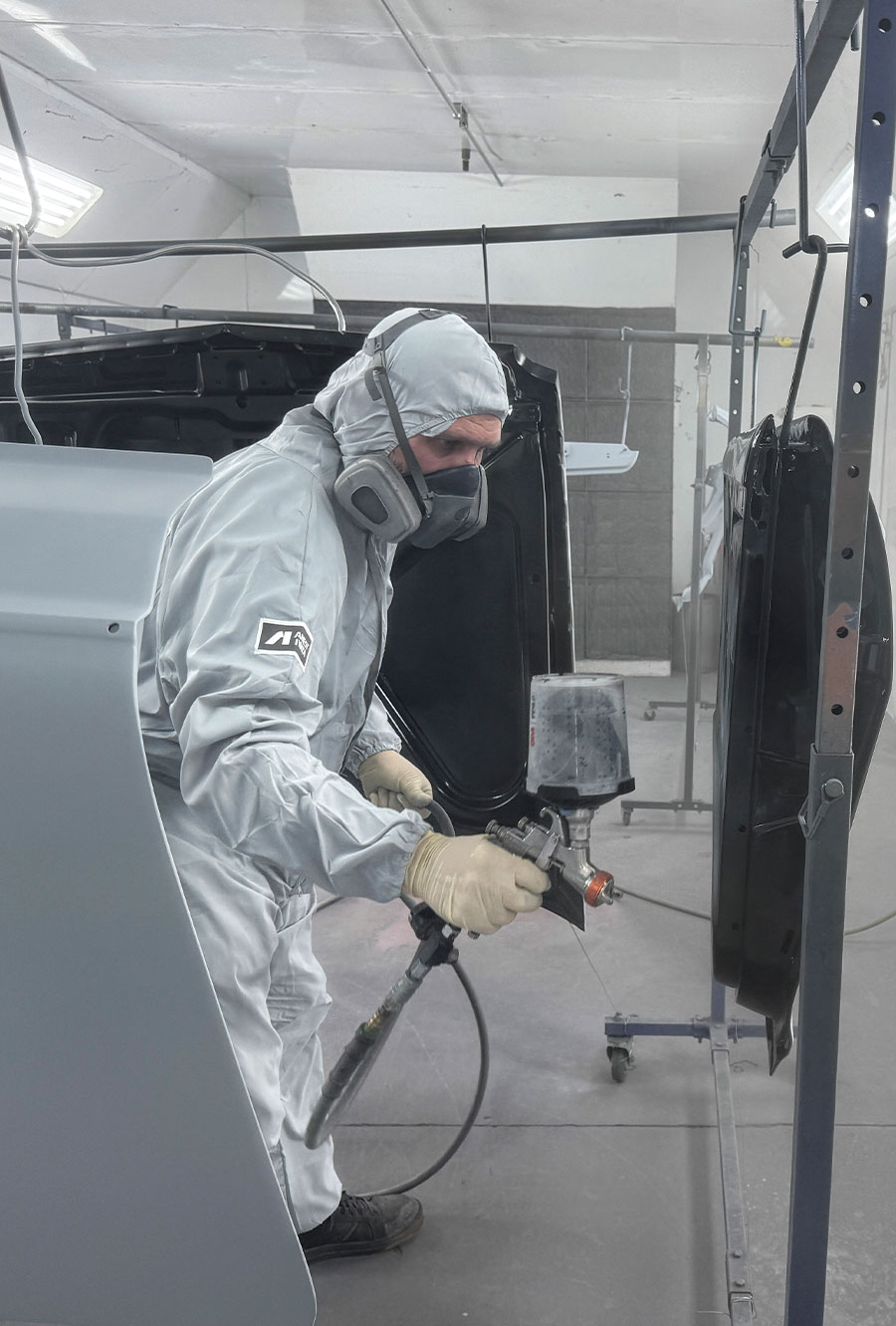
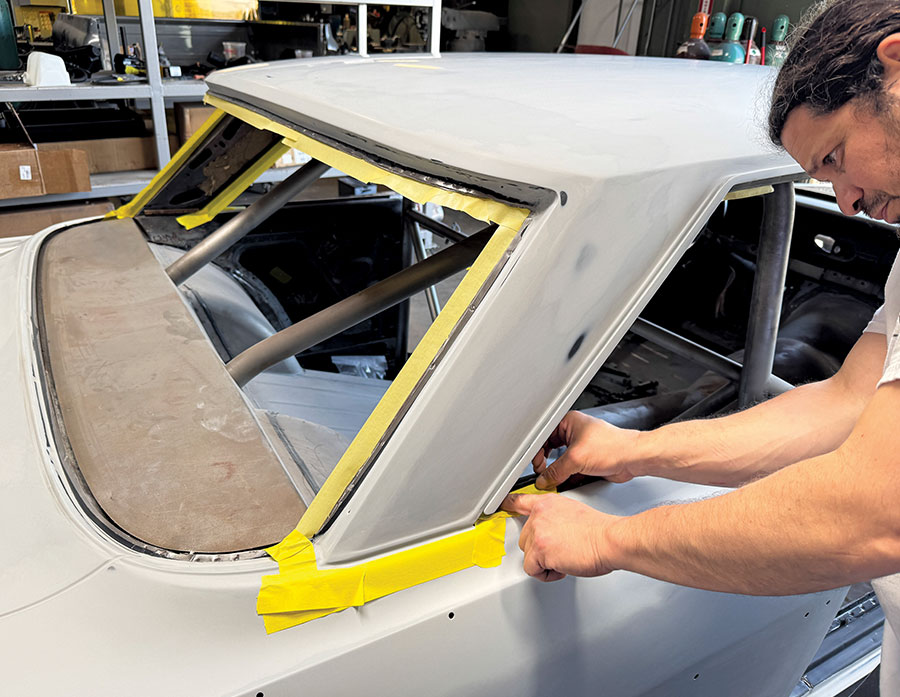
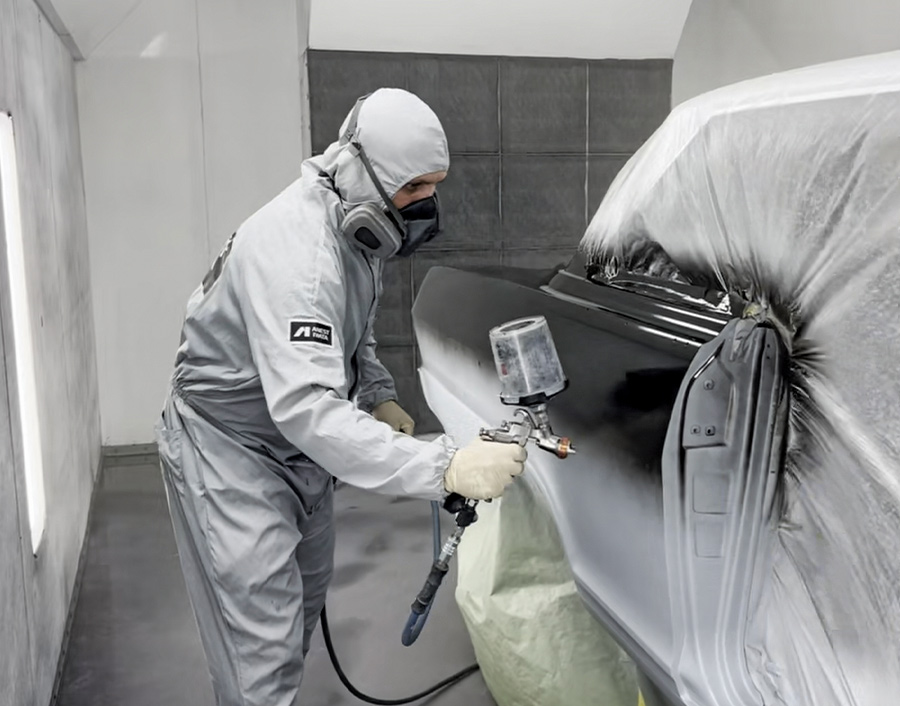
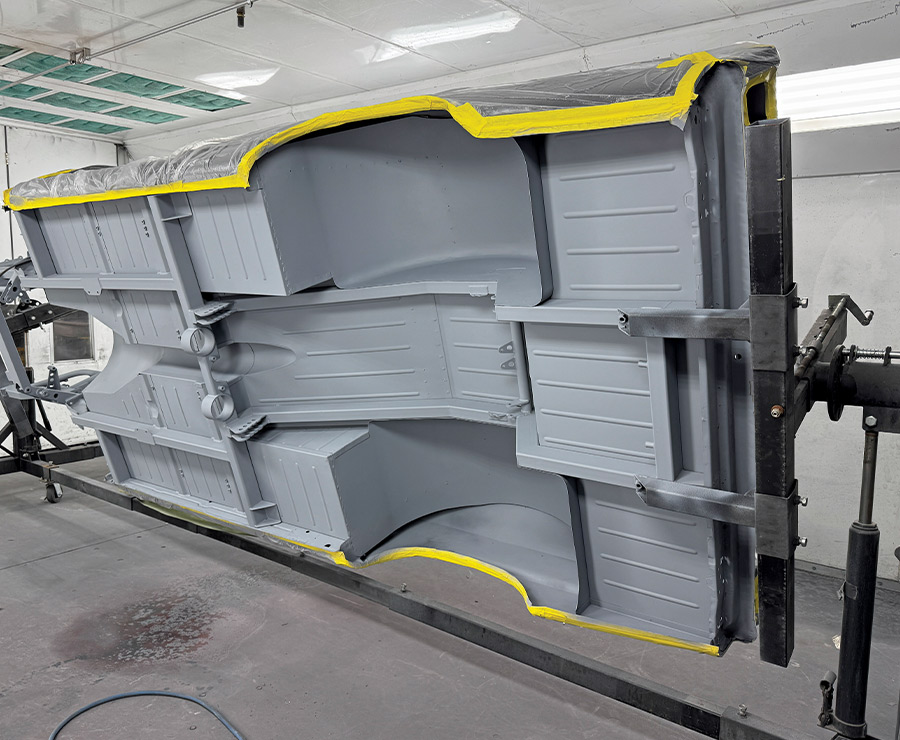
Once all the sanding is completed, the panels are ready for paint. Smaller panels are held on racks inside the paint booth, making it easy to get good coverage on all surfaces. The body of the car is carefully masked as needed before the base, color, and clearcoats are applied.
The photos show the most important steps, and they will give you a good idea about what it takes to produce a top-quality job like this one.












 SOURCES