
 FEATURE
 Photography by THE AUTHOR
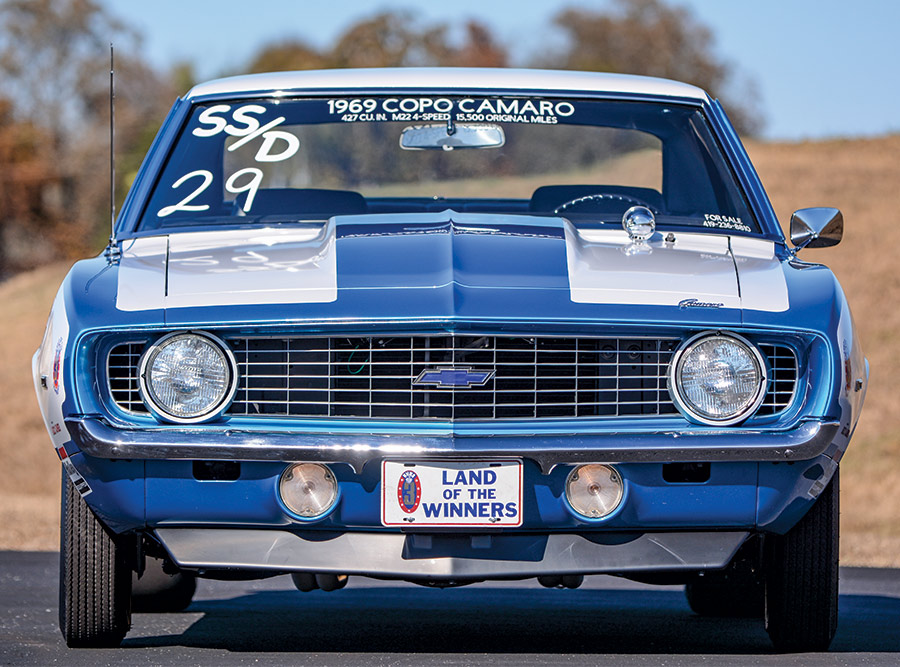
he four letters C-O-P-O spell muscle car royalty. During the late ’60s, the COPO designation typically defined a high-performance combination that wasn’t readily available at the dealership. Today, anything that has COPO heritage instantly goes up in value, but a pure stock restoration often removes any previous identities the car carried during its life on the street or on the racetrack. Even though stock COPO cars bring the most money at auction, these cars usually had a more robust personality when they were being used for their intended purpose.
To get the full scope, we need to go back to 2003 when Jim met his coworker, DJ Justice. Old cars were often the topic of conversation and DJ mentioned that he had a ’69 Camaro with a big-block and only 15,000 miles on it. He had owned the car since 1982 and didn’t plan to sell it. Justice later retired, but Jim reached out several years after to see if he still had the Camaro or if he had considered parting with it. Justice stood firm with his desire to keep the car, but Jim asked if he could see it in person—not to persuade Justice to sell it, but to hopefully dispel some of his own desire for the car. Jim said, “I was secretly hoping upon inspection it would not be as described and I could mentally move on.” However, a close inspection revealed a nice, solid, low-mile car. Jim asked again if he’d consider selling it, and this time Justice shocked him. The answer was yes, but with one stipulation: Jim had to promise he would never cut the car up and make it a race car, an ironic request, as Jim would later find out.
After getting it home, he started running the numbers and found that the big-block was a 427 from a ’66 Impala, and the car was originally a four-speed that had been replaced with a TH400 with a manual valvebody. Out back was a non-original 10-bolt rearend with 3.08:1 gears. Despite these modifications, Jim still wanted to be thorough in his investigation, so he kept digging. One peculiar detail was that the car had X44 designations on the trim tag, which denotes a base model, yet it had a big-block heater core. After some research online, he also found that the pierced hole in the firewall for the cowl induction wiring harness (located above the fuse block) was a significant detail. This led to further investigation, and a call to Jerry MacNeish, the recognized authority on ’69 Camaros. A few months later, MacNeish would inspect the car in person and confirm its COPO origins. Jim ran the NCRS report, which revealed Ray Bryant Chevrolet in Dayton, Ohio, as the original seller, but no record was found of the original owner.
While he waited for the inspection, Jim went into detective mode to uncover the car’s ownership history. Jim determined that he was the eighth person to own the car, but it had never left the state of Ohio. He still couldn’t track down the original owner, but the car’s second owner was arguably its most significant in the overall timeline. Doug Davis owned the Camaro from 1970 through 1974 and bought it with the sole purpose of drag racing in the Super Stock ranks. Doug had unfortunately died in 2006, but Jim was able to contact Doug’s wife, Judy, and their son, Denny, to get the full story.

Denny still had a picture of the car in his wallet, which had previously spent decades in his father’s wallet before he died. Denny also had his father’s old racing helmet, which was painted to match the car. The most sentimental detail of the car’s history was revealed when Denny took Jim to visit Doug’s gravesite. There, the Rat’s Nest Camaro was engraved in Doug’s headstone, forever displaying his love for this car. Even though Doug owned this car for less than five years, it obviously made an impact on the entire family.


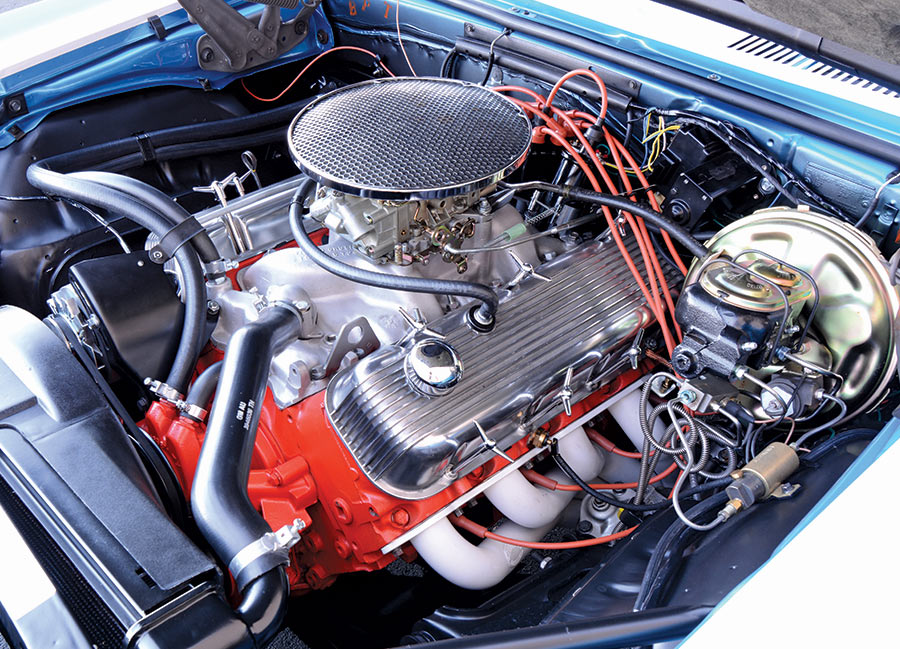
As Jim unraveled this enormous amount of information, he also scoured the country for date-code correct components to complete a factory-correct restoration. Jim sourced engine and drivetrain parts that coincided with the car’s late September ’69 build date. This included a date-correct L72 engine, M22 Muncie four-speed transmission, and BE 12-bolt rearend with 4.10:1 gears.
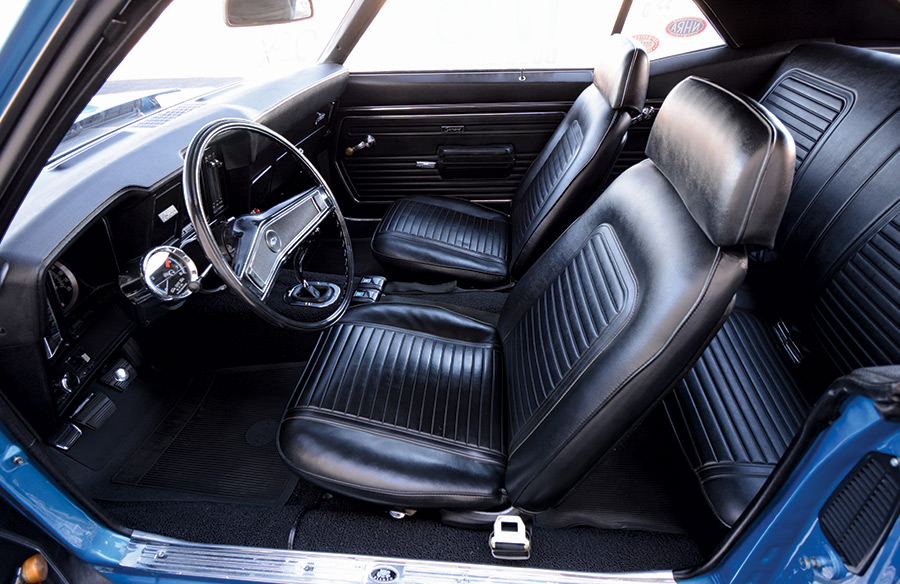
Luckily, the car was never gutted for weight reduction, and it never received a rollbar, so the interior was in excellent condition. The only parts that Jim and his brother Mike replaced were the carpet, headliner, and dashpad. Everything else is original and looks brand new, thanks to a deep cleaning. Jim and Mike are responsible for nearly every aspect of the restoration, and debuted the car at the Camaro Nationals in original, as-delivered form in LeMans Blue with painted steel wheels and dog dish caps. Upon returning from the event, Jim began the Day Two portion of the build.
Jim performed the Rat’s Nest transformation in a way that could be reversed if he chose to put it back to stock. Ken Thompson at Flawless Wraps followed Jim’s direction to recreate the car’s original color scheme, as well as the Rat’s Nest graphics and decals. The pearl white and Candy Apple Red vinyl pops in the sun and has an excellent gloss. All exterior sheetmetal and trim are either original or N.O.S. items, and the front and rear bumper still wear the original chrome plating.
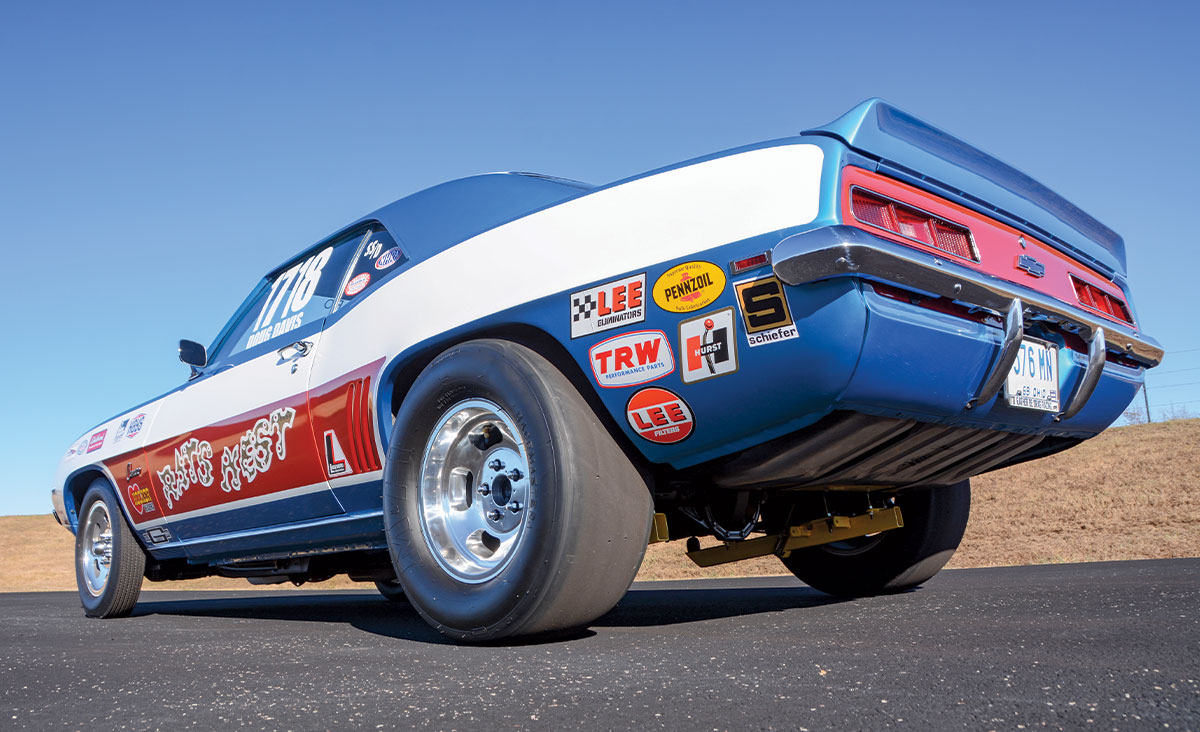
With the car’s Rat’s Nest identity finalized, Jim toured the car around Ohio to visit previous owners, or the family of previous owners. He also attended the MCACN show in Chicago where the car took Concours Gold in the Day Two class. The car made its first trip down the dragstrip in approximately 45 years when Jim attended the 2022 Supercar Reunion in Bowling Green, Kentucky.
While some might say that Jim stumbled into a car with an outstanding storyline, the reality is that his intense research led him from one amazing discovery to another. His thoughtful approach to bringing the car back to its previous life as a Super Stocker truly does this car justice, so much that you almost forget that it’s significant in other ways. There’s a COPO underneath all those early ’70s drag car details, but if it wasn’t for the investigation work of Jim Lammers, the world would have never known this car’s significance. Whether it’s wearing street clothes or its Rat’s Nest getup, this COPO has an incredible story to tell and an awesome caretaker who brought it all to life.

Vehicle: ’69 Camaro COPO
Type: L72 big-block
Displacement: 427 ci
Compression Ratio: 11.0:1
Bore: 4.250 inches
Stroke: 3.760 inches
Rotating Assembly: Original GM
Cylinder Heads: Original cast iron
Valvetrain: Original
Camshaft: Original 0.520-inch lift
Intake: Original aluminum
Assembly: Corvette Specialties of Kansas City
Exhaust: Hooker Super Comp headers
Ancillaries: Cal Custom valve covers, fly eye air cleaner, vintage Mallory plug wires
Output: 450 hp
Transmission: M22 Muncie four-speed manual
Clutch: Stock with Lakewood bell housing
Rear Axle: COPO BE 12-bolt with 4.10:1 gears
FRONT SUSPENSION: Stock
REAR SUSPENSION: Stock leaves with Gabriel Hijacker shocks and Lakewood traction bars
MASTER CYLINDER: Stock with Hurst Roll Control
Wheels: Fenton 15×3.5 front, Ansen 15×8.5 rear
Tires: Pro Trac 5.60-15 front, M&H 10.0/27.0-15
Seats: Stock with original upholstery
Steering: Original
Shifter: Hurst
Dash: Stock
Instrumentation: Sun Super Tach and Sun blueline gauges
HVAC: None
Audio: Stock AM radio
Bodywork: Hausfeld Classics (Springboro, OH)
Paint: Code 71 LeMans Blue, PPG base/clear
Trim: Original
Hood: Original cowl induction
Bumpers: Original chrome
Trunk: Original, spoiler added